 how-to
Protecting Wooden Decks From Water Damage Year-Round
Last Updated: October 26, 2026
Quick Summary
Protecting wooden decks from water means combining water resistance with good drainage rather than trying to stop water completely, since most decks only need resistance plus drainage. Match the sealer to your wood species, age, and existing finish, then clean, repair, and let the wood dry 48 to 72 hours before applying product in the right temperature, humidity, and dew point conditions.
- Waterproofing stops water completely, while water resistance slows it down, which is enough for most decks.
- Wait 48 to 72 hours after cleaning before applying any sealer or stain.
- Most manufacturers specify application between 50°F and 80°F, and surface temperature matters more than air temperature.
- Most decks need a fresh coat every one to three years depending on exposure and finish type.
- If water soaks in within a minute instead of beading, the surface is unprotected.
Table of Contents
- Why Water Damages Wooden Decks and How to Spot It Early
- Deck Stain vs. Sealer: Choosing the Right Moisture Protection
- Finding the Best Deck Sealer for Wood Species, Age, and Finish
- Step-by-Step Deck Preparation Before Any Product Goes On
- Applying Sealer, Stain, and Waterproofing in the Right Conditions
- How Long Deck Stain Takes to Dry Before Rain Arrives
- How Often to Seal a Wood Deck and What Maintenance Looks Like
- Protecting Deck Surfaces From Pots, Planters, and Pool Water
- Frequently Asked Questions
Why Water Damages Wooden Decks and How to Spot It Early
Protecting wooden decks from water starts with understanding that water is patient, and that protecting wooden decks is a long game. It rarely ruins a deck in one storm. It works slowly, soaking into wood grain, pooling on boards, and creeping into joints where you can't see it.
The same principles apply whether it's a saucer under a planter or rain on a deck.
Here's what to watch for:
- Boards that stay dark after rain or feel soft underfoot
- Gray, fuzzy patches that suggest mildew or early rot
- Loose fasteners that pull out easily
- Water pooling near the ledger board or joists
- Warped or cupped board edges
The Path Water Takes Through Deck Boards and Joists
Water hits the surface first. It runs between boards, soaks into end grain, and pools wherever the deck sags.
Deck Stain vs. Sealer: Choosing the Right Moisture Protection
Here's the core difference:
Waterproofing versus water resistance matters here. Waterproofing stops water completely. Water resistance slows it down. Most decks only need water resistance plus good drainage.
Finding the Best Deck Sealer for Wood Species, Age, and Finish
No single product fits every deck. Match the sealer to the wood, and you'll get far better results.
Use this as a starting point:
| Wood Situation | Best Choice | Why |
|---|---|---|
| New treated lumber | Wait, then penetrating oil stain | Treated wood needs to dry out first |
| Weathered older deck | Penetrating oil-based stain | Soaks into thirsty wood grain |
| Previously coated deck | Same type as existing finish | Prevents peeling and flaking |
| Cedar or redwood | Clear penetrating sealer | Keeps natural color |
| Heavily worn boards | Repair first, then stain | Sealant won't fix soft wood |
Step-by-Step Deck Preparation Before Any Product Goes On
Follow these steps in order:
- Clear the deck. Remove furniture, planters, and grills. Sweep off leaves and debris.
- Check the structure. Look for loose boards, popped nails, and soft spots. Tighten fasteners and replace rotten boards.
- Clean the boards. Scrub with a stiff brush and a deck cleaner. Rinse thoroughly.
- Remove mildew. Mildew needs a dedicated cleaner, not just soap. Our guide on how to remove mildew from wooden deck railings walks through the process.
- Let the wood dry. Wait 48 to 72 hours after cleaning before applying anything.
- Sand rough spots. Lightly sand raised grain and splinters.
- Test absorption. Sprinkle water on the boards. If it beads, the wood won't take a penetrating product.
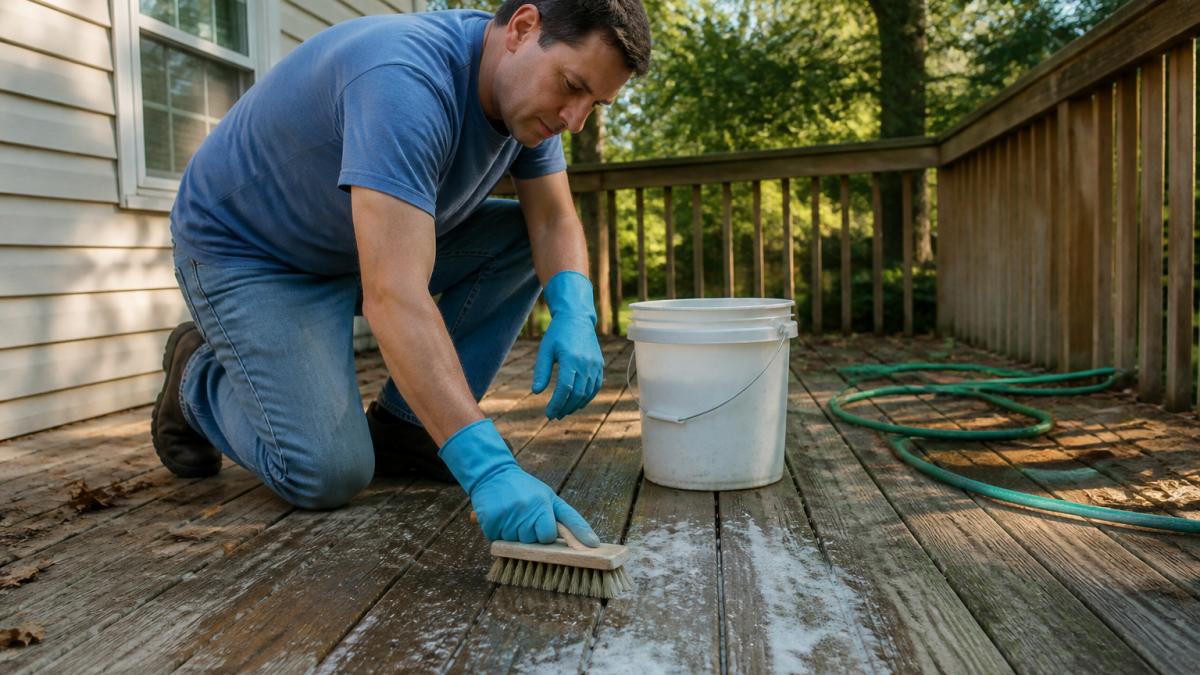
Cleaning, Debris Removal, and Repairing Loose Boards
Debris removal is more than tidying up. Leaves and dirt hold moisture against the wood.
Push debris out from between boards with a putty knife or a thin tool. Pay attention to corners where water pools.
For loose boards, drive new fasteners or replace the board entirely. A soft, spongy board can't be saved with sealant. Cut it out and patch it.
Applying Sealer, Stain, and Waterproofing in the Right Conditions
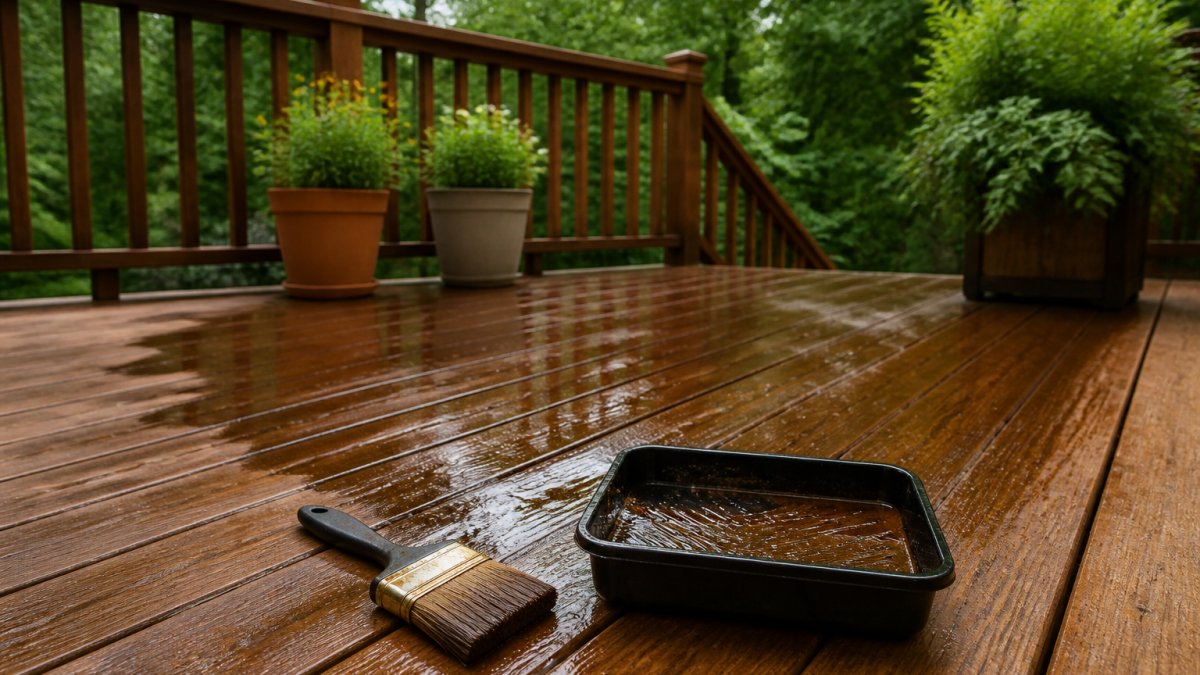
Application conditions decide whether a product cures into a protective film or fails within a season. Most deck coatings are formulated to work within a specific temperature and moisture window, and stepping outside it causes the two most common failures: skinning over before absorption, and trapping moisture under a film that then blisters or peels.
Temperature, humidity, and dew point
- Air and surface temperature: Most manufacturers specify application between 50°F and 80°F, and some oil-based products allow up to 90°F. Surface temperature matters more than air temperature, a deck in direct afternoon sun can run 20°F to 30°F hotter than the air, which shortens working time and causes lap marks.
- Humidity: High humidity slows solvent and water evaporation. On a muggy day, a water-based product may stay tacky for hours and an oil-based product may not penetrate before the surface skins. A common practitioner rule is to avoid application when relative humidity is above roughly 70% to 80%, depending on the product label.
- Dew point: If the deck surface is at or below the dew point, condensation forms and the coating cannot bond. Check the forecast for the spread between temperature and dew point; a spread under about 5°F is a signal to wait.
- Rain: Most labels call for 24 to 48 hours of dry weather after application. A washed-off coat wastes product and leaves bare wood, and re-coating over a partially cured film often produces an uneven finish.
Match the schedule to the product type
- Penetrating oil-based stains and sealers: These need dry wood and moderate temperatures. They absorb best when the wood is thirsty, so avoid applying right after a rain or when the deck has been shaded and damp. Typical recoat windows run 24 to 48 hours before foot traffic and longer before furniture.
- Water-based (acrylic) stains and sealers: These dry to the touch in a few hours but need longer to cure fully. Cool, humid conditions extend both times. Many labels specify no rain for 24 hours and no washing for several days.
- Film-forming waterproof coatings: These are the least forgiving. They need a clean, dry surface and stable conditions through the full cure, because moisture trapped underneath is what causes peeling. Avoid applying them when rain is likely within the label's cure window.
Working technique that prevents callbacks
- Apply thin coats and back-brush or back-roll puddles before they dry. A J roller helps on flat boards, but a brush is better for edges and end grain.
- Work in early morning or late afternoon to avoid direct hot sun, and keep a wet edge to prevent lap marks.
- Coat end grain and cut edges more heavily, they absorb more and are where water enters first.
- Do not walk on the deck, set furniture, or allow pets on it until the label's dry time has passed; cure time is longer still.
How Long Deck Stain Takes to Dry Before Rain Arrives
How long deck stain takes to dry before rain arrives depends on the product and the weather.
4 inch Heavy duty polypropylene Saucer →
Plan around the forecast. If rain is coming within 24 hours, wait. A washed-off coat wastes product and leaves bare wood exposed.
Humidity slows drying too. On a muggy day, give the deck an extra day before you walk on it or put furniture back.
How Often to Seal a Wood Deck and What Maintenance Looks Like
How often to seal a wood deck comes down to exposure, finish type, and how the deck sheds water. Most decks need a fresh coat every one to three years, but that range is wide because a penetrating oil on a shaded deck and a film-forming coating on a sun-blasted deck age at very different rates. The more useful question is: how do you know protection has failed before damage starts?
Signs protection has failed
- Water no longer beads. Sprinkle water on several boards. If it soaks in within a minute instead of beading, the surface is unprotected.
- Color fade or gray wood. UV exposure breaks down the finish and the wood beneath it. Graying means the surface is already weathering.
- Cupping, checking, or splintering. Boards that cup or crack are taking on water unevenly, often because the finish has worn thin on the top face.
- Peeling or flaking film. A film-forming coating that peels is trapping moisture underneath. Re-coating over it will not fix the cause.
- Soft spots or dark, damp wood near the ledger board and joists. This is structural moisture, not a surface problem, and it needs to be addressed before any coating goes back on.
A practical inspection and maintenance schedule
- Spring: Walk the deck and check for winter damage, loose fasteners, popped nails, split boards, and soft spots. Probe the ledger board and joists from below. Clear debris from between boards and from corners where water pools.
- Before applying product: Clean, repair, and let the wood dry 48 to 72 hours. Test absorption on a small spot.
- Early summer: Apply sealer or stain when the forecast gives you the label's dry window. Avoid the hottest part of the day.
- Fall: Clear leaves and debris, check that water drains away from the house, and confirm gutters and downspouts are not dumping onto the deck.
- Monthly during wet seasons: Sweep, check for pooling water, and look for new soft spots or loose fasteners.
Troubleshooting persistent pooling and leaks
Deck inspection and maintenance guidance
Protecting Deck Surfaces From Pots, Planters, and Pool Water
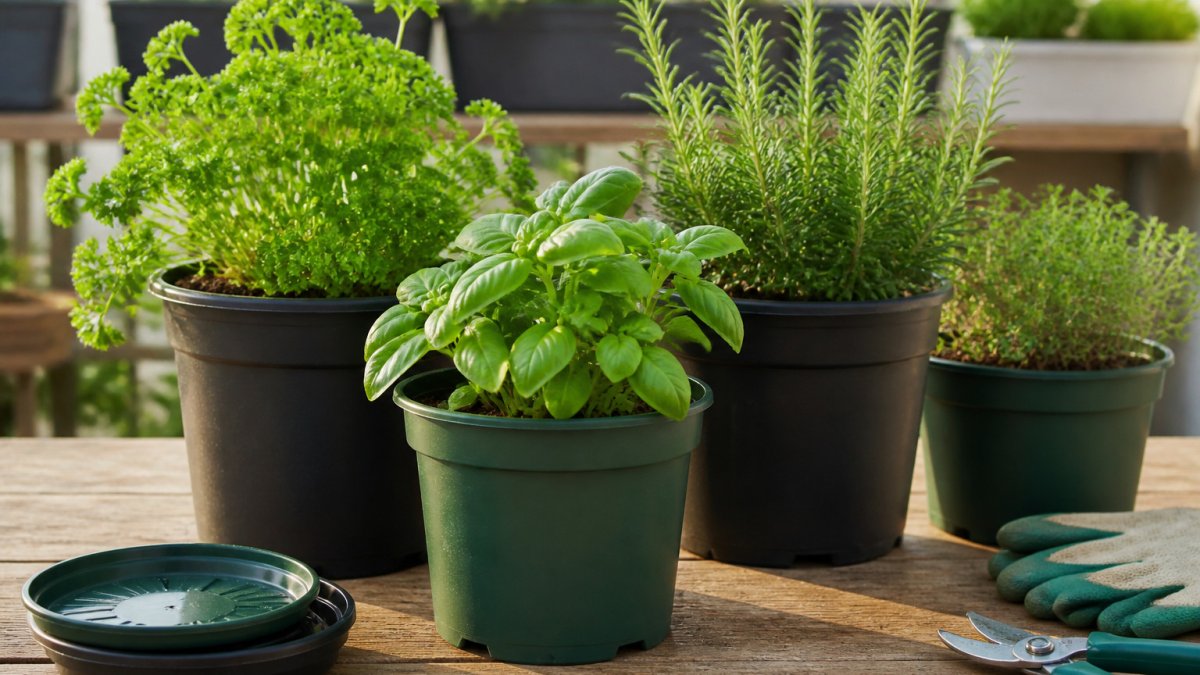
Water draining from pots can leave stains and rings on a deck. A drip tray can collect excess water drainage and soil spillage.
Our Austin planter saucers collect excess water drainage and soil spillage. The ribbed underside keeps the saucer slightly above the surface.
We also put together a guide on protecting surfaces from water stains if you want the full picture on planters and decks.
For the broader topic of deck water damage and long-term protection, our article on how to protect a deck from water damage covers more ground.
Frequently Asked Questions
How do you weatherproof a deck?
Start by cleaning the deck and letting the wood dry for at least 48 hours. Repair loose boards, then apply a penetrating stain or waterproof coating rated for your wood species. Check the forecast and apply when temperatures stay between 50 and 80 degrees Fahrenheit with no rain expected for 24 to 48 hours. Reapply every two to three years, or sooner if water stops beading on the surface.
Is it better to stain or water seal a deck?
It depends on the look and protection you want. A deck sealer soaks in and guards against moisture without changing the wood's color, which suits newer or naturally toned decks. Stain adds pigment that blocks UV fading along with water resistance. Many homeowners use a stain-and-sealer combo for both. If your deck already has a solid color, match the new product to that finish rather than layering a clear sealer on top.
Can rain fall on a deck 24 hours after staining it?
It depends on the product and the weather. Most oil-based stains need 24 to 48 hours of dry time before rain, while water-based formulas can be rain-ready in as little as 12 to 24 hours. Check the label for the specific recoat and rain-safe windows. If rain arrives early, look for cloudy patches or tacky spots and plan to recoat those areas once the wood dries fully.
How often should you seal a wooden deck?
Most wood decks need resealing every two to three years, though high-traffic decks or ones in wet climates may need it annually. Test by sprinkling water on the boards: if it beads up, the seal is holding; if it soaks in, it is time to reseal. Sealing before winter and after a thorough cleaning in spring keeps moisture from working into the grain during freeze-thaw cycles.
Water will find every gap in your deck if you let it. Protecting wooden decks takes a plan: clean and repair first, seal in the right conditions, and catch the water your planters drip.
That last part is where we come in. Beloit Plastics LLC makes heavy-duty, American-made saucers that collect drainage before it stains your deck. Every order ships free, ships fast, and comes with a 30-day return window.
Get started with Beloit Plastics LLC and keep your deck dry from the pot down.