 how-to
7 Ways to Protect Plant Roots From Extreme Heat
Last Updated: October 31, 2026
Quick Summary
To protect plant roots from extreme heat, mulch beds two to three inches deep and water deeply in the early morning so soil stays cool and damp. Add 40-50% shade cloth during heatwaves, and monitor soil temperature at four inches to catch stress early.
- Bare soil in full sun heats fastest, and containers lack the soil buffer garden beds provide.
- Keep mulch a couple of inches back from stems and trunks to avoid trapping moisture and rot.
- Water deeply two or three times a week rather than lightly every day during a heatwave.
- Drape shade cloth over hoops or a frame so it never touches the foliage, and leave sides open.
- Take shade cloth down when the forecast high drops below roughly 85°F.
Table of Contents
- Why Extreme Heat Damages Roots First
- Mulch for Heat Protection: Depth, Material, and Timing
- Watering Plants During a Heatwave Without Wasting Water
- Shade Cloth for Garden Plants: Choosing the Right Density
- Protecting Container Plants From Heat: Pots, Saucers, and Placement
- Soil Temperature Monitoring and Plant-Specific Heat Tolerance
- DIY Reflective Cooling and Post-Heatwave Recovery
- Shop American-Made Planters Built for Hot Weather
- Frequently Asked Questions
Why Extreme Heat Damages Roots First
Roots fail before leaves do. That is the core fact behind how to protect plant roots from extreme heat, and it is the one most gardening guides skip. Gardeners often ask why a plant that looked fine on Tuesday collapsed by Friday.
Roots need cool, damp, air-filled soil to take up water and breathe. When the top few inches bake, fine feeder roots cook and stop working.
How Heat Moves Through Soil
Soil heats from the top down. Bare soil in full sun can climb far above air temperature, and heat sinks several inches deep over a long afternoon. Dark, dry, bare soil gets hottest fastest.
Three things make it worse:
- No cover. Bare soil takes the full sun load.
- Dry soil. Moist soil moves heat away more slowly, so dry ground spikes faster.
- Small soil volume. A pot heats on all sides; garden beds only heat from the top.
Containers lack the soil buffer garden beds provide, which is why pots suffer first in a heatwave.
Signs of Heat Stress in Plants
Catch these early and you can still save the plant:
- Wilting that does not recover overnight
- Crisp or papery leaf edges
- Scorched brown patches on the sun-facing side
Watch out: wilting does not always mean "water me." A heat-stressed plant in soggy soil is drowning, not thirsty. Check soil moisture with a finger before you reach for the hose.
Mulch for Heat Protection: Depth, Material, and Timing
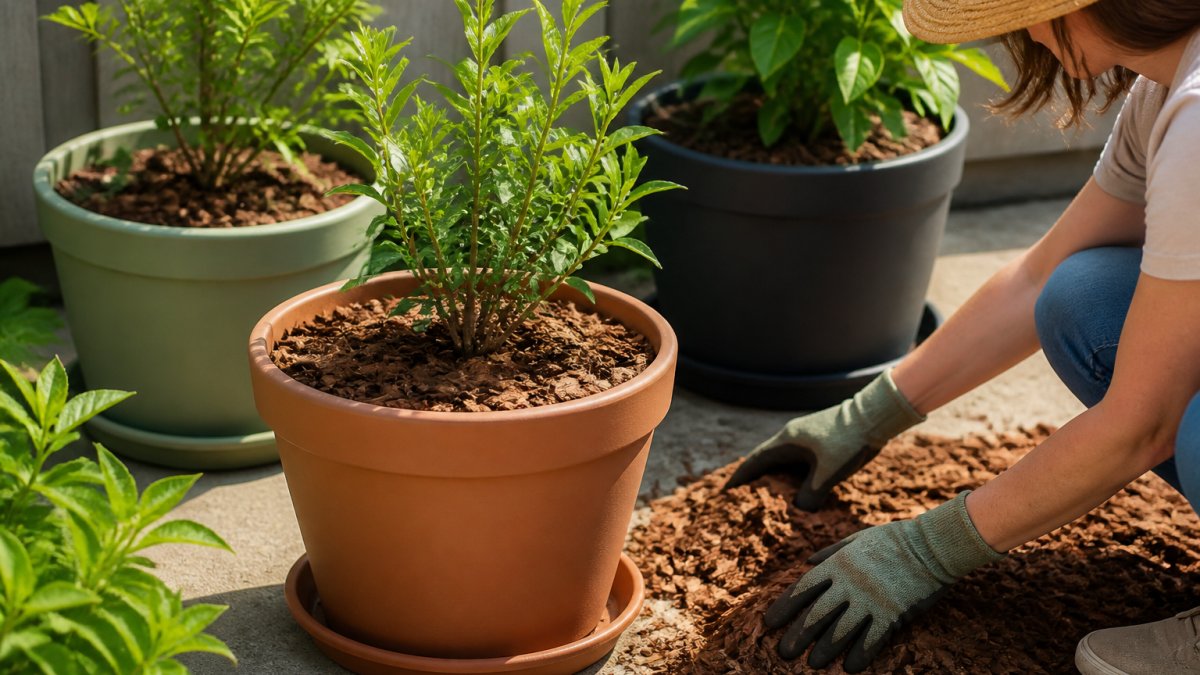
Mulch for heat protection is the cheapest, most effective move you can make.
Material choice matters less than people think. Shredded bark, straw, pine needles, and compost all work. Avoid dark, fine mulches that pack down and shed water.
Mulch in late spring, before the first real heat arrives. Adding mulch after the soil has baked does less good, because you are trapping heat rather than preventing it.
How Deep Should Mulch Be to Protect Roots?
Two to three inches is the target for garden beds. Less and sunlight still reaches the soil surface; more than four inches risks smothering roots and holding too much moisture after rain.
For containers, one inch is plenty. Pots have limited soil volume, and a thick mulch layer can keep water from reaching the roots at all.
Keep mulch a couple of inches back from stems and trunks. Piling it against the plant traps moisture and invites rot.
Watering Plants During a Heatwave Without Wasting Water
Watering plants during a heatwave is about timing and depth, not frequency. Deep, infrequent watering builds roots that can handle heat.
Water early in the morning, so foliage dries before evening and moisture reaches the root zone before the sun hits. Evening is second-best.
Water the soil, not the leaves. Aim at the base and let it soak in slowly; a quick blast from a hose mostly runs off.
Signs you are watering correctly:
- Soil is damp two inches down a few hours after watering
- Plants recover overnight from mild wilting
- You are watering deeply two or three times a week, not lightly every day
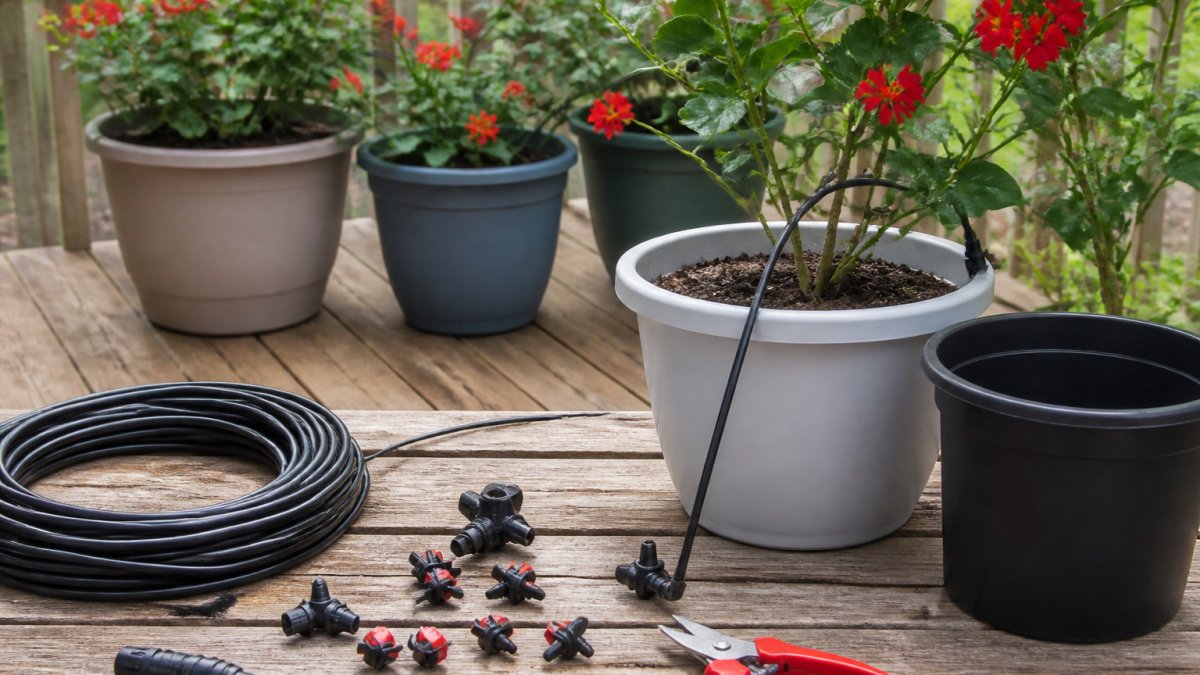
If you are setting up a drip or trickle system for containers, our guide on building a DIY container irrigation system walks through the parts and setup step by step.
Drip Irrigation and Trickle Watering Basics
Drip irrigation delivers water slowly and directly to the root zone, cutting evaporation, keeping foliage dry, and using far less water than overhead sprinklers. Trickle watering works on the same principle at a smaller scale, which suits pots and small beds.
The basics:
- Run tubing along the bed or pot line
- Space emitters so each plant gets its own water source
- Set a timer for early morning
- Check emitters weekly for clogs
- Adjust run times as temperatures climb
For containers, a simple timer and a few drip emitters turn a daily chore into a background task, consistency that protects roots when you are away or busy.
Shade Cloth for Garden Plants: Choosing the Right Density
Shade cloth for garden plants cuts the sun load on both leaves and soil, making it the fastest way to drop the temperature around a plant during a heatwave.
Density is measured as a percentage of light blocked. Here is how to pick:
| Shade Level | Best For | Notes |
|---|---|---|
| 30% | Tender vegetables, herbs | Light protection, good airflow |
| 40-50% | Most container plants, seedlings | The everyday heatwave choice |
| 60-70% | Heat-sensitive plants, new transplants | Use only during extreme heat |
| 80%+ | Temporary emergency cover | Blocks too much light for long use |
Drape shade cloth over hoops or a frame so it does not touch the foliage. Fabric resting on leaves traps heat and can scorch them. Leave the sides open for airflow.
How to Set Up Shade Cloth Without a Frame
Most guides assume you own hoops or a pergola. You do not need either. A few household setups work for a single heatwave:
- Staked row cover. Push four garden stakes into the corners of a bed and clip the cloth to the tops with spring clamps. Leave the south and west sides open so hot air escapes.
- Laundry rack and clips. A folding drying rack set over a container makes an instant shade frame. Clip the cloth to the top bar and let it hang loose on the sunny side.
- Umbrella or patio umbrella. A market umbrella angled to block the afternoon sun is a legitimate short-term fix for a cluster of pots. Move it as the sun moves.
DIY Reflective Cooling When You Do Not Have Shade Cloth
Reflective cooling is the cheapest trick in this guide. Light colors bounce sun away instead of absorbing it, and you can apply that principle in minutes with materials you already have.
- Light-colored mulch. Straw and pale bark reflect more sun than dark bark; a thin layer over dark soil drops surface temperature noticeably within an afternoon.
- White pot collars. Wrap the sunny side of a dark pot in white fabric, a pale towel, or reflective material to keep the pot surface and root ball cooler.
- Aluminum foil shields. Stand a foil-covered board on the sun side of a sensitive plant, a foot or two away so air still moves.
Reflective materials work best against direct sun on the sunny side of the plant. They do not replace airflow or water, and they do not help much on an overcast hot day when the heat load is diffuse.
Austin Planter under 7 inch - Multi Size & Color Plastic Flower Pot, Seedling →
When to Take Shade Cloth Down
Take shade cloth down once temperatures ease. Plants under heavy shade for weeks get leggy and weak, and flowering plants under 60% or more shade often set fewer blooms.
If a plant was already damaged before you got shade up, do not fertilize it. Its roots are compromised and cannot take up nutrients, so fertilizer can burn what is left.
Protecting Container Plants From Heat: Pots, Saucers, and Placement
Protecting container plants from heat starts with the pot itself.
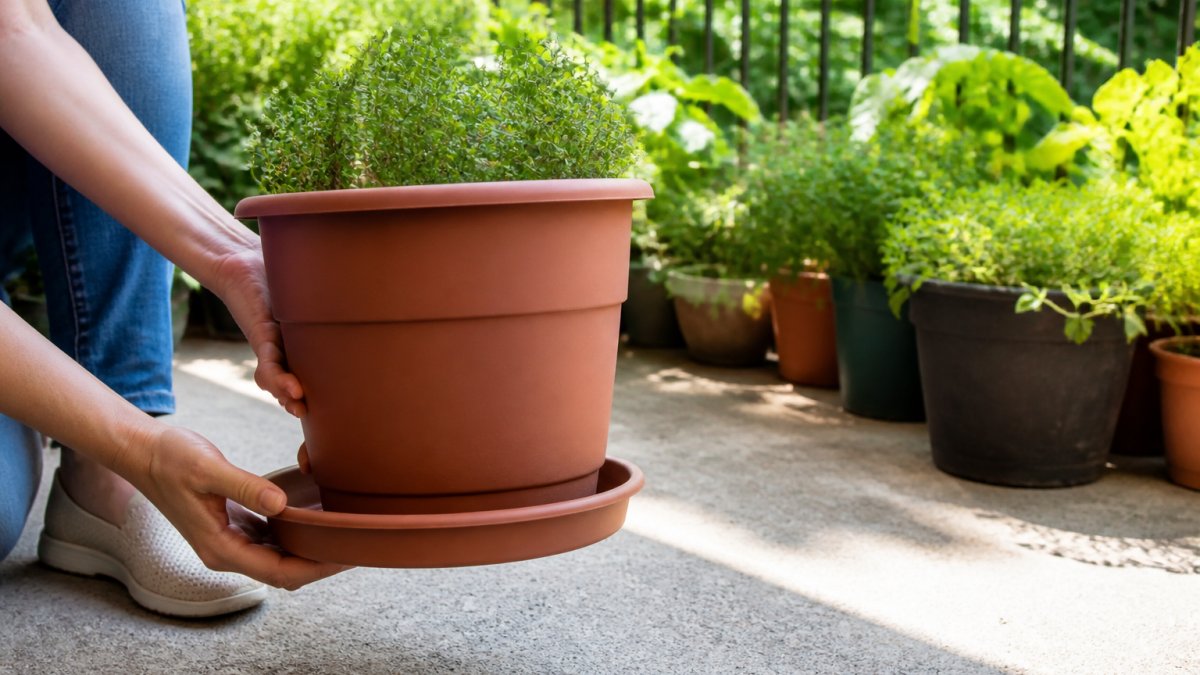
Placement is free and immediate. Move pots out of the hottest afternoon sun, group them so they shade each other, and lift them off hot concrete or pavers.
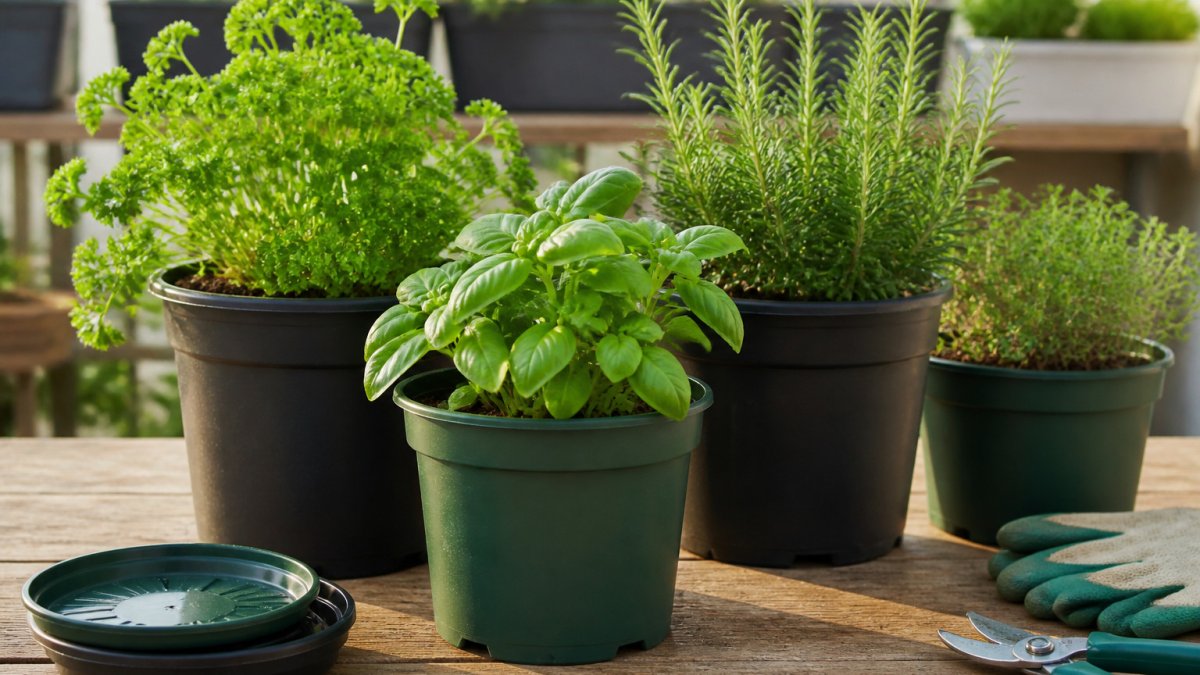
Saucers help more than people expect. A saucer catches runoff and holds a small reservoir the plant can draw from between waterings.
If waterlogged pots are part of your problem, these drainage tips for container plants cover the fixes.
Why Pot Color and Material Matter
Dark pots absorb heat. A black or dark brown pot in full sun can run much hotter than a light-colored one, and that heat passes straight into the root zone.
Thick-walled plastic holds up well in heat and does not dry out as fast as unglazed clay. Thin, cheap plastic can crack under temperature extremes.
If you are choosing pots for a hot spot, our guide to weather-proof plant pots covers what to look for. And if you already use saucers, this roundup of weather-resistant garden saucers explains which styles hold up to sun and heat.
Soil Temperature Monitoring and Plant-Specific Heat Tolerance
Soil temperature monitoring is the gap most gardeners leave open. Air temperature gets all the attention, but soil temperature decides whether roots survive a heatwave. A plant can look fine at 95°F air temperature and still be losing feeder roots if the top four inches of soil run 10 to 15 degrees hotter than the air.
A basic soil thermometer costs little and tells you more than any forecast. Probe-style models with a 6- to 8-inch stem reach the root zone without digging.
What Soil Temperature Readings Actually Mean
There is no single universal threshold, because root comfort varies by species and soil moisture. What matters is the trend and the gap between air and soil. A few working rules most horticulturists use:
- Below 75°F: Cool root zone. Most plants are comfortable; no intervention needed.
- 75-85°F: Watch zone. Fine feeder roots on cool-season crops start to slow. Mulch and deep watering keep it here.
- 85-95°F: Stress zone. Shallow-rooted plants begin losing feeder roots. Add shade and check moisture twice daily.
Moist soil runs cooler than dry soil under the same sun because water has a high heat capacity and moves heat away from the surface more slowly. That is why a bed that dries out spikes faster than one that stays evenly damp, and why mulch plus deep watering is a temperature tool, not just a moisture tool.
Root Sensitivity by Plant Type
General advice treats all plants the same. They are not.
Shallow-rooted vegetables and greens, lettuce, spinach, radishes, most herbs, and young seedlings, concentrate feeder roots in the top two to four inches, exactly the layer that heats fastest. They are the first to show heat stress and the first to need shade cloth and extra mulch. Cool-season crops can bolt or turn bitter once soil holds above roughly 80°F for several days.
Medium-rooted fruiting vegetables, tomatoes, peppers, eggplant, and squash, root mostly in the top 6 to 12 inches.
Succulents and heat-adapted herbs, rosemary, thyme, lavender, and most succulents, evolved in hot, dry, well-drained conditions.
Group plants by root sensitivity so you can shade and water the sensitive ones without overdoing it for the rest.
Tender Plants and New Transplants
Tender plants and new transplants need the most attention. Their root systems are shallow and cannot reach cooler, deeper soil, so they sit in the hottest layer with no backup. Give them shade cloth, extra mulch kept back from the stem, and closer watering until they establish, usually two to three weeks after transplant. A soil thermometer reading next to a new transplant is the most honest check on whether it is ready to lose its shade.
DIY Reflective Cooling and Post-Heatwave Recovery
Try these:
For the bigger picture on reviving stressed pots, this guide on keeping container plants healthy covers recovery and long-term care.
Shop American-Made Planters Built for Hot Weather
Heat is hard on roots, and it is hard on pots too.
Beloit Plastics LLC makes planters and saucers in Beloit, Wisconsin, USA, from polypropylene. The Austin Planter line is weather resistant and lightweight, and its saucers have a ribbed underside and support grid to allow airflow.
A few options that suit hot-weather container gardening:
- Austin Planter with Saucers, from $19.99 for a 4-inch five-pack up to $29.95 for larger sizes, in colors molded through the resin so they will not fade in the sun
- MRAP 14-inch Pot and Saucer, $20.75, a wide, shallow round planter with a matching saucer that holds a water reservoir
- Oval Pot with Saucer, $39.75, a 17 by 9 inch planter that fits entryways and patios without taking up much floor space
Shipping is always free, and returns are accepted within 30 days.
Frequently Asked Questions
How do you keep plant roots cool in extreme heat?
Start with a 2 to 4 inch layer of mulch over the root zone to block direct sun from the soil surface. Water deeply in the early morning so moisture reaches the root zone before the day heats up. For containers, move pots out of afternoon sun and set them on saucers so water stays available. Shade cloth rated 30 to 50 percent also lowers leaf and soil temperatures during the hottest hours.
Does mulch protect plant roots from heat?
Yes. Mulch acts as thermal insulation between the sun and the soil, slowing heat transfer into the root zone and reducing water evaporation from the surface. Organic mulches like straw, shredded bark, and leaves work well, and a light-colored gravel mulch reflects more sunlight. Keep mulch a couple of inches away from stems so the crown does not stay wet and rot.
Can plant pots get too hot for roots?
They can. Dark plastic and metal containers in full sun can push soil temperatures well above ambient air temperature, and roots in a small pot have nowhere to escape. Use light-colored or thick-walled pots, group containers so they shade each other, and set them on saucers that hold a little water. Moving pots to a spot with afternoon shade is the simplest fix.
When should you water plants during a heatwave?
Water early in the morning, before 9 a.m. if possible, so plants take up moisture before the peak heat and foliage dries before evening. Deep, less frequent soakings beat daily light sprinkling because they push water down to the root zone where it lasts. Check soil moisture with a finger or meter rather than following a fixed schedule, since containers dry out far faster than garden beds.
Your roots are already working harder than they should this season. Give them a container that keeps its cool, drains properly, and holds up to the sun year after year. Get started with Beloit Plastics LLC and give your plants a root zone built for the heat.