 how-to
Protect Outdoor Metal Decor From Rust: A Step-by-Step Guide
Last Updated: November 1, 2026
Quick Summary
To protect outdoor metal decor from rust, clean and degrease the surface, remove any loose rust, then apply a rust-inhibiting primer followed by two thin topcoats, or use a clear coat or wax if you want to keep the metal's look. Reseal outdoor metal decor once a year in full weather and every two years for sheltered pieces.
- Rust usually starts at welds, joints, the base, creases, and bolted connections where water collects.
- Run a magnet, weight, and finish check before buying any product, since cast iron and aluminum need different treatments.
- Two thin coats beat one thick coat because thin coats cure evenly and resist chipping.
- Full sun calls for a urethane clear coat with UV inhibitors, since wax melts and runs in sustained heat.
- Lift metal off bare soil onto pavers, gravel, or a raised base so water drains away.
Table of Contents
- Why Outdoor Metal Decor Rusts and Where It Starts
- Identify the Metal Type and Existing Finish First
- Clean, Degrease, and Prep the Metal Surface
- How to Remove Rust From Metal Yard Art Safely
- Rust-Resistant Paint for Metal Garden Decor
- Clear Coat for Outdoor Metal: When a Sealer Beats Paint
- How Often to Reseal Outdoor Metal Decor
- Choosing the Right Protection for Your Patio Setup
- Frequently Asked Questions
Why Outdoor Metal Decor Rusts and Where It Starts
Rust is what happens when iron meets water and oxygen, and outdoor metal decor sits in both all day.
The process starts faster than most people expect.
Where does it begin? Usually in the spots you never check:
- Welds and joints, where water collects and coatings thin out
- The base, where metal touches bare soil, gravel, or pavers
- Creases and hollows in cast or stamped designs
Ground contact is the quiet culprit. For a look at which weather-resistant decor survives winter conditions, see Best Weather Resistant Garden Statues for Winter.
Corrosion basics from the National Institute of Standards and Technology explains how moisture and oxygen work together on iron surfaces.
Identify the Metal Type and Existing Finish First
Before you touch a brush or a can, find out what the piece is made of. The right treatment for cast iron will ruin aluminum, and the wrong solvent can strip a finish you meant to keep.
Quick Identification Tests
Run these three checks before buying any product:
- Magnet test: A magnet sticks hard to iron and steel, barely grabs aluminum or zinc, and will not stick to copper or bronze.
- Weight test: Cast iron and steel feel heavy for their size; aluminum feels light for its volume.
- Finish check: Look for paint, powder coat, clear lacquer, or bare metal with a patina. Scratch a hidden spot with a coin, a hard, thick film that chips rather than scrapes is usually powder coat.
What Each Metal Needs
Cast iron and wrought iron. These rust readily and need a full coating system: rust removal, rust-inhibiting primer, and a topcoat.
Carbon steel. Similar to iron but often smoother and sometimes oiled from the factory.
Copper and bronze. These develop a green patina that many people want to keep. Do not scrub it off.
Weathering steel (Corten). This steel is designed to form a stable rust layer that protects the metal beneath.
Reading the Existing Finish
A factory powder coat is the most durable finish most decor arrives with. You can extend its life with wax or a compatible clear coat, but painting over it requires scuffing and a primer made for hard, glossy surfaces. Clear lacquer breaks down faster under UV; once it chalks, it needs removal before recoating. Bare metal with a patina is a judgment call, preserve it if the look matters, strip it if you want a painted finish.
Clean, Degrease, and Prep the Metal Surface
A coating will not bond to dirt, oil, or chalky residue. Cleaning is the step most people rush, and it decides whether the job lasts.
Work through this sequence:
- Wash the piece with mild soap and water. Use a soft brush on textured areas.
- Rinse thoroughly and let it dry in the sun.
- Degrease with a solvent or a dedicated prep cleaner. Wipe, don't soak.
- Scuff glossy or powder-coated surfaces lightly with fine abrasive pads so the new coating can grip.
- Wipe down with a clean cloth and let the surface dry fully before coating.
Surface preparation is where rust prevention is won or lost. Any grease left behind will cause paint to lift within a season.
Watch the weather, too. Most coatings want a dry day with moderate temperatures, and applying in direct sun on a hot day can cause the coating to skin over before it bonds.
How to Remove Rust From Metal Yard Art Safely
Rust removal comes down to two routes: mechanical abrasion for surface rust, and chemical removers for pits and tight corners. Start with the gentlest method that works, then step up only if you need to.
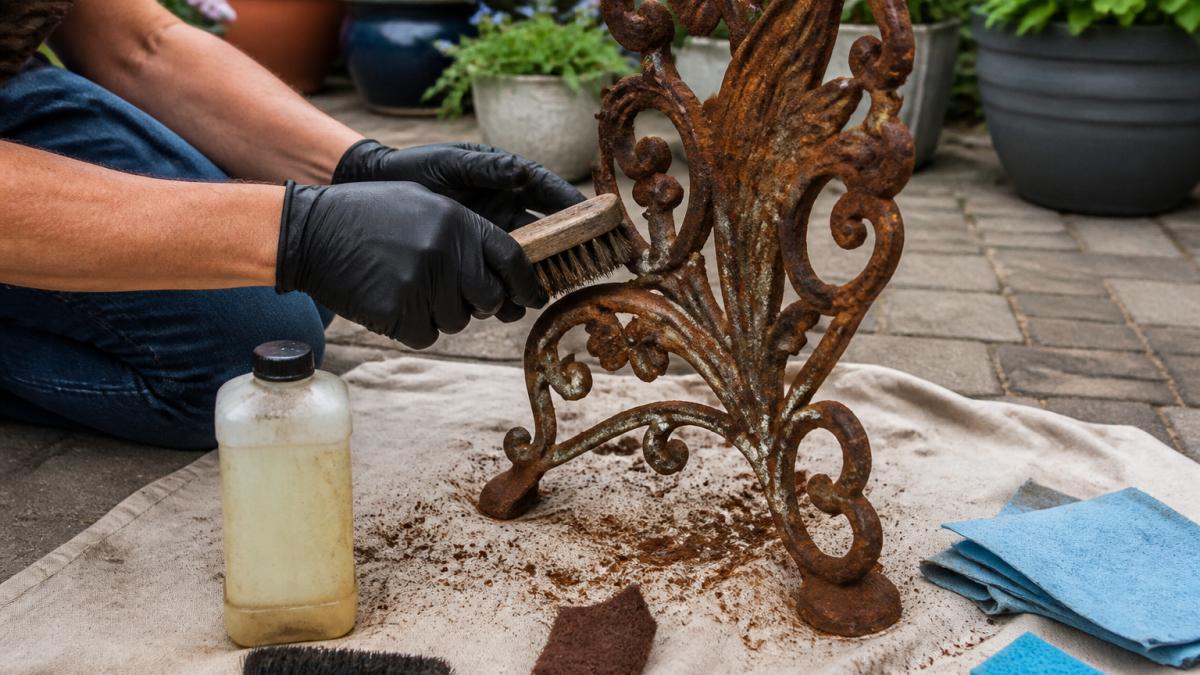
Removing Loose Rust With Brushes and Abrasives
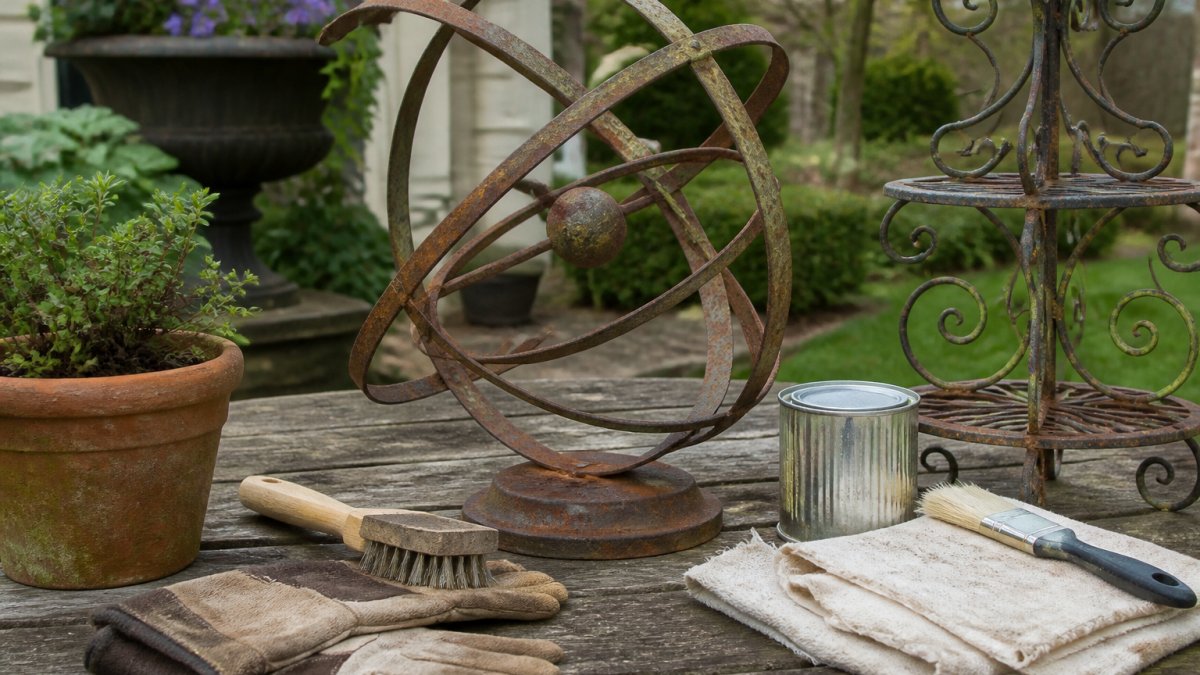
Start with a stiff wire brush or a hand-held abrasive pad. Scrub with the grain where you can, and work the bristles into welds, joints, and carved details.
For heavier erosion, step up to a drill-mounted wire wheel or an abrasive disc. Keep the tool moving and let the speed do the work.
Stop when you reach sound metal. You do not need a mirror finish, just a surface free of flaking rust and loose scale.
Chemical Rust Removers and When to Use Them
Chemical removers earn their place on pitted surfaces, tight scrollwork, and pieces too delicate for a wire wheel. They dissolve rust without grinding away the metal around it.
Use them carefully:
- Wear gloves and eye protection. These products are acids or caustic converters.
- Test on a hidden spot before treating the whole piece.
- Apply by brush and give it the dwell time the label states.
Rust converters are a different product from rust removers. A converter turns remaining rust into a paintable surface. A remover takes the rust off entirely. Pick one based on how much metal you want to keep.
Rust-Resistant Paint for Metal Garden Decor
Paint does two jobs at once: it blocks moisture and hides the repair. The trick is using the right paint in the right order.
The system that works has three layers:
- Rust-inhibiting primer goes on bare or rust-treated metal first. It bonds to the surface and slows corrosion at the metal itself.
- Topcoat paint provides the color and the weather barrier. Enamel and direct-to-metal coatings are common choices for garden decor.
- Two thin coats beat one thick coat every time. Thin coats cure evenly and resist chipping.
Watch out: painting over rust you did not remove traps moisture under the film. The paint blisters within months and you are back to square one.
Match the finish to the piece. A matte or satin topcoat suits cast iron urns and classic sculpture.
Clear Coat for Outdoor Metal: When a Sealer Beats Paint
A clear coat for outdoor metal preserves the look of the metal itself. Use it when the piece has a finish worth showing: a bronze sculpture, a brushed steel accent, or a patina you want to hold. Paint hides the metal; a clear coat protects it while letting the surface read through.
Clear Coats, Waxes, and Sealants Compared
| Product | Best For | Durability | Appearance | Reapplication |
|---|---|---|---|---|
| Acrylic clear coat | Painted or powder-coated pieces, moderate exposure | Months to a couple of years outdoors | Slight sheen; can yellow on some surfaces | When it chalks or peels |
| Urethane clear coat | High-sun, high-rain exposure; bare or patinated metal | Longer than acrylic; more UV-stable | Gloss or satin; can look wet on matte metal | Less often, but harder to remove |
| Paste wax or beeswax | Delicate, valuable, or antique art; patinated bronze and copper | Weeks to months outdoors | Matte, natural; darkens slightly with buildup | Frequently, but easy |
| Penetrating sealer | Porous cast metal and textured surfaces | Varies by product | Invisible; does not build a film | As the surface stops beading water |
Clear coats work well on sculptures and art where color matters, on factory powder coats you want to extend, and on patinated bronze and copper you want to freeze in place. They fall short in one spot: clear films break down under UV light, and once they chalk or peel, the metal underneath is exposed.
Choosing by Exposure
- Full sun: UV is the enemy. Choose a urethane clear coat with UV inhibitors, or accept that acrylic will need annual reapplication. Wax melts and runs in sustained heat.
- Rain and humidity: Film-forming clear coats beat wax because they shed water rather than absorbing it. Check that the product is rated for exterior use, interior clear coats fail quickly outdoors.
- Coastal salt air: Salt accelerates corrosion on any bare metal. Rinse pieces monthly with fresh water, and choose a coating system rated for marine exposure. Wax alone is not enough near salt water.
Choosing by Appearance Goal
If you want the metal to look unchanged, use wax or a matte clear coat. If you want a uniform sheen and easier cleaning, a satin urethane is the practical choice. If the piece is painted and you only want to extend the paint, a clear coat is optional, the paint is already the barrier, and a clear coat mainly adds UV and scratch protection.
Compatibility and Application Conditions
Clear coats and waxes do not bond to dirty, oily, or chalky surfaces. Clean and degrease first, and scuff glossy finishes lightly so the coating can grip.
Most clear coats specify a temperature range and humidity limit on the label.
One rule holds for every sealer: the metal must be completely dry before you apply it. Trapped moisture under a clear film shows up as cloudy patches and lifting edges.
How Often to Reseal Outdoor Metal Decor
Reseal outdoor metal decor once a year for pieces in full weather, and every two years for sheltered items. To see how durable all-season construction holds up over the years, read Durable Construction for All Seasons: Long-Lasting Planters. Check the coating each season and touch up bare spots before they spread.
The schedule below is what we suggest as a starting point. Adjust it for your climate and exposure.
| Task | When | What to Check |
|---|---|---|
| Quick visual inspection | Monthly | Chips, scratches, chalky film, new rust spots |
| Wash and dry | Spring and fall | Dirt buildup, standing water at the base |
| Touch-up recoating | As needed | Bare metal, thin edges, weld seams |
| Full reseal or recoat | Yearly in harsh weather | Overall film condition, UV chalking |
| Base and ground check | Every season | Contact with soil, trapped moisture |
Maintenance Schedule and Touch-Up Checklist
A five-minute check twice a year prevents most rust repairs. Run through this list:
- Lift the piece and check the base for trapped water
- Look at welds, joints, and bolt holes for early rust
- Feel for chalky or sticky patches on the coating
Choosing the Right Protection for Your Patio Setup
Protection works best when it covers the whole patio, not just one sculpture. Metal decor, planters, and containers all face the same weather and benefit from the same habits.
Start with these moves:
- Lift metal off bare soil. Set pieces on pavers, gravel, or a raised base so water drains away.
- Avoid standing water. Check saucers and low spots after rain and empty them.
- Group pieces for shelter. A wall or a corner blocks wind-driven rain.
At Beloit Plastics LLC, we build our planters and saucers for durable everyday use. Our products are designed to be easy to clean and to help protect surfaces from water stains.
Frequently Asked Questions
What is the best thing to put on metal to prevent rust?
A rust-inhibiting primer followed by a rust-resistant topcoat gives the longest protection for outdoor metal decor. For pieces you want to keep bare or patinaed, a clear coat or paste wax works instead. The key is applying it to a clean, dry surface and recoating before the finish wears thin, roughly once a year in humid or coastal areas.
Can you use clear coat to protect outdoor metal art?
Yes. A clear coat for outdoor metal preserves the look of bare steel, copper, or painted pieces while blocking moisture. Choose an exterior-grade clear coat made for metal, apply two thin coats, and let each dry fully. Clear coats wear faster in direct sun, so plan to touch up or reapply annually, especially on pieces facing constant weather exposure.
How often should you reseal outdoor metal decor?
Reseal outdoor metal decor once a year in most climates, and every six months in coastal or high-humidity areas. Check for dulling, chalking, or water beading loss as your cue. Pieces sitting on bare soil or in standing water need more frequent attention, and raising them on pavers or gravel reduces ground moisture and extends the finish.
Will metal wall art rust if it hangs on a covered porch?
It can still rust, just more slowly. Covered porches reduce direct rain but humidity and temperature swings still cause condensation on metal surfaces. A clear coat or wax layer slows corrosion, and keeping the piece off damp walls with small spacers helps air circulate. Inspect joints and welds yearly, since moisture collects there first.
Rust wins when moisture sits and coatings go unchecked. A yearly clean, a quick touch-up, and a smart base under every piece will keep your metal decor looking sharp for years. Beloit Plastics LLC makes U.S.-built planters and saucers with durable all-season construction, easy-to-clean surfaces, and protection against water stains, all with free shipping and 30-day returns. Get started with Beloit Plastics LLC and give your patio a setup built to last.