 how-to
How Do You Remove Mildew From Wooden Deck Railings?
Last Updated: October 24, 2026
Quick Summary
For mildew removal on wooden deck railings, dry-brush the wood, wet it with a garden hose, then apply oxygen bleach or a commercial deck cleaner and scrub along the grain. Rinse thoroughly, repeat on remaining spots, and let the wood dry at least 24 to 48 hours before sealing. Never use a pressure washer, which drives water into the grain.
- Cleaning deck railings takes about an hour for an average railing run.
- Work from the top rail down to the balusters and bottom rail so dirty water never runs onto clean wood.
- Oxygen bleach is the safest all-purpose choice because it lifts mildew without bleaching wood color.
- Wash railings twice a year, in spring and fall, before mildew gets a foothold.
- Sealing a railing that still has mildew traps spores under the finish and makes it return worse.
Table of Contents
- Why Mildew Grows on Wooden Deck Railings
- What You'll Need Before You Start
- How to Clean Deck Railings: Step-by-Step
- Choosing a Deck Railing Cleaning Solution
- Cleaning Mildew Off Stained Wood Without Ruining the Finish
- How to Prevent Mildew on Wood Railings
- Protecting Your Deck Surface With the Right Planters and Saucers
- Frequently Asked Questions
Why Mildew Grows on Wooden Deck Railings
Mildew is a surface fungus that feeds on moisture and organic matter, and wooden deck railings give it both, which is why mildew removal matters here. Rain soaks into the grain, humidity lingers in shaded corners, and pollen and dirt settle into the wood's pores. That mix creates a perfect growing surface.
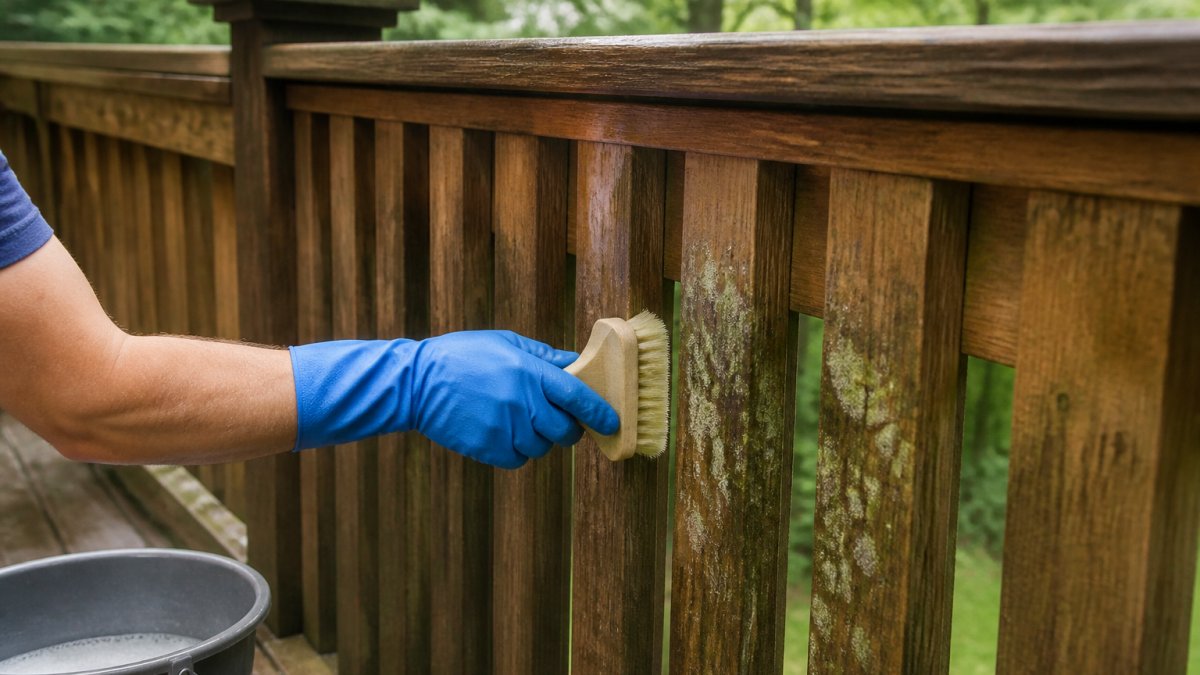
The problem shows up fast. Mildew looks like gray, green, or black speckles that spread along the top rail and the shaded side of the balusters. Left alone, those spots sink deeper into the wood and turn into a stain that no amount of scrubbing will lift.
Watch out: the biggest mistake is reaching for a pressure washer. High pressure drives water into the wood grain and shreds soft fibers, which gives mildew a bigger foothold next season.
Mildew needs three things to grow: moisture, warmth, and food. Remove any one of them and the spores stop spreading. That's the logic behind everything below.
What You'll Need Before You Start
Gather your supplies first so you're not running to the garage mid-job. A simple kit handles most railing jobs:
- A soft-bristle brush or a medium-stiff deck brush
- A plastic bucket and a garden hose
- Rubber gloves and safety glasses
- A pump sprayer or a clean spray bottle
- Oxygen bleach or a commercial deck cleaner
- Drop cloths to protect plants and siding
- A putty knife for scraping loose debris
Skip anything with a metal scraper or wire brush. Those gouge soft wood and leave scratches where dirt collects.
Check the weather before you start. Pick a dry, overcast day when rain isn't expected for at least 24 hours. Direct sun dries the cleaner too fast and can leave streaks.
How to Clean Deck Railings: Step-by-Step
Cleaning deck railings takes about an hour for an average railing run. The process is simple, but the order matters. Work from the top down so dirty water never runs onto a clean surface.
Step 1: Clear and prep the area. Move planters, furniture, and decor off the deck. Lay drop cloths over nearby shrubs and siding to catch runoff.
Step 2: Dry-brush the wood. Sweep off loose dirt, pollen, and cobwebs with a stiff brush. Loosen any clumps of debris with a putty knife.
Step 3: Wet the railing. Rinse the wood with a garden hose. Wet wood absorbs cleaner more evenly and stops the solution from drying too fast.
Step 4: Apply your cleaner. Spray or brush the solution onto the top rail first, then the balusters, then the bottom rail. Let it sit for the dwell time on the label, usually a few minutes.
Step 5: Scrub along the grain. Work the brush back and forth in the direction of the wood grain. Pay extra attention to joints and the shaded side of the railing where mildew hides.
Step 6: Rinse and check. Rinse thoroughly with the hose. If spots remain, repeat the scrub on those areas rather than soaking the whole railing again.
Step 7: Let it dry fully. Give the wood at least 24 to 48 hours of dry time before you stain or seal it.
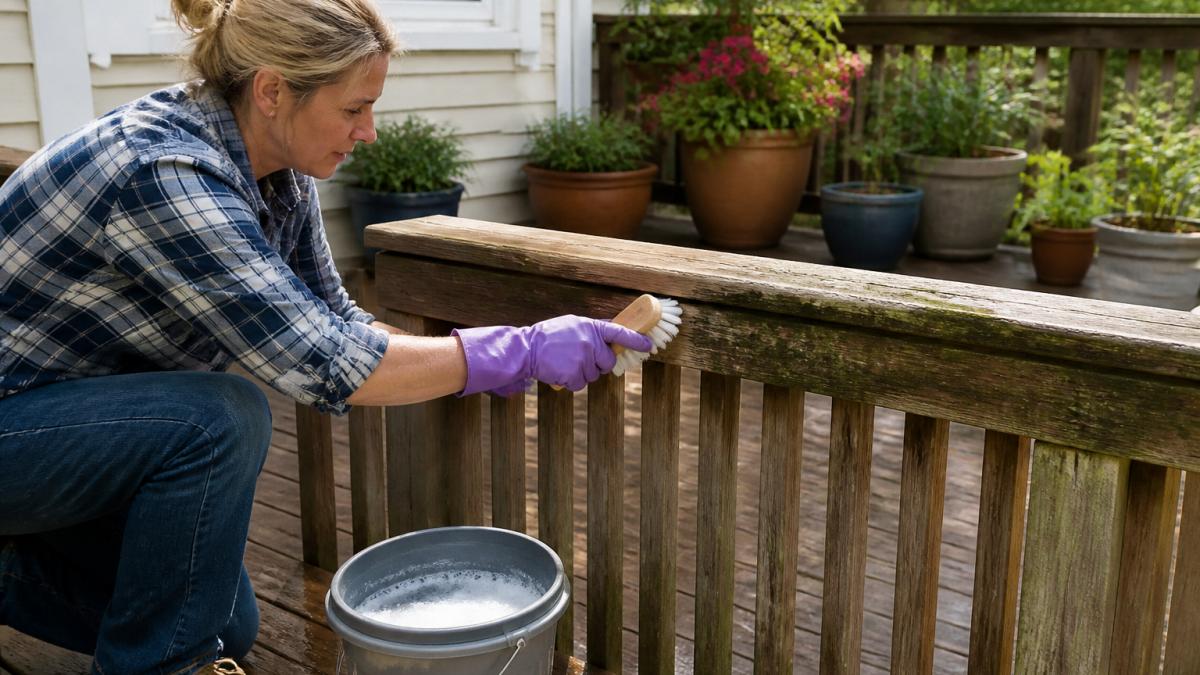
Here is the cleaning sequence the article recommends, from prep to final dry time.
| Step | What to do | Time or frequency |
|---|---|---|
| 1 | Clear and prep the area; lay drop cloths | Before cleaning |
| 2 | Dry-brush the wood; loosen debris with putty knife | Before wetting |
| 3 | Wet the railing with a garden hose | Before applying cleaner |
| 4 | Apply cleaner to top rail, balusters, bottom rail | Let sit for label dwell time, usually a few minutes |
| 5 | Scrub along the grain; focus on joints and shaded side | During cleaning |
| 6 | Rinse thoroughly and repeat scrub on remaining spots | After scrubbing |
| 7 | Let it dry fully before staining or sealing | At least 24 to 48 hours |
Choosing a Deck Railing Cleaning Solution
The best deck railing cleaning solution depends on how bad the mildew is and what finish is on the wood.
Oxygen bleach is the safest all-purpose choice. Mix it with water per the label, and it lifts mildew and dirt without bleaching the wood's color. It's gentle enough for most painted and stained railings.
Mild dish soap and water works for light surface mildew. It won't kill deep spores, but it's fine for routine seasonal cleaning.
Commercial deck cleaners are formulated for specific wood types. Read the label and match it to your railing.
Chlorine bleach kills mildew fast but has real downsides. It can lighten wood color, damage nearby plants, and corrode metal fasteners. If you use it, dilute it well and rinse everything nearby.
A simple rule for mildew removal: start mild and step up only if the mildew fights back. Most railings don't need the strongest option.
Cleaning Mildew Off Stained Wood Without Ruining the Finish
Cleaning mildew off stained wood is a balance. You need to kill the fungus without stripping the protective finish that keeps moisture out.
Start with the gentlest method. A soft brush and oxygen bleach solution usually lift mildew from a stained surface without touching the stain itself. Scrub lightly and rinse well.
Avoid three things on stained wood:
- High pressure. It strips stain and etches the grain.
- Strong chlorine bleach. It fades color and breaks down the finish.
- Harsh solvents. They can lift the stain in patches that never blend back.
If a spot won't budge after two gentle passes, spot-treat just that area. Then plan to re-stain the railing once it's fully dry. A fresh coat of stain restores the moisture barrier and helps prevent the next outbreak.
Watch out: never scrub a stained railing while it's hot from direct sun. The finish softens and scuffs easily.
How to Prevent Mildew on Wood Railings
Prevention comes down to keeping the wood dry and clean. A few habits make a real difference:
- Wash the railings twice a year, in spring and fall, before mildew gets a foothold.
- Trim nearby plants so air moves freely and shade doesn't trap moisture.
- Re-seal or re-stain every few years to keep the moisture barrier intact.
- Fix leaky gutters that drip onto the railing.
- Clear debris from rail joints where water pools.
A common mistake is sealing a railing that still has mildew on it. The sealer traps the spores under the finish, and the mildew comes back worse. Always clean and dry fully before sealing.
If moisture problems run deeper than the railing, our guide on how to protect a deck from water damage covers the wider fixes. Wood rot and mildew share the same root cause, so our piece on how to keep your planter box from rotting is worth a read too.
Protecting Your Deck Surface With the Right Planters and Saucers
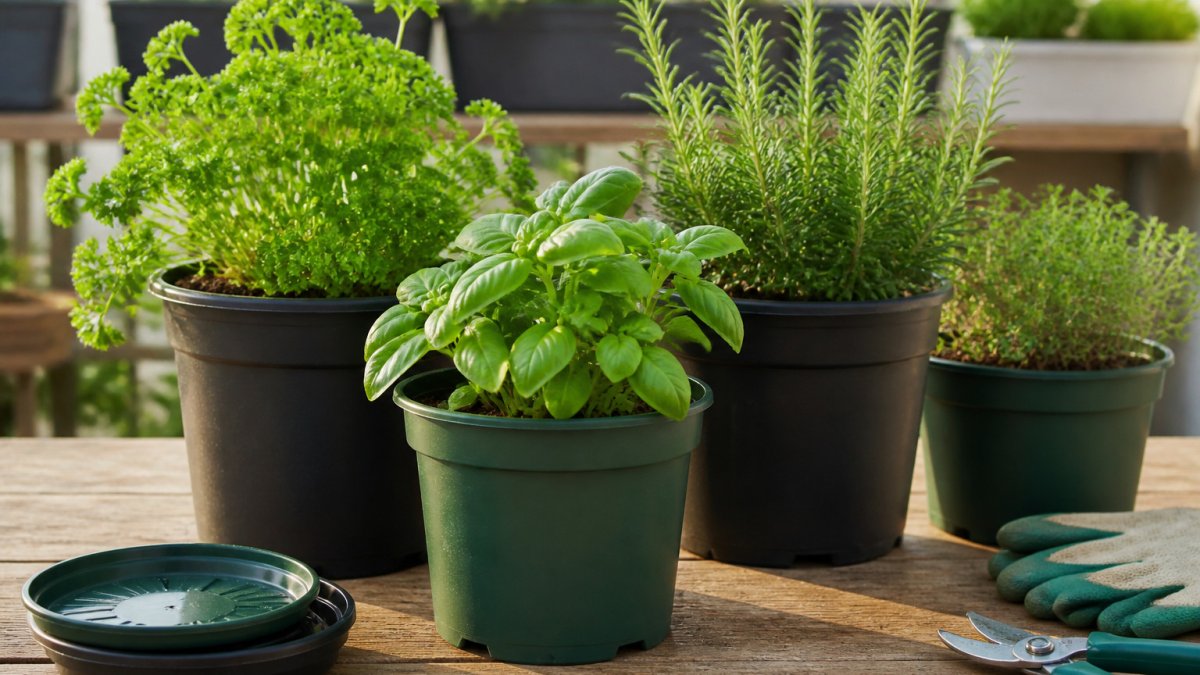
Planters are one of the most overlooked causes of deck stains. Water draining from a pot pools under the base and soaks into the wood, which feeds mildew and leaves dark rings.
The fix is simple: use a saucer under every planter. A good saucer catches runoff and keeps it off the deck surface. Best Weather Resistant Garden Saucers covers options built to last outdoors. Empty it after rain so it doesn't turn into a standing puddle.
Material matters. Plastic saucers resist moisture, don't crack in freeze-thaw cycles, and clean up easily. Terra cotta looks nice but wicks water straight onto the wood.
At Beloit Plastics LLC, we make U.S.-made planters and saucers built for exactly this problem. Our saucers protect surfaces from water stains, and the durable construction holds up through every season.
A saucer won't stop mildew on its own, but it removes one steady moisture source. Combined with seasonal cleaning and a good seal, it keeps the whole deck drier.
Frequently Asked Questions
Can you use vinegar to clean mildew off a wood deck railing?
White vinegar works on light mildew and is gentler on wood than bleach. Mix equal parts white vinegar and water, apply to the affected railing, and let it sit for about 10 minutes before scrubbing with a soft brush. Rinse thoroughly and let the wood dry completely. Vinegar handles surface mildew well, but heavy or recurring growth may need a dedicated wood-safe cleaner. Always test on a hidden spot first.
Is bleach safe to use on wooden deck railings?
Bleach kills mildew quickly but can lighten stained wood and damage the finish if mixed too strong or left on too long. If you use it, dilute one part bleach to three parts water, apply briefly, scrub, and rinse immediately. Never mix bleach with vinegar or ammonia. For stained railings, a gentler oxygen-based cleaner is usually the safer choice to protect the color and coating.
How do you remove mildew from stained wood without damaging the finish?
Use the mildest cleaner that works: start with soapy water, move to a diluted oxygen-based cleaner, and scrub with a soft-bristle brush rather than a stiff one. Avoid pressure washing at high settings, which can strip stain and raise the wood grain. Rinse thoroughly, let the railing dry fully, and reapply a stain or sealer coat if the finish looks dull or worn after cleaning.
How do you keep mildew from coming back on deck railings?
Moisture control is the main defense. Trim plants away from railings, fix leaks or drainage issues, and keep planters on saucers so water doesn't sit against the wood. Clean the railings at least once a year, and reseal them every one to three years so water beads instead of soaking in. Good airflow and quick drying after rain make it much harder for mildew to return.
Mildew on wooden railings is a moisture problem before it's a cleaning problem. Clean it properly, keep the wood sealed, and cut off the water sources that feed it. Beloit Plastics LLC helps with the last part: our U.S.-made planters and saucers protect your deck from water stains, ship free, and come with a 30-day return window. Get started with Beloit Plastics LLC and keep your deck drier all season.