 how-to
How to Seal Ceramic Pots for Winter
Last Updated: November 8, 2026
Quick Summary
To seal ceramic pots for winter, clean and dry the pot for three to five days, then brush on two thin coats of a penetrating sealer inside and out, letting each coat dry per the label. Apply when temperatures stay above 50°F and cure fully before the first freeze.
- Penetrating sealers suit unglazed terracotta and clay, while film-forming coatings trap moisture in planted pots.
- Glazed ceramic is already largely water-resistant, so penetrating sealers mostly help exposed or chipped clay.
- Inspect and reapply penetrating sealer every one to three years as it degrades with UV and freeze-thaw cycling.
- Elevate outdoor pots on feet or blocks and skip the saucer so water drains instead of pooling.
- Sealing slows wall absorption but cannot stop water entering through drainage holes, cracks, or the soil surface.
Table of Contents
- Why Ceramic and Terracotta Pots Crack in Winter
- Choosing a Waterproof Sealer for Ceramic Pots
- Step-by-Step: How to Seal Ceramic Pots for Winter
- Can You Leave Ceramic Pots Outside in Winter?
- How to Protect Terracotta Pots in Winter
- Can You Keep Soil in Pots Over Winter?
- Seal, Store, or Leave Outdoors: A Decision Guide
- Shop Winter-Ready Planters at Beloit Plastics
- Frequently Asked Questions
Why Ceramic and Terracotta Pots Crack in Winter
Cracking happens because water trapped inside the pot's walls freezes, expands, and pushes the material apart. A pot that looks dry outside can still hold enough moisture to split after one hard freeze. Most people blame the cold, but moisture does the damage.
How Moisture Expands During Freezing
Clay and ceramic are porous, so water sits inside the pot wall, not just the soil. When it freezes, that expansion has to go somewhere, and the pot wall loses. A freeze-thaw cycle repeats as water seeps in, freezes, thaws, seeps deeper, and freezes again, widening hairline cracks until the pot fails. Drainage holes help but don't stop absorption through the sides.
A few things make it worse:
- Standing water in a saucer that keeps the base saturated
- Soil that holds water against the pot wall all winter
- Pots sitting directly on frozen ground, where moisture wicks upward
Glazed Ceramic vs. Unglazed Clay and Terracotta
Glazed ceramic has a glass-like coating that slows water absorption, but it isn't waterproof. Glaze can craze, chip, or wear thin, and once water gets behind it, the pot is worse off than bare clay because the moisture can't escape.
If you want to understand the full cracking picture before you start sealing, our guide on how to prevent planter cracking walks through causes and prevention in detail.
Choosing a Waterproof Sealer for Ceramic Pots
A waterproof sealer for ceramic pots works by blocking water from entering the pot wall. There are two main families, and picking the wrong one creates a new problem instead of solving the old one. The choice also depends on the pot surface, because a product that bonds beautifully to bare terracotta can fail on a glazed finish.
Penetrating Sealer vs. Rubberized Sealant or Waterproof Coating
Penetrating sealers soak into the pores and line them from the inside. The pot still looks and feels like clay and breathes a little.
Rubberized sealants and waterproof coatings sit on the surface as a film.
Here's how we'd decide:
| Sealer Type | Best For | Watch Out For |
|---|---|---|
| Penetrating sealer | Unglazed terracotta, clay, porous ceramic | Needs dry pots and 2+ coats |
| Rubberized sealant | Decorative pots kept empty or with a liner | Traps moisture, can peel |
| Waterproof coating | Pots used as cachepots | Cracks if the pot flexes |
Our take: for any pot that will hold soil, a penetrating sealer is the safer bet. Film-forming coatings are for pots you're sealing as objects, not as planters.
Matching the Sealer to the Pot Surface
Glazed ceramic and unglazed clay behave differently under the same product, so read the label before you buy.
- Unglazed terracotta and clay: a penetrating masonry sealer is the right match. The open pores accept it and the pot keeps most of its vapor movement. Expect two thin coats and a longer cure in cool weather.
- Glazed ceramic: most penetrating sealers can't soak into fired glaze, so they sit on the surface and do little. If the glaze is intact, the pot is already largely water-resistant. If it's crazed or chipped, a penetrating sealer helps the exposed clay but won't restore the glaze.
- Painted or decorated pots: test on an inconspicuous spot first; solvent-based products can lift paint or dull the finish.
Gardeners often buy one product for every pot on the patio and then wonder why the glazed pots still craze. Match the product to the surface, not the shelf label.
Application Conditions, Curing, and Reapplication
Sealer performance depends as much on the conditions during application as on the product itself.
- Temperature: apply when air and pot temperatures are above 50°F and will stay there through the cure; below that, the product may not coalesce or bond.
- Moisture: the pot must be dry before the first coat. A pot that feels cool and damp isn't ready, even if the surface looks dry.
- Humidity and rain: avoid application when rain is forecast within the cure window. Penetrating sealers often need 24 to 72 hours, and cool, humid weather stretches that.
Watch out: sealing the inside of a pot that still holds moisture locks that water in. If the pot feels cool and damp to the touch, it isn't ready.
What Sealing Cannot Do
Sealing is a moisture-management tool, not a structural upgrade. It slows absorption through the pot wall but doesn't stop water entering through the drainage hole, the soil surface, or a hairline crack. A sealed pot in a saucer of standing water still takes on water from the base; one with a clogged drainage hole still freezes; and a cracked pot can't be sealed back to structural soundness.
Step-by-Step: How to Seal Ceramic Pots for Winter
Sealing works best on a clean, bone-dry pot, applied in two coats, inside and out, with a full cure before the first freeze. Rush the drying step and the sealer traps moisture instead of blocking it.
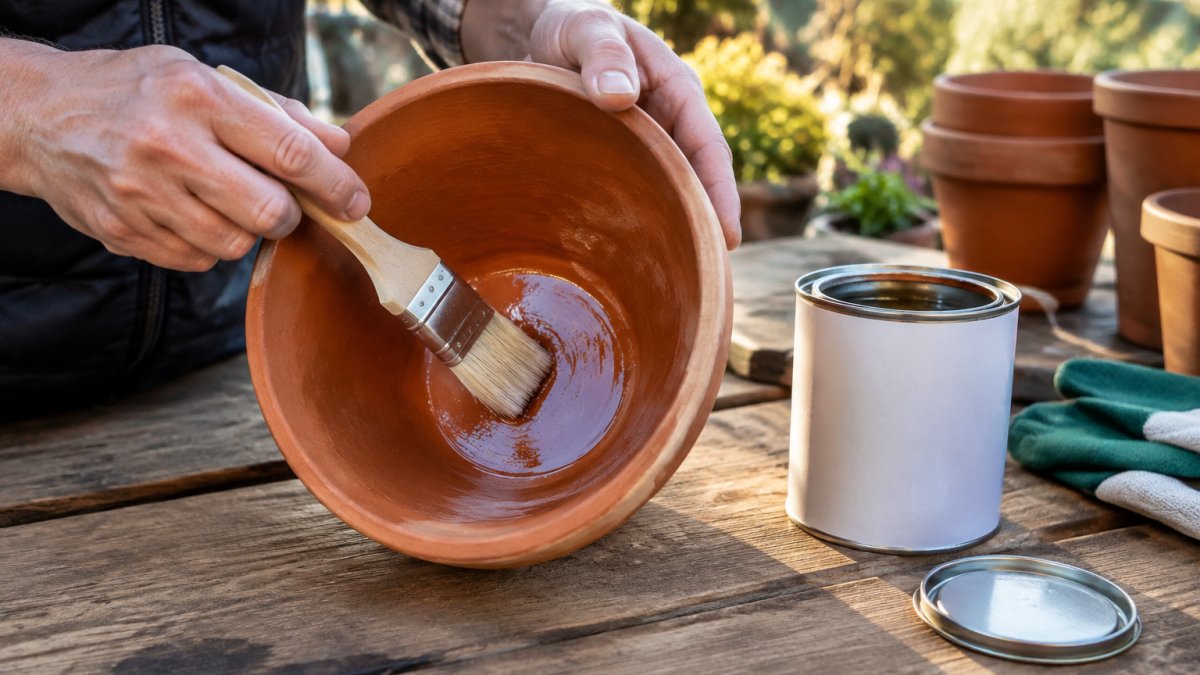
Preparing Pots: Remove Plants, Empty Soil, Clean and Dry
- Remove the plant. Slide it out gently and set it in a temporary pot or a bucket of moist soil.
- Empty the soil. Dump it into a wheelbarrow or bag; old soil can be reused in beds, not in the sealed pot.
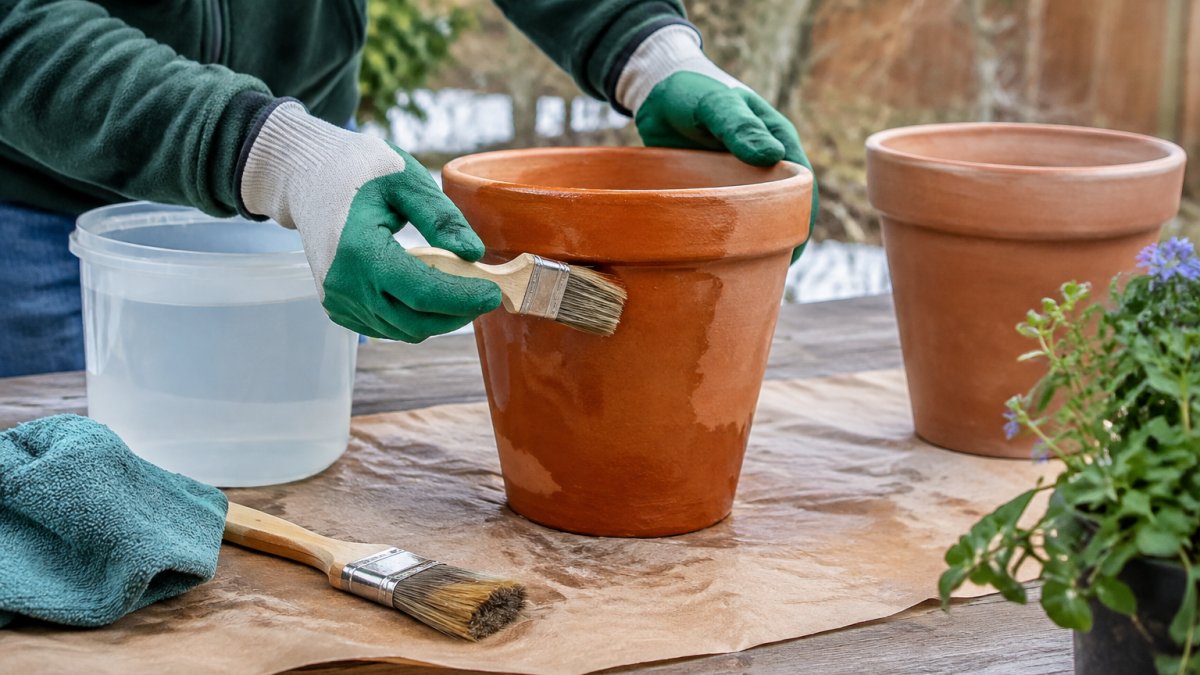
- Scrub the pot. Use a stiff brush and plain water. Skip harsh cleaners, which leave residue that stops the sealer bonding.
- Check for cracks. Hairline cracks mean the pot is already compromised; sealing won't fix structural damage.
- Dry thoroughly. Give it three to five days in a warm, dry spot.
Applying Sealer Inside and Outside
- Stir the sealer. Don't shake it, shaking traps air bubbles that show up as pinholes.
- Coat the inside first. Brush it on thin and even, covering the base and walls. Let it dry per the label.
- Coat the outside. Work top to bottom so drips run onto already-coated areas.
- Add a second coat. Two thin coats beat one thick coat every time.
- Cure fully. Give it the full label cure time before soil goes back in.
Watch out: sealing the inside of a pot that still holds moisture locks that water in. If the pot feels cool and damp to the touch, it isn't ready.
Can You Leave Ceramic Pots Outside in Winter?
You can leave ceramic pots outside in winter if they are frost-rated, well-drained, and raised off the ground. Standard glazed and terracotta pots are a gamble in hard-freeze climates, sealed or not. The decision comes down to three variables: how cold it gets, how often it swings above and below freezing, and whether the pot is rated for outdoor winter exposure.
Climate and Temperature Thresholds
Think in terms of how cold it gets and how often it swings. These bands are practical rules of thumb, not guarantees, because pot construction and microclimate vary:
- Mild winters, occasional light frost (lows around 30°F to 32°F): most sealed pots handle it fine outdoors. Empty pots and pots with hardy plants can usually stay put.
- Repeated freezes below 20°F: sealed pots survive better, but emptying them is safer. Freeze-thaw cycles in this range are where most hairline cracks begin.
- Sustained single digits or deep freeze-thaw cycles (lows below 10°F): bring pots in or accept losses. At these temperatures, even frost-rated pots are stressed, and unglazed terracotta is at high risk.
Two climate details matter as much as the low temperature. Freeze-thaw frequency: a climate that dips below freezing at night and thaws every day does more cumulative damage than a consistently cold one, because each cycle pulls water deeper into the clay. Precipitation pattern: a wet fall followed by an early hard freeze is the worst combination, because the pot goes into winter saturated.
Sealing raises the odds. It doesn't change what the pot is made of. If your winter regularly drops into hard freezes, compare winter-ready planter options before you rely on a sealed pot.
Frost-Rated vs. Standard Pots
Not every pot labeled "ceramic" is built for winter. Frost-rated or frost-proof pots are fired and formulated to tolerate freeze-thaw cycling, and are usually heavier and denser than standard terracotta. Standard terracotta and many decorative glazed pots are not frost-rated, even when the glaze looks tough. Check the manufacturer's label for an outdoor winter rating; if there is none, assume the pot is not frost-proof.
Protecting Pots That Must Stay Outdoors
If a pot is too large to move or is planted with something you want to keep in place, layer the protections:
- Elevate the pot on pot feet, wooden blocks, or flat stones so water drains and does not wick up from frozen ground.
- Shelter it against a wall, under an eave, or on a covered porch where rain and snowmelt are reduced.
- Skip the saucer outdoors in winter. It holds water right where the pot is most vulnerable.
Inspecting and Recovering After a Freeze
Inspect pots after the first hard freeze and again at spring thaw. Look for hairline cracks, especially around the rim, base, and drainage hole, and tap the pot gently; a dull thud instead of a ring can indicate a crack that has not opened yet.
If water has frozen in a pot, don't pour hot water on it, thermal shock can turn a hairline crack into a split. Move it to a sheltered spot and let it thaw gradually.
How to Protect Terracotta Pots in Winter
Terracotta needs more help than glazed ceramic because it absorbs water so readily. The goal is simple: keep water out and give any moisture that gets in a way to escape.
Start with these moves:
- Seal the pot with a penetrating sealer, inside and out.
- Lift pots off the ground using pot feet, wooden blocks, or flat stones so water drains and doesn't wick up.
- Add a layer of lava rocks in the base for drainage before soil goes in.
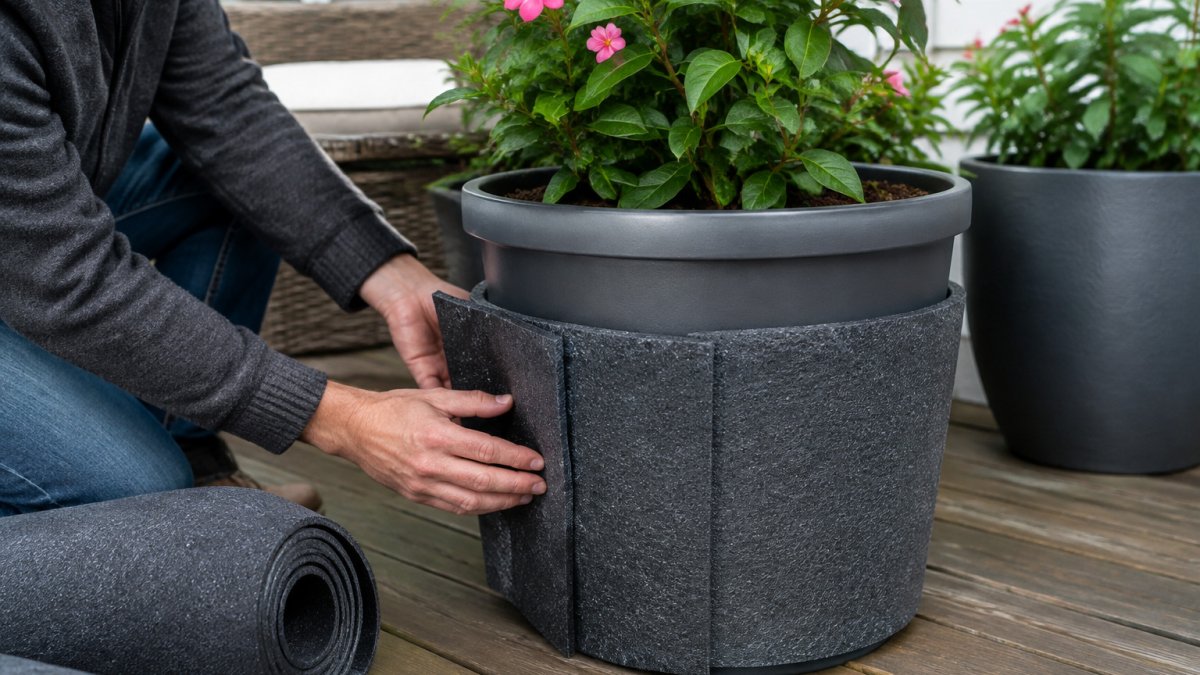
If you want extra protection beyond sealing, our guide on insulating outdoor planters yourself covers wrapping and layering methods for terracotta.
Can You Keep Soil in Pots Over Winter?
You can keep soil in pots over winter, but the pot must drain freely and the soil must not stay saturated. Wet soil against a pot wall is the single biggest driver of winter cracking.
If you leave soil in:
- Confirm the drainage hole is open, not clogged with roots or compacted soil
- Raise the pot so water exits instead of pooling
- Skip winter watering unless the soil is dry well below the surface
If you're storing pots instead, our tips on storing plastic pots for winter apply to any container you're putting away empty.
Seal, Store, or Leave Outdoors: A Decision Guide
Use this to pick your approach in under a minute:
| Situation | Best Move |
|---|---|
| Frost-rated pot, mild winters | Seal and leave outdoors |
| Unglazed terracotta, hard freezes | Seal, empty, and shelter or store |
| Glazed pot with visible cracks | Store empty, don't risk it |
| Pot too large to move | Seal, elevate, shelter from rain |
| Tender plant still growing | Bring plant in, store pot |
The honest answer most guides skip: sealing a planted pot can backfire. A sealed pot can't dry through its walls, so water that gets in past the soil surface sits there. That's why we suggest sealing empty pots before refilling, not sealing around a growing plant.
If your pots won't survive your winters no matter what, it's worth comparing frost-resistant planter alternatives instead of fighting the material.
Shop Winter-Ready Planters at Beloit Plastics
The best seal in the world can't rescue a pot that was never built for cold.
Our planters and saucers are made in the USA. Pricing and shipping details are available on our website.
Browse our planters on the Beloit Plastics LLC website to see current options.
Sealing your ceramic pots is a weekend project that pays off for years.
Frequently Asked Questions
Do ceramic pots need to be sealed before winter?
Sealing helps porous ceramic and terracotta pots resist water absorption, which is the main cause of freeze-thaw cracking. A penetrating sealer reduces how much moisture soaks into the clay wall. Sealing is not a substitute for good drainage and elevation, though. If a pot sits in standing water or stays full of wet soil, a sealer alone will not prevent damage. Combine sealing with emptying soil, lifting pots off the ground, and moving them to a sheltered spot.
What is a good waterproof sealer for ceramic pots?
Look for a penetrating sealer made for masonry, stone, or terracotta, applied to a clean, dry pot inside and outside. Penetrating sealers soak into the clay and leave the surface able to breathe, which suits unglazed pots. Rubberized sealants and waterproof coatings form a film on top and can trap moisture if the pot is used for planting, so they work better on empty decorative pots. Always follow the manufacturer's dry-time and temperature instructions.
Can glazed ceramic pots be left outside in winter?
Glazed ceramic pots handle winter better than unglazed clay because the glaze slows water absorption, but they are not immune. Water can still enter through the drainage hole and the unglazed rim or base, then freeze and stress the pot. In regions with repeated freeze-thaw cycles, empty glazed pots, lift them off the ground, and store them in a garage or shed. If they stay outdoors, keep them dry and out of standing water.
Can I keep soil in pots over winter?
You can leave soil in a pot over winter if the pot is frost-proof, has clear drainage, and sits somewhere it will not collect water. For terracotta and other porous pots, emptying the soil is safer because damp soil holds moisture against the clay wall. If you keep the soil, cover the top to shed rain, raise the pot on pot feet or wooden blocks, and check the drainage hole is open before the first hard freeze.