 how-to
7 Steps to Choosing the Right Pot Size for Tomatoes
Quick Summary
Choosing the right pot size for tomatoes depends mainly on the plant's growth habit. Compact determinate varieties do well in about 5 to 10 gallons, while indeterminate vining types need 15 to 20 gallons, or more for vigorous cherry tomatoes.
- Check the seed packet or plant tag to see whether the tomato is determinate or indeterminate.
- Compact determinate tomatoes suit about 5 gallons, and standard determinate types suit about 10 gallons.
- Indeterminate tomatoes need 15 to 20 gallons, with a diameter of 18 to 24 inches.
- Measure usable soil depth from the rim to the inside bottom, since listed height often overstates it.
- Repot a tomato showing wilting, roots through drainage holes, or slow growth.
Table of Contents
- Why Pot Size Decides How Much Your Tomato Plant Produces
- Step 1: Identify Whether Your Tomato Is Determinate or Indeterminate
- Step 2: Match the Pot Volume to Your Tomato Variety
- Step 3: Set the Pot Diameter and Depth in Inches
- Step 4: Size Down for Cherry Tomatoes
- Step 5: Choose Containers That Drain, Hold Moisture and Suit Your Space
- Step 6: Adjust for Climate, Watering and Plants per Container
- Step 7: Diagnose an Undersized Pot and Decide Whether to Repot
- Frequently Asked Questions
Why Pot Size Decides How Much Your Tomato Plant Produces
Choosing the right pot size for tomatoes is one of the most important decisions for a container garden. A pot that is too small starves the roots, dries out fast, and caps the harvest. A pot that is too large holds water longer than the plant can use, which can invite root problems. Getting the size right from the start saves time and money.
Container tomatoes need room for roots to spread, soil to hold moisture, and space for the plant to support its fruit. The pot is the plant's entire world, so every limit inside it shows up in the tomatoes you pick.
- Roots need space to grow and feed the plant
- Larger soil volume holds water and nutrients longer
- Bigger pots mean fewer watering emergencies in hot weather
- The right size supports more fruit per plant
Many gardeners start with whatever container they already own. That approach often leads to disappointing yields. Taking a few minutes to match the pot to the variety makes a clear difference.
Step 1: Identify Whether Your Tomato Is Determinate or Indeterminate
Before you pick a pot, find out how your tomato grows. Determinate tomatoes stop growing at a set height and ripen their fruit within a short window. Indeterminate tomatoes keep growing and producing until frost.
This difference matters a lot for container size. Determinate plants stay compact and do well in smaller pots. Indeterminate plants grow tall and vine-like, and they need much more root space to keep producing.
- Determinate: Compact, bush-type plants with a short harvest window
- Indeterminate: Vining plants that keep producing all season
- Check the seed packet or plant tag for the growth habit
If the label says "determinate" or "bush," you can use a smaller container. If it says "indeterminate" or "vining," plan for a bigger pot from the start.
Step 2: Match the Pot Volume to Your Tomato Variety
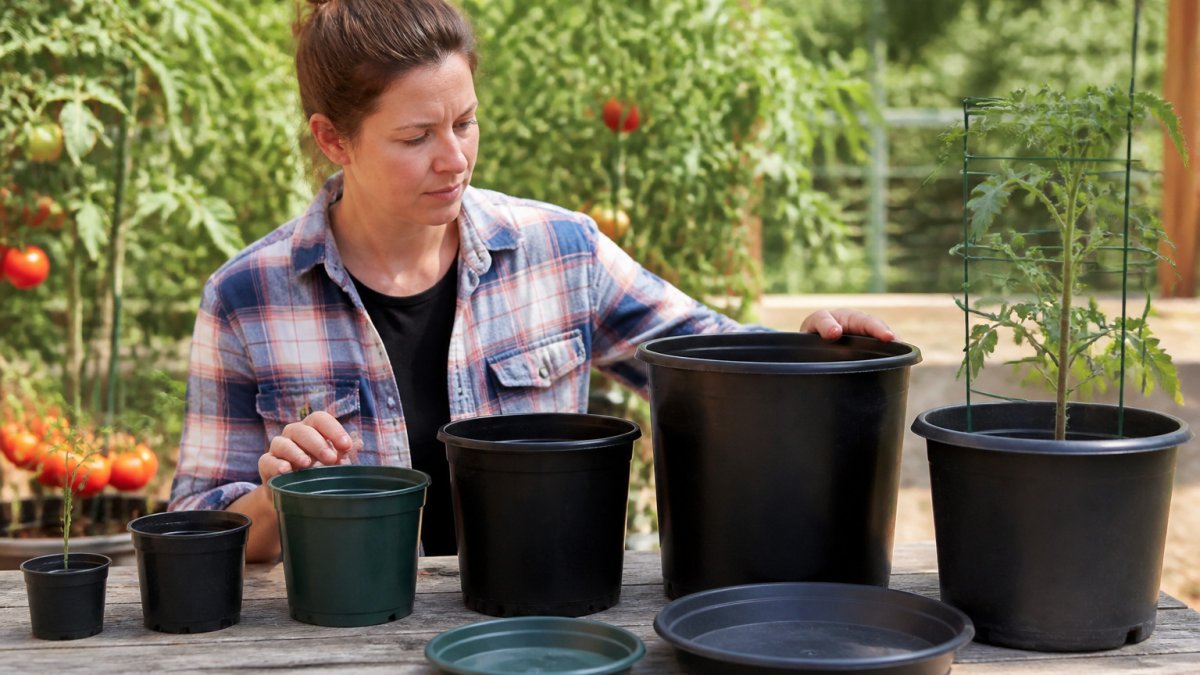
Pot volume, measured in gallons, is the number that matters most because it tells you how much soil the roots can work in. But volume alone is not enough: two pots labeled 10 gallons can provide very different root space depending on shape and usable depth. Use the chart below as your primary guide, then check the diameter and depth notes in the next section.
| Tomato Type | Suggested Pot Volume | Typical Diameter | Typical Usable Depth | Best For |
|---|---|---|---|---|
| Compact determinate (patio, dwarf) | 5 gallons | 12-14 inches | 10-12 inches | Small patios, balconies |
| Standard determinate | 10 gallons | 14-16 inches | 12-14 inches | Most home container setups |
| Indeterminate | 15-20 gallons | 18-24 inches | 16-20 inches | Maximum harvest |
| Cherry tomatoes (compact) | 5 gallons | 12-14 inches | 10-12 inches | Compact, high yield |
| Cherry tomatoes (vigorous indeterminate) | 10-15 gallons | 16-20 inches | 14-18 inches | Heavy clusters, long season |
These ranges reconcile the two measures gardeners most often see on plant tags and pot labels. A 5-gallon pot is roughly 1,155 cubic inches of soil; a 10-gallon pot is about 2,310 cubic inches; a 20-gallon pot is about 4,620 cubic inches. When a seller lists only diameter, estimate volume by treating the pot as a cylinder and multiplying 3.14 × radius squared × usable depth, then divide by 231 to convert cubic inches to gallons. That math explains why a wide, shallow 16-inch pot can hold less soil than a narrower 14-inch pot that is several inches deeper.
A common mistake is buying a pot that matches the plant's size at the nursery rather than its size at harvest. Tomato plants grow quickly, so choose the pot for the mature plant. Indeterminate varieties are the clearest case: a plant that reaches 6 to 8 feet tall by late summer needs the root volume to match, which is why the 15- to 20-gallon range appears so often in grower recommendations.
Watch out: a pot sold as "5 gallons" may hold closer to 4 gallons of actual potting mix once you leave headspace for watering, so size up one step if you are between ranges.
Step 3: Set the Pot Diameter and Depth in Inches
Volume is useful, but shoppers often find pots listed by diameter and depth, and those two numbers can mislead if you do not account for shape. Measure both the top diameter and the usable soil depth, the distance from the rim to the inside bottom, not the outside height. A pot's stated height usually includes a rim and a recessed base, so usable depth is often 1 to 2 inches less than the listed height.
For most tomatoes, look for a pot at least 12 inches deep and 14 to 16 inches across. Deeper pots work better for indeterminate types because their roots reach far into the soil. But diameter alone is a poor proxy for root room. A tapered pot narrows toward the bottom, so a 16-inch top diameter may provide only 10 to 12 inches of root width at the base. A tall, narrow pot can hold the same volume as a short, wide one while giving roots a very different shape to fill.
Use this shape guide when comparing pots of similar volume:
- Tapered nursery pots: Convenient and cheap, but the taper reduces usable root width at the bottom. Size up one step for indeterminate plants.
- Straight-sided pots and fabric grow bags: Maintain width from rim to base, so the stated volume is closer to usable root space. Fabric bags also air-prune roots and dry faster, which matters in hot weather.
- Shallow bowls and planter boxes: A 10-inch-deep box can work for compact determinate plants but leaves little margin for indeterminate roots. Treat depth under 12 inches as a compact-variety-only option.
- Self-watering containers: The reservoir takes up interior space, so a 10-gallon self-watering pot may provide only 6 to 7 gallons of actual soil. Account for that when matching to the chart above.
The MRAP 14 inch Pot and Saucer measures 14 inches wide by 5 inches tall and comes with a matching 14 inch saucer that catches excess water and provides a reservoir for your plants. If you want a smaller option to compare against these dimensions, the 12 inch Red Pot with Saucer is a 12-inch option with drainage holes and an included saucer.


Watch out: a pot that is wide but shallow dries out faster than a deeper pot of the same volume because the surface area exposed to sun and air is larger, so match depth to your watering schedule as well as to the variety.
Step 4: Size Down for Cherry Tomatoes
Cherry tomatoes are smaller plants, so they fit into smaller containers. Many gardeners grow them in pots around 5 gallons. They still need consistent watering, because small pots dry out quickly on hot days.
Cherry types can produce heavy clusters even in modest containers. Choose a pot that holds enough soil to keep the roots moist between waterings.
To experiment with different sizes, a set of graduated pots helps. The Sample Pack 12-Piece Flower Pot and Saucer Set, (2"-12") offers graduated sizes from 2 to 12 inches.

Watch your cherry plant for wilting in the afternoon. That often signals the pot is too small or the soil is drying too fast.
Step 5: Choose Containers That Drain, Hold Moisture and Suit Your Space
Size is only part of the decision. Drainage matters because roots that sit in standing water can rot. Look for drainage holes in the base, and use a saucer to catch excess water.
Moisture retention matters too. Thin plastic pots dry out faster than thicker containers in summer heat. If you garden in a hot climate, a larger soil volume helps buffer the swings.
If you want to read more about options, our guide on how to choose self-watering containers for vegetables covers how reservoirs affect moisture. For drainage fixes, the 10 best drainage tips for container plants explains how to keep water moving through the soil.
Consider your space too. A large pot is heavy when filled with wet soil. If you have a balcony or rooftop, weigh the load and plan where the pot will sit before you buy.
Step 6: Adjust for Climate, Watering and Plants per Container
Your climate and watering habits should shape your final choice. In hot, dry areas, go bigger than the minimum so the soil holds moisture longer. In cooler, humid areas, a medium pot may be enough.
Plant count matters as well. One tomato plant per pot gives the roots the most room. Crowding two plants into one container splits the soil volume and usually lowers the yield for each plant.
- Hot, sunny spots: Choose the larger end of the volume range
- Cool, shaded spots: A mid-sized pot often works
- One plant per container: Gives the best results
- Multiple plants: Only with a very large pot, and expect smaller harvests
Water deeply and check the soil every day in summer. A larger pot gives you more margin if you miss a day.
Step 7: Diagnose an Undersized Pot and Decide Whether to Repot
Sometimes you only realize the pot is too small after the plant is already growing. Watch for these signs: wilting even after watering, roots poking out of drainage holes, slow growth, and small fruit.
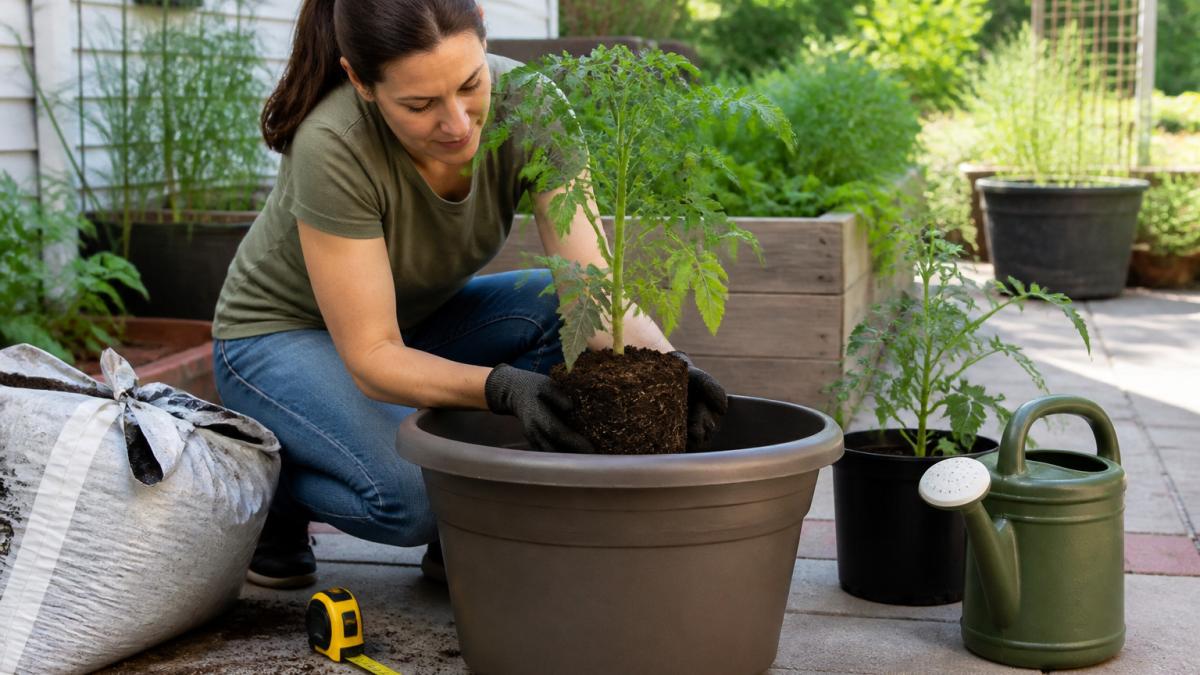
If you see these signs early, you can repot. Move the plant into a larger container with fresh potting mix. Handle the roots gently, and water the plant well after the move.
Waiting too long makes repotting harder and can stress the plant. It is better to choose the right size at planting time, but repotting in the first few weeks of growth is often successful.
To keep your garden thriving, start with a pot sized to your tomato variety and check it often. A few smart choices at the beginning lead to a stronger plant and a bigger harvest.
Frequently Asked Questions
What is the ideal pot size for growing tomatoes?
For most indeterminate tomato varieties, a container of at least 5 gallons is a practical minimum, and 10 to 15 gallons gives a plant more root room and moisture stability. Determinate and compact varieties can often grow well in 3 to 5 gallons. Depth matters as much as volume, so aim for a pot at least 12 inches deep. Larger containers dry out more slowly, which reduces the stress of uneven watering that can cause blossom end rot and cracked fruit.
Is a 2-gallon bucket big enough for a tomato plant?
A 2-gallon bucket can support a small determinate or dwarf tomato variety for a short season, but it is generally too small for most tomatoes. Limited soil volume dries out quickly in summer heat and restricts root growth, which lowers yield. If you want to use a bucket, choose a 5-gallon size or larger and make sure it has several drainage holes. For a full-sized plant, plan on at least 5 gallons and ideally more.
What size pot should I use for cherry tomatoes?
Cherry tomatoes generally do well in containers of 3 to 5 gallons, which is a smaller volume than many full-sized varieties need. A pot about 12 to 14 inches in diameter and at least 10 to 12 inches deep is a reasonable starting point for one plant. Even with a smaller pot, cherry tomatoes still benefit from consistent watering and a sturdy support, because their vines can grow vigorously and carry heavy clusters of fruit.
How many tomato plants can fit in one container?
In general, plant one tomato per container. Sharing a pot splits the soil volume and water between plants and increases competition for nutrients, which usually reduces the yield of each plant. If you do want to grow two compact plants together, use a container of at least 15 to 20 gallons and space them well apart. Check the variety's mature size before deciding, since indeterminate tomatoes need more room than determinate types.