 how-to
How to Choose Self-Watering Containers for Vegetables
Last Updated: October 25, 2026
Quick Summary
How to choose self-watering containers for vegetables starts with matching reservoir size to your crop: use 1-quart reservoirs for shallow-rooted herbs and greens in 8 to 10-inch pots, 1.5 to 2-quart reservoirs for peppers and determinate tomatoes in 12 to 14-inch pots, and 3-quart reservoirs for indeterminate tomatoes in 18-inch pots. Prioritize containers with clear water-level indicators, overflow holes, and fill tubes to prevent root rot and simplify refilling.
- Reservoir size should be 20 to 30 percent of soil volume for fruiting crops like tomatoes and peppers, and 10 to 20 percent for leafy greens and herbs.
- Platform and integrated-reservoir designs move water more reliably than wick systems and suit larger containers and thirsty crops.
- Oversizing containers traps excess moisture around roots, causing root rot; match pot size to the vegetable's mature root system.
- Refill every 2 to 3 days in hot, dry conditions or weekly in cool weather, checking water-level indicators before watering.
- Use potting mix with perlite or coir, not garden soil, to maintain proper drainage and capillary action in self-watering systems.
Table of Contents
- Understanding How Self-Watering Containers Work
- Self-Watering Planter Reservoir Capacity and Design
- Self-Watering Container Size for Vegetables
- Self-Watering Planter Drainage and Overflow Features
- Best Vegetables for Self-Watering Planters
- Potting Mix, Maintenance, and Climate Considerations
- Selecting Durable Self-Watering Containers That Last
- Frequently Asked Questions
Understanding How Self-Watering Containers Work
A reservoir sits at the base, separated from the growing medium by a false floor or barrier.
This solves inconsistent watering, plants either get too much at once or dry out between waterings. Steady moisture is especially valuable for vegetables like tomatoes and peppers.
The key advantage is reliability: refill every few days or weekly depending on temperature and plant size, rather than checking soil daily.
Self-Watering Planter Reservoir Capacity and Design
Reservoir size determines how long plants go between refills; design determines how reliably water reaches roots. Two 2-quart reservoirs can behave very differently depending on whether they use a wick, a platform, or an integrated column.
How much reservoir capacity you actually need
A practical rule most experienced container growers use: size the reservoir at roughly 20 to 30 percent of the soil volume for thirsty fruiting crops, and 10 to 20 percent for leafy greens and herbs. That translates to:
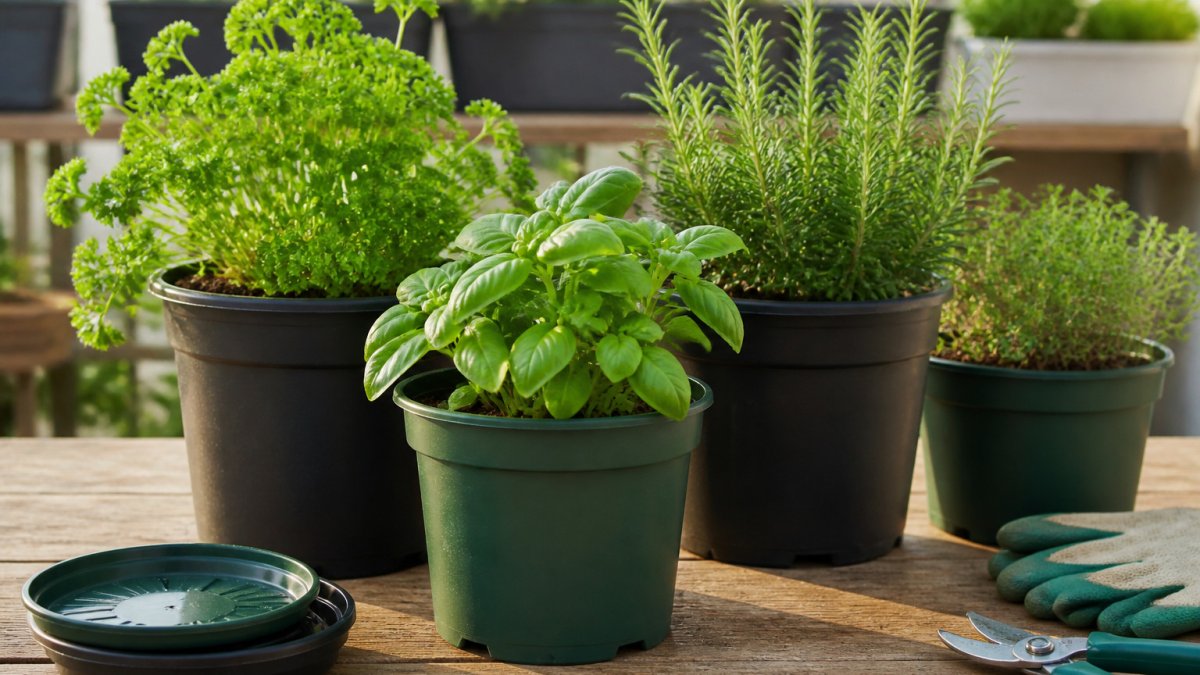
- 8 to 10-inch pots (about 1 to 2 gallons of mix): 1-quart reservoir. Enough for lettuce, spinach, and herbs for 3 to 5 days in mild weather.
- 12 to 14-inch pots (about 3 to 5 gallons): 1.5 to 2 quarts. Suitable for peppers, bush beans, and determinate tomatoes.
- 14 to 18-inch pots (about 5 to 10 gallons): 2 to 3 quarts. The working range for full-size tomatoes and eggplant.
Bigger is not automatically better. A 5-quart reservoir under a 6-inch pot of basil keeps the mix saturated longer than roots can use, a common route to root rot. Match reservoir to plant, not to the biggest number on the label.
Wick, platform, and integrated-reservoir designs compared
These three designs fail in different ways.
Wick-based systems. A fabric, cord, or felt wick runs from the reservoir into the potting mix, moving water by capillary action.
- Strengths: simple, inexpensive, works in small pots, easy to retrofit into a standard pot and saucer.
- Weaknesses: wicks clog or mat down in dense mixes, lose efficiency with age, and struggle to supply large, fast-transpiring plants. Performance depends on a coarse, peat- or coir-based mix.
- Best for: herbs, lettuce, and other shallow-rooted crops in 8 to 12-inch containers.
Platform (false-floor) systems. A perforated platform sits above the reservoir; soil wicks water up through its openings or a soil column.
- Strengths: moves more water than a single wick, handles larger soil volumes, and the platform doubles as an air gap that limits waterlogging.
- Weaknesses: the soil column can compact and slow uptake; overflow holes are essential and can clog; refilling via a fill tube is awkward on large pots.
- Best for: tomatoes, peppers, eggplant, and beans in 12 to 18-inch containers.
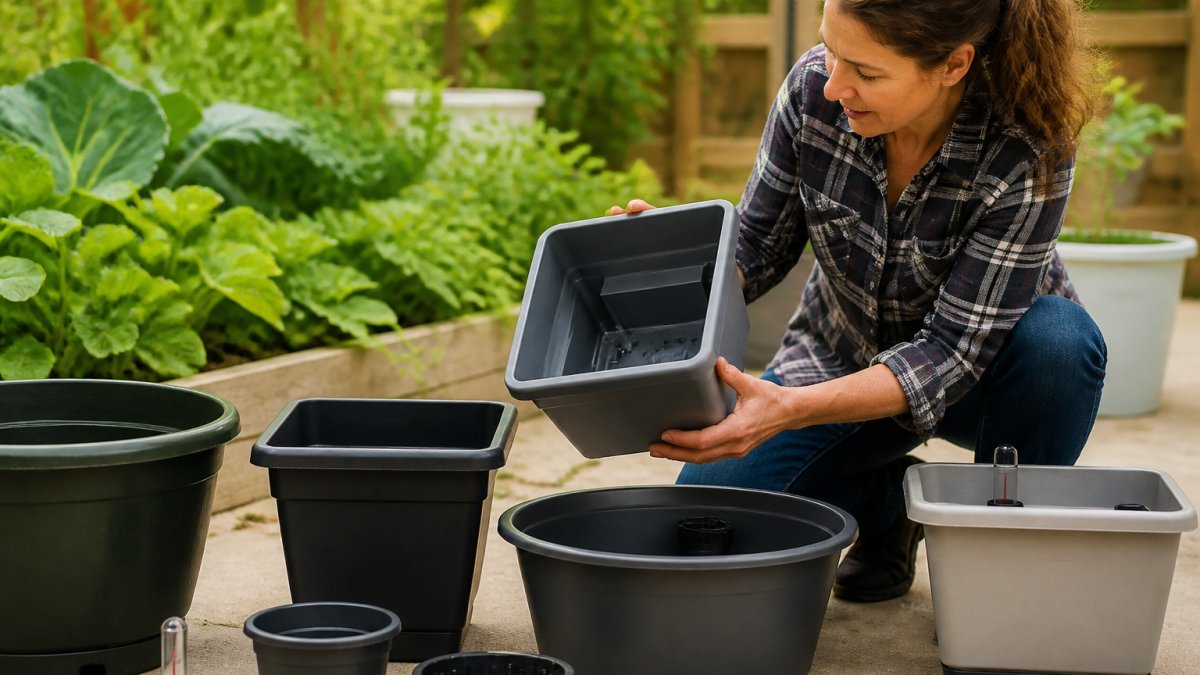
Integrated-reservoir (column or tube) systems. The reservoir is molded into the container body, often with a fill tube and water-level indicator.
- Strengths: cleanest refilling, easiest monitoring, and most durable, fewer separate parts to lose or break.
- Weaknesses: harder to clean thoroughly; a failed float or indicator is not always replaceable. Cheaper versions can have thin walls that crack in freeze-thaw cycles.
- Best for: low-maintenance refilling and larger pots where lifting a saucer to check water is impractical.
Refill access, monitoring, and maintenance trade-offs
Design choices show up in daily use more than on the spec sheet:
- Fill tubes beat lifting a pot off a saucer, a 14-inch pot of wet mix weighs 20 to 30 pounds.
- Water-level indicators remove guesswork; without one, you judge by feel, where most over- and under-watering happens.
- Overflow holes are a safety feature, keeping the reservoir from pressurizing water into the root zone. Check them monthly; algae and grit block them.
Matching design to crop and setting
- Balcony or patio with wind and sun: a platform or integrated design with a 2-quart-plus reservoir and water-level indicator; wicks dry out too fast here.
- Small-space herbs and greens: a wick-based pot-and-saucer setup is the most economical choice.
- Long-season tomatoes: an integrated 3-quart reservoir with a fill tube saves the most refills in peak summer.
A clear water-level indicator and a generously sized overflow are the two features that most reliably separate a container you will keep using from one you will abandon by midsummer.
Self-Watering Container Size for Vegetables
Container size must match the vegetable's root depth, spread, and water demand. Too small and roots cramp while the reservoir empties in a day; too large and excess soil stays wet too long, inviting root rot. The table gives working numbers.
| Vegetable | Minimum soil depth | Soil volume | Reservoir | Notes |
|---|---|---|---|---|
| Lettuce, spinach, herbs | 6 inches | 1 to 2 gallons | 1 quart | Shallow roots; bolting risk rises with dry stress |
| Bush beans, peas | 8 to 10 inches | 2 to 3 gallons | 1.5 quarts | Consistent moisture during flowering matters most |
| Peppers | 10 to 12 inches | 3 to 5 gallons | 1.5 to 2 quarts | Warmth plus steady moisture; avoid oversizing |
| Determinate (bush) tomatoes | 12 inches | 5 gallons | 2 quarts | Compact root system; 12 to 14-inch pot works |
| Indeterminate (vining) tomatoes | 18 inches | 10 gallons | 3 quarts | Large, fast-transpiring plant; needs the volume |
| Eggplant | 12 to 14 inches | 5 gallons | 2 to 3 quarts | Similar demand to tomatoes; heat-loving |
| Carrots and other root crops | 10 to 12 inches | 3 gallons | 1.5 quarts | Depth is the constraint; choose a deep, narrow pot |
| Cucumbers (bush types) | 12 inches | 5 gallons | 2 quarts | Vining types need a trellis and an 18-inch pot |
Why these numbers, crop by crop
Tomatoes. Determinate varieties fit a 12 to 14-inch pot with about 5 gallons of mix and a 2-quart reservoir. Indeterminate varieties transpire all season; give them an 18-inch pot, roughly 10 gallons of mix, and a 3-quart reservoir. Inconsistent moisture causes blossom-end rot and fruit cracking, so reservoir size here is about buffering, not convenience.
Peppers. Peppers tolerate slightly drier soil than tomatoes but produce best with steady moisture.
Leafy greens and herbs. Lettuce, spinach, kale, basil, parsley, and cilantro have shallow roots and modest water demand.
Root vegetables. Depth, not width, is the limit. Carrots need at least 10 to 12 inches of loose mix; choose a deep, narrow container. A 1.5-quart reservoir suffices for these moderate water users.
Beans and peas. Bush types produce well in 10 to 12-inch pots with 2 to 3 gallons of mix. The critical window is flowering and pod set, when dry stress cuts yield; a 1.5-quart reservoir carries them through.
The oversizing trap
A container that is too large stays wet longer. Herbs in a 20-inch pot leave excess soil holding water roots cannot use, so the mix stays saturated between refills, yellowing, slow growth, and root rot follow. Size to the mature root system, not the seedling.
Quick sizing checks before you buy
- Measure the soil depth, not the outside height, against the table minimums.
- Confirm the reservoir capacity in quarts or gallons; if unstated, assume it is undersized.
- For anything 14 inches or larger, look for a fill tube and water-level indicator; you will not want to lift a wet 10-gallon pot.
A container sized to the crop's mature root system and water demand will outproduce a larger, mismatched pot every season.
Self-Watering Planter Drainage and Overflow Features
Proper drainage prevents stagnant water in the reservoir. Explore detailed drainage tips to optimize water management in your containers. Look for:
- Overflow holes: prevent water rising above the soil surface. Test before planting by slowly filling the reservoir and watching where water exits.
- Drainage gaps: a small space between soil and reservoir wall lets air circulate and prevents anaerobic conditions.
- Saucer support grids: keep the pot elevated so water doesn't pool underneath and trap moisture against your deck.
The Oval Pot with Saucer features a ribbed underside that lifts the pot away from surfaces, protecting wood decks and concrete from water stains and discoloration.
Overflow is a safety feature, not a flaw: if the reservoir overfills, overflow holes prevent root rot. Without them, water sits against roots indefinitely, suffocating them. Check the openings monthly, algae and debris block them.
Best Vegetables for Self-Watering Planters
Self-watering containers excel with vegetables that demand steady moisture and struggle with dry-then-wet cycles. Learn which vegetables perform best in self-watering containers.
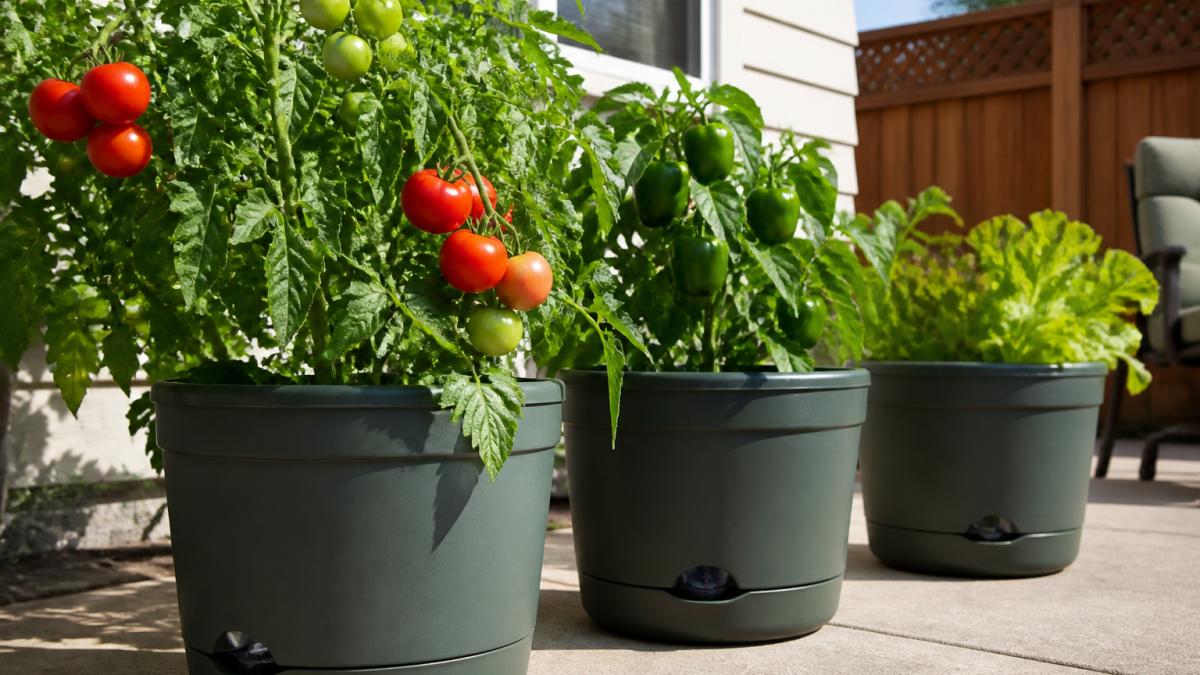
Tomatoes are the classic choice.
Peppers need warmth and consistent moisture.
Leafy greens, lettuce, spinach, kale, grow quickly in shallow containers.
Herbs like basil, parsley, and cilantro thrive in self-watering setups; basil especially hates drying out.
Bush beans and peas produce well in 10 to 12-inch containers.
Avoid plants that prefer dry periods between waterings, like succulents or ornamental grasses.
Potting Mix, Maintenance, and Climate Considerations
Use a high-quality potting mix, not garden soil. Container soil must drain well while holding enough moisture for the self-watering system to work; garden soil compacts and blocks capillary action.
Refill based on weather and plant size: every 2 to 3 days in hot, dry conditions; weekly in cool weather or for slow-growing herbs. Check the water-level indicator, if present, before watering. Wind accelerates evaporation, so a windy balcony needs more frequent refills, and afternoon shade helps in hot climates.
Fertilize every 2 to 3 weeks with a balanced, water-soluble fertilizer. Self-watering containers leach nutrients more slowly than traditional pots, but consistent moisture means faster growth and higher nutrient demand.
Selecting Durable Self-Watering Containers That Last
Durability matters, a container that cracks after one winter defeats the purpose. Polypropylene and resin resist UV damage and freeze-thaw cycles and don't degrade like cheaper alternatives.
The LAP 12 inch Pot with Saucer or Hanger uses high-impact polypropylene made from over 90% recycled plastic. This material withstands freeze-thaw cycles common in northern climates without cracking.
In harsh freeze-thaw climates, thicker walls absorb stress better: 3 to 4 millimeters resists cracking far better than thinner alternatives, so ask about wall thickness when comparing options. Choose containers made in the USA when possible. Beloit Plastics LLC manufactures all containers in Wisconsin, ensuring they're built to handle freeze-thaw cycles and temperature swings typical across the country.
Knowing how to choose self-watering containers for vegetables turns gardening from a daily chore into a manageable routine. Our selection of durable, U.S.-made self-watering containers provides the reliability and longevity you need season after season.

Frequently Asked Questions
How do self-watering containers work for growing vegetables?
Self-watering containers use a reservoir system that holds water at the base. Water moves upward through capillary action via a wick or porous material, keeping the growing medium consistently moist without daily watering. The saucer or integrated reservoir catches excess drainage and provides a steady water supply, reducing watering frequency while supporting healthier root systems and more stable plant growth.
What size self-watering container do vegetables need?
Container size depends on the vegetable's root depth and mature size. Leafy greens and herbs need 6-8 inches of depth with 8-10 inch diameter containers. Peppers and smaller tomatoes require 10-12 inch containers with 10-12 inches of depth. Larger tomato varieties need 14-16 inch containers with 12-14 inches of depth and adequate reservoir capacity to support consistent moisture during hot weather.
Which vegetables grow best in self-watering containers?
Tomatoes, peppers, lettuce, spinach, kale, herbs (basil, parsley, cilantro), and bush beans thrive in self-watering containers. These crops benefit from consistent moisture that the reservoir system provides. Avoid root vegetables like carrots and beets, which prefer drier soil and can rot in overly moist conditions. Cucumbers and squash can work in larger containers with proper drainage management.
How often should I refill the reservoir in a self-watering container?
Refill frequency depends on temperature, plant size, and season. In warm weather, check the water level every 3-5 days; in cooler seasons, every 7-10 days. Most self-watering systems include a fill opening or indicator so you can monitor levels easily. Stop refilling if the reservoir overflows, and ensure the overflow opening remains clear to prevent root rot from excess standing water.