 how-to
Do Plastic Planters Crack in Winter? What You Need to Know
Table of Contents
- Why Plastic Planters Crack in Winter
- Which Materials Survive Winter Best
- How to Winterize Outdoor Pots Step by Step
- Drainage Hole Maintenance and Soil Saturation
- Choosing Durable Plastic Planters for Sale
- Repairing Cracked Planters vs. Replacing Them
- Frequently Asked Questions
Last Updated: September 15, 2026
Why Plastic Planters Crack in Winter
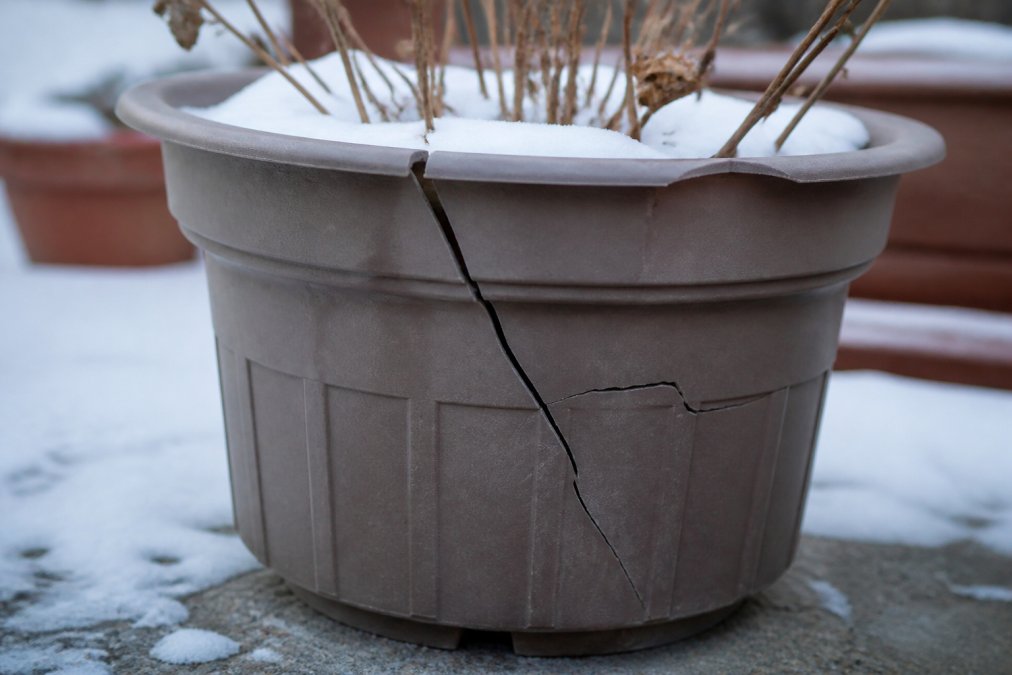
Yes, plastic planters crack in winter, and the reason is water, not cold alone. Plastic handles freezing temperatures well; what destroys a pot is trapped moisture expanding as it turns to ice, pushing outward until the walls split.
Below: how freeze-thaw cycles work, which materials hold up, and how to winterize pots before the first frost.
The Freeze-Thaw Cycle and Moisture Expansion
The freeze-thaw cycle, water in soil freezing overnight and thawing during the day, is the single biggest cause of cracked containers. Water expands when it freezes, and that pressure has to go somewhere.
A common mistake is assuming dry-looking soil is safe. Porous materials hold moisture deep in the mix long after the surface feels dry. When that hidden water freezes, it pushes against the walls from inside. Thin-walled pots crack first; thicker pots with flexible walls, like polyethylene and polypropylene, bend and recover.

Thermal Shock and Temperature Fluctuations
Thermal shock is the stress a material undergoes when its temperature changes rapidly, compounding moisture damage. A pot in direct afternoon sun can warm well above air temperature, then drop below freezing the same night.
Brittle materials handle that swing poorly: terracotta and glazed ceramic develop hairline cracks that widen each cycle. Plastic flexes with temperature fluctuations, which is why a well-made plastic planter usually outlasts ceramic in a cold climate.
Which Materials Survive Winter Best
Resin and polypropylene planters survive winter best, followed by polyethylene; terracotta and glazed ceramic fail fastest. The difference is flexibility, wall thickness, and water absorption.
Here's how the common container materials compare for cold-weather durability:
| Material | Winter Durability | Main Weakness | Best For |
|---|---|---|---|
| Polypropylene | High | Can fade without UV stabilizers | Year-round outdoor use |
| Polyethylene | High | Softer, less rigid shape | Large planters, cold climates |
| Resin (composite) | Medium-High | Varies widely by filler content | Decorative pots, mild winters |
| Terracotta | Low | Porous, absorbs water, brittle | Indoor use, dry climates |
| Glazed ceramic | Low | Cracks under thermal shock | Sheltered patios |
Material-Specific Durability Ratings
"Plastic" is a category, not a specification. Two identical-looking pots can behave completely differently after a hard freeze, and the difference lives in the polymer and wall thickness. Here's how the plastics break down for cold weather:
- High-density polyethylene (HDPE). The workhorse of cold-climate containers: flexible well below freezing, impact-resistant, and non-absorbent. Its weakness is stiffness, large HDPE pots can bow under wet soil, so they need thicker walls or a rolled rim. Look for it in large tubs, half-barrels, and nursery pots.
- Polypropylene (PP). The best all-around balance for outdoor planters: more rigid than HDPE so it holds its shape, yet flexible enough to absorb freezing soil's expansion instead of splitting, with very low moisture absorption. Its vulnerability is UV, without stabilizers, PP turns chalky and brittle after a few seasons of sun, and brittle plastic cracks far more easily in cold. A UV-stabilized PP pot lasts many winters; an unstabilized one may not survive two.
- Thin-walled injection-molded plastic. This category gives plastic planters a bad reputation. Made from generic blends, sometimes recycled content of unknown quality, with walls as thin as a sixteenth of an inch, they have almost no flex or reserve strength, a single freeze-thaw cycle can split them rim to base. If a pot flexes like a disposable cup when squeezed, keep it indoors or sheltered.
- Resin and composite blends. Resin is a marketing term, not a polymer. Some resin planters are dense, fiber-reinforced composites that perform like HDPE; others are thin decorative shells. Filler content and wall thickness determine everything, so ask what the resin is made of before trusting a frost-proof claim.
A quick field test: press your thumbnail into the inside wall of an empty pot. A permanent dent means soft plastic that will deform under ice pressure; barely a mark means rigid and more likely to crack than flex. The sweet spot flexes slightly and springs back.
Why Terracotta and Ceramic Fail Faster
Terracotta and unglazed ceramic are porous: they absorb water through the walls themselves, not just the soil, and that moisture freezes and expands inside the material.
Glazed ceramic avoids porosity but introduces thermal shock: the glaze and clay body expand at different rates as temperatures swing, and the mismatch shows up as cracks. Both materials suit a covered porch or indoor windowsill, but both are a gamble in a cold climate without serious winter protection.
How to Winterize Outdoor Pots Step by Step
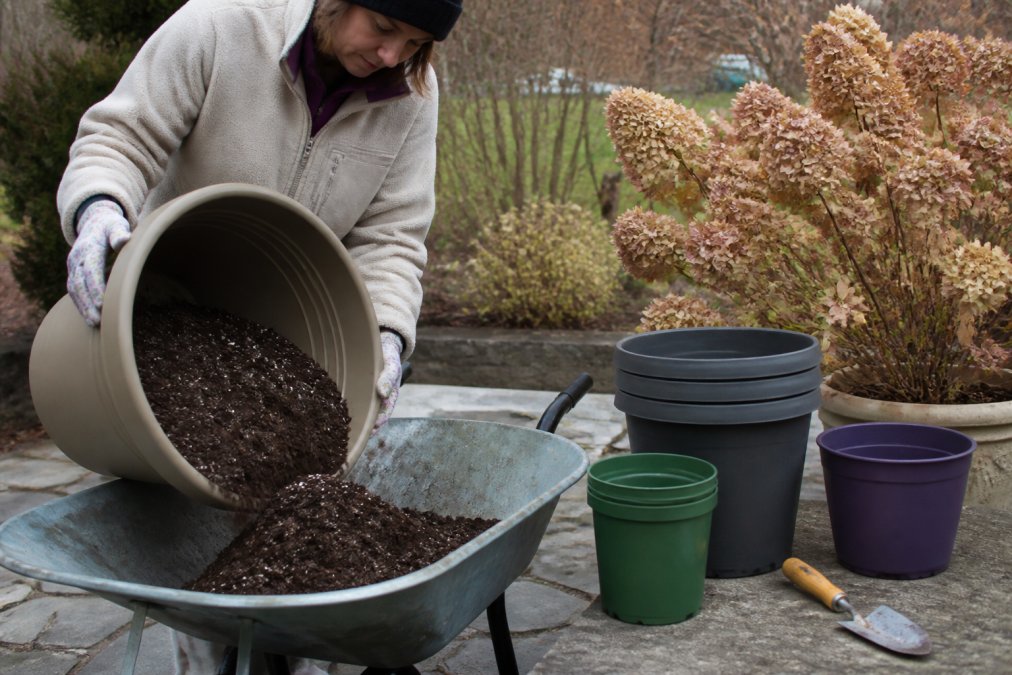
Winterizing outdoor pots takes about 30 minutes per container and comes down to two things: getting water out and keeping the pot out of the freeze-thaw cycle.
Step 1: Clear Soil and Check Drainage Holes
- Empty the soil into a wheelbarrow or compost bin. Old potting mix loses structure and shouldn't be reused.
- Scrub the inside with warm water and mild soap; skip harsh chemicals that could linger in the plastic.
- Inspect every drainage hole, a blocked hole traps water at the bottom, exactly where freeze damage starts.
- Clear clogged holes with a skewer or stiff brush. If the pot has no drainage holes, drill them before storing.
Step 2: Clean, Dry, and Store Your Pots
- Air-dry pots upside down for a full day so no water sits in the rim or base.
- Stack loosely with newspaper between pots; tight stacks trap moisture and can crack rims under their own weight.
- Store in a garage, shed, or basement above freezing.
- If a pot stays outside, elevate it on pot feet so it never sits in standing water, and move it against a wall out of direct wind.
Drainage Hole Maintenance and Soil Saturation
Drainage hole maintenance is the most overlooked part of pot care, and it decides whether a planter survives the season. Clear drainage sheds excess water; a blocked hole turns the pot into a bucket.
Saturated mix holds more water than the pot can drain, and that water expands with the first hard freeze. Check drainage before winter, not after. Empty saucers rather than letting water sit, and use pot feet to lift the base off cold surfaces where ice forms.
Choosing Durable Plastic Planters for Sale
Durable plastic planters for sale should be judged on wall thickness, material type, and UV resistance, not looks. A thick polypropylene pot with clear drainage holes outlasts a thin decorative shell every time.
A few things to check before buying:
- Material listed by name. "Plastic" is not enough, look for polypropylene or polyethylene.
- Wall thickness. Squeeze the rim; if it flexes easily and feels papery, it won't hold up.
- UV stabilizers. Unprotected plastic turns brittle from UV degradation, making it far more likely to crack in cold.
- Drainage holes. Non-negotiable for anything staying outdoors.
- Made in the USA. Domestic manufacturing means domestic quality standards and easier support.
Our Austin Planter line uses 95% recycled polypropylene with drainage holes and matching saucers, priced from $16.45 for a 5-pack.

U.S. Environmental Protection Agency guidance on recycling plastics
Repairing Cracked Planters vs. Replacing Them
How to Patch a Hairline Crack in a Plastic Planter
When to Replace Instead
Replace the pot instead when:
Frequently Asked Questions
Do plastic planters crack in winter?
Yes, they can. Plastic planters crack in winter when water trapped in the soil or drainage holes freezes and expands. That expansion pressure pushes outward against the container walls. Thin or brittle plastic, especially pots that have weakened from UV degradation, splits along the rim or base. Thick polypropylene and polyethylene pots resist this far better because they flex slightly instead of fracturing. Emptying soil and storing pots in a garage or storage shed removes the main cause.
How cold is too cold for outdoor plastic planters?
The bigger factor for plastic planters is not the lowest temperature but how often it swings above and below 32°F. Empty your pots or move them into a garage before the first hard freeze to prevent damage.
What materials are most resistant to winter cracking?
Polypropylene and polyethylene are the most winter-resistant plastics because they stay flexible in cold weather. Resin planters made from these materials handle freeze-thaw cycles well. Terracotta and ceramic are porous materials that absorb moisture, so they crack far more easily. Fiberglass and concrete also resist frost damage but weigh much more. If you want durable plastic planters for sale that survive northern winters, look for thick-walled polypropylene.
How can I store plastic planters to prevent winter damage?
Clean each pot with mild soap, let it dry completely, then stack them loosely in a garage, storage shed, or basement. Avoid stacking them tightly, since trapped moisture between nested pots can freeze and cause hairline cracks. If you must leave pots outside, empty the soil, flip them upside down, and raise them on pot feet or bricks so water drains rather than pooling. Never leave soil sitting in a planter through winter.
Cold weather exposes every shortcut in a planter's construction, and most cracked pots fail for the same preventable reason: trapped water and thin walls. Beloit Plastics LLC makes planters from thick, 95% recycled polypropylene with drainage holes and matching saucers, all made in the USA, with free shipping and 30-day returns. Get started with Beloit Plastics LLC and give your patio planters a set that survives every season.