 blog
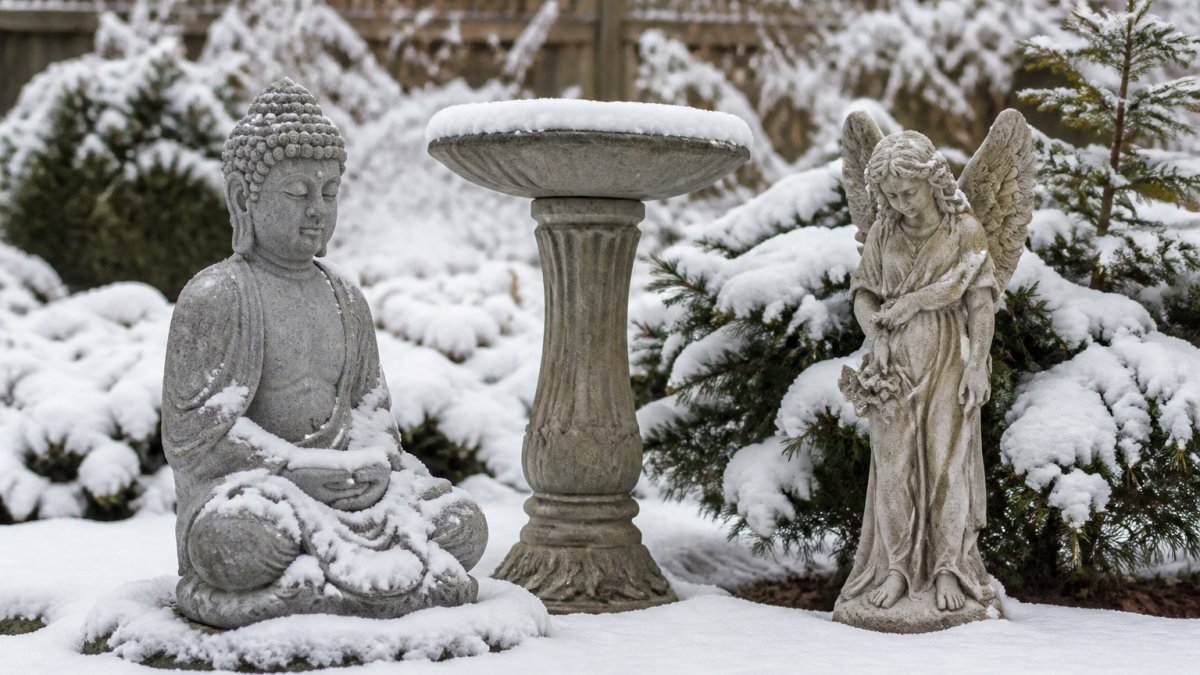
Best Weather Resistant Garden Statues for Winter
Last Updated: October 29, 2026
Quick Summary
The best weather resistant garden statues for winter are made from dense, low-porosity materials like cast stone, bronze, aluminum, and quality resin, because trapped water and freeze-thaw cycles cause the damage, not cold alone. Seal porous materials such as concrete and cast stone annually with a penetrating acrylic sealant before the first freeze.
- Water trapped inside a material causes winter damage through freeze-thaw cycles and spalling.
- Seal concrete and cast stone only on a dry surface with daytime temperatures above freezing for 24 hours.
- Light resin pieces under 15 pounds need a weighted base, ground anchor, or sheltered placement.
- Keep rock salt and de-icing products off statues; use sand or CMA de-icer on nearby walkways.
- Never pour hot water on a frozen statue, as thermal shock can crack stone and warp resin.
Table of Contents
- Why Winter Destroys Some Garden Statues and Not Others
- Best Materials for Outdoor Statues That Handle Frost
- Concrete Garden Statues in Winter: Durable but Not Indestructible
- Resin Outdoor Statues: Lightweight, Weather-Resistant, and Budget-Friendly
- Winter Care for Garden Statues: A Season-by-Season Checklist
- Placement, Weight, and Stability Before the First Freeze
- Repairing and Restoring Winter-Damaged Statues
- Choosing Winter-Ready Garden Accents for Your Space
- Frequently Asked Questions
Why Winter Destroys Some Garden Statues and Not Others
The best weather resistant garden statues for winter are the ones that survive water, not cold, and that is exactly what the best weather resistant garden statues for winter have in common.
A statue that fails in February usually failed in November, when water first got inside it. If you are wondering whether plastic planters crack in winter, the same freeze-thaw and porosity rules apply to plastic garden items.
How Freeze-Thaw Cycles and Spalling Work
A freeze-thaw cycle is the repeated process of water entering a material's pores, freezing, expanding, and then thawing as temperatures rise and fall. Water expands as it freezes, and that expansion pushes outward on whatever contains it.
Do this enough times and the surface starts to flake, pit, and break away. That flaking has a name: spalling. A statue can look perfect in October and shed chunks by March, and the damage is almost always internal before it is visible.
Porosity: The Number That Predicts Survival
Porosity is the measure of how much empty space a material contains for water to fill. It is the single best predictor of whether a statue survives winter, and most product listings never mention it.
Dense materials leave water nowhere to sit. Porous materials soak it up like a sponge and pay for it at the first hard freeze.
Best Materials for Outdoor Statues That Handle Frost
The best materials for outdoor statues are dense, low-porosity options: cast stone, bronze, aluminum, and quality resin. Each handles frost differently, and each has trade-offs in weight, cost, and upkeep. Here is how the main categories compare before you spend money.
| Material | Frost Resistance | Weight | Maintenance | Best For |
|---|---|---|---|---|
| Cast stone / concrete | Good if sealed | Very heavy | Reseal annually | Anchored focal points |
| Bronze / aluminum | Excellent | Moderate | Occasional wax | Long-term investment |
| Quality resin | Very good | Light | Wipe clean | Balconies, renters |
| Polyurethane | Very good | Light | Wipe clean | Detailed lightweight pieces |
| Terracotta | Poor | Light | Minimal | Indoors or mild climates |
Comparing Metal, Stone, and Resin Durability
Metal wins on longevity. Bronze and aluminum resist corrosion and frost because they absorb almost no water, and a metal finish develops a patina over time that many gardeners want.
Stone, including cast stone and concrete, is dense and heavy, which makes it stable in wind but vulnerable at the surface if unsealed. Resin and polyurethane are the practical middle ground: light enough to move alone, and formulated to resist moisture when the manufacturer builds them for outdoor use.
Concrete Garden Statues in Winter: Durable but Not Indestructible
Concrete garden statues in winter are durable, but only if you seal them.
Watch out: sealing a damp statue traps moisture inside, which is worse than leaving it bare. Apply sealant only to a dry surface on a dry day, and let it cure fully before temperatures drop.
Weight is the hidden advantage here. If you are comparing heavy, porous materials against lighter options, our roundup of frost resistant outdoor planters covers the alternatives.
Resin Outdoor Statues: Lightweight, Weather-Resistant, and Budget-Friendly
Resin outdoor statues are the best choice for anyone who moves decor seasonally or gardens on a balcony.
That lightness cuts both ways. Resin is easy to reposition alone, which matters if you store pieces in a garage over winter.
- UV protection matters: cheap resin chalks and fades without it
- Wall thickness signals quality; thin resin cracks under impact
- Weighted bases keep tall pieces upright in storms
For apartment dwellers with a few herbs and a small statue, resin is not overkill. It is the right tool.
Winter Care for Garden Statues: A Season-by-Season Checklist
Winter care for garden statues comes down to four seasonal tasks: seal in fall, inspect in winter, clean in spring, and repair in summer. A routine built around the freeze-thaw calendar prevents most damage before it starts, but the steps differ by material, and generic advice is where most statues get ruined.
Fall: Seal and Stage Before the First Freeze
Seal porous materials, cast stone, concrete, terracotta, only when the surface is dry and daytime temperatures will stay above freezing for at least 24 hours so the coating can cure.
Move lightweight resin and polyurethane pieces into a garage or shed if you have space. For pieces that stay outside, lift them an inch off bare soil using a brick, paver, or plastic foot so meltwater drains instead of bonding the base to frozen ground.
First Freeze: Lock In Stability
Before the ground hardens, check that every statue sits level and does not rock. A piece that wobbles in November will tip when the soil heaves in January. Reset the base on compacted gravel or a paver, not loose mulch, and confirm that downspouts and roof drip lines do not empty onto the statue.
Winter: Inspect Without Disturbing
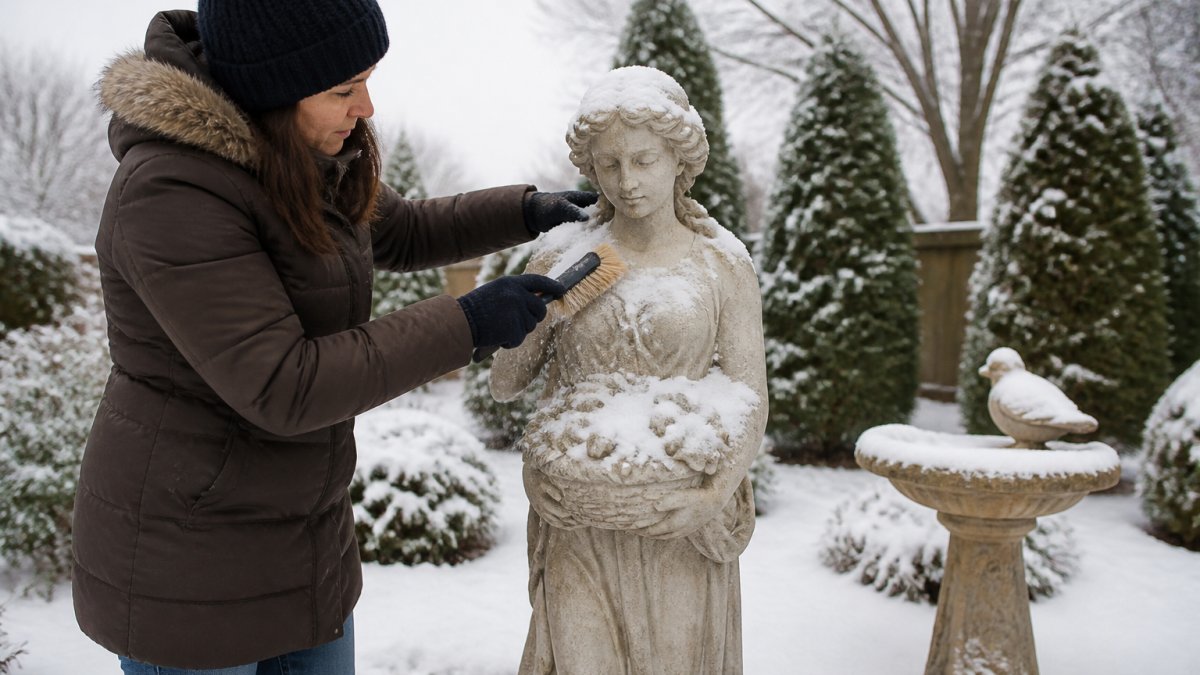
Brush snow off gently with a soft broom, never chip ice with a shovel or tool, which gouges stone and scratches metal finishes. After an ice storm, check for hairline cracks at the base and joints; that is where freeze-thaw stress concentrates. Keep rock salt and de-icing products off statues entirely, chlorides pit concrete and dull bronze patina. If you must treat a nearby walkway, use sand or a calcium magnesium acetate (CMA) de-icer, which is less aggressive on masonry and metal.
Spring: Inspect and Clean by Material
- Cast stone and concrete: look for surface flaking (spalling) and hairline cracks; clean with mild soap and a soft brush, then let dry fully before any touch-up.
- Bronze and aluminum: wash with mild soap, dry, and apply a thin coat of paste wax to protect the patina; skip abrasive pads.
- Resin and polyurethane: wipe with a damp cloth; check for chalky fading that signals UV breakdown.
Summer: Repair and Reseal
Summer is the right window to repair because porous materials need a dry, warm surface to cure. Fill chips with color-matched patching compound, let it cure per the label, then reseal. Reseal cast stone and concrete annually; reseal wood or composite accents every one to two years depending on exposure.
For a full cold-season routine, our guide to outdoor planters for winter walks through protecting containers alongside decor.
Placement, Weight, and Stability Before the First Freeze
Placement decisions made in autumn determine whether a statue is still standing in March. Three factors drive stability: weight, base contact, and wind exposure. Most winter statue failures are not material failures, they are tipping and settling failures, and they are preventable with a few concrete steps.
Match Anchor Strategy to Weight
Heavy cast stone and concrete pieces (often 50 to 200 pounds depending on size) anchor themselves on a level surface. Light resin and polyurethane pieces, frequently under 15 pounds, need help. Three practical options:
- Weighted base: fill a hollow base with play sand or pea gravel, or set the statue on a concrete paver to lower its center of gravity.
- Ground anchor: for tall pieces, drive a galvanized landscape stake beside the base and tie it with UV-resistant cord; do not drill into the statue itself.
- Sheltered placement: move tall, light pieces to a corner protected from prevailing winter wind, or bring them inside for the season.
Prepare the Base, Not Just the Spot
A statue set on loose mulch or soft soil will settle unevenly once the ground freezes and thaws. Excavate a few inches, compact a base of crushed gravel or sand, and set a paver or stone foot on top. The statue should sit flat with full contact, no rocking. On decks and balconies, use a rubber or cork pad under the base to protect the surface and add friction.
Respect Wind and Water Paths
- Keep tall pieces out of prevailing wind paths; a light statue with a broad surface acts like a sail in a winter gust.
- Avoid low spots where meltwater pools and refreezes; standing water at the base accelerates spalling and heaving.
- Leave a gap between statues and walls so water drains and air moves; a statue pressed against siding stays damp longer.
Thermal expansion is the quiet culprit behind loosened joints and hairline cracks. Materials that flex with temperature swings survive longer than rigid ones set into unforgiving surfaces. A statue that is anchored, level, and draining will outlast an identical statue that is merely set down and forgotten.
Repairing and Restoring Winter-Damaged Statues
Most winter damage is fixable if you catch it early. Small chips and surface spalling can be repaired with color-matched patching compound, then resealed to stop water re-entry.
Deep structural cracks are a different story. If a piece is crumbling at the base or splitting through the body, replacement usually costs less than repair.
Restoration also means protection. Clean the repaired area, let it dry completely, and reapply sealant.
Choosing Winter-Ready Garden Accents for Your Space
Choosing winter-ready accents starts with one question: will this piece hold up where I live?
Decorative versus functional matters here.
When you are ready to shop, browse our outdoor living decor collection to find pieces built for every season.
Winter will test every piece of decor on your property, and the pieces that fail are usually the ones nobody thought about in October.
Frequently Asked Questions
What material is best for garden statues in winter?
Resin and cast stone are the most forgiving choices for cold climates. Resin outdoor statues resist moisture absorption and thermal expansion, so freeze-thaw cycles rarely crack them, and they are light enough to move before a storm. Cast stone and concrete hold up well too but need a sealed surface and a dry, elevated base. Bronze lasts decades but costs the most. Avoid unglazed ceramic and terra cotta outdoors in freezing zones, since trapped water expands and splits them.
Can concrete garden statues stay outside in freezing weather?
Yes, if they are sealed and sit on a base that drains. Concrete garden statues in winter fail for two reasons: water soaking into pores and refreezing, and standing water pooling at the base. Apply an acrylic sealant before the first freeze, set the statue on gravel or a paver so meltwater runs off, and avoid placing it where snow piles up against it. Hairline cracks can be patched with exterior concrete filler in spring.
Are resin garden statues weather-resistant enough for a harsh winter?
Resin outdoor statues handle winter well because the material does not absorb water the way concrete or clay does. Look for UV-stabilized resin with a painted or powder-coated finish, since cheap resin can fade or chalk after several seasons of sun. Resin also weighs far less, which makes it easier to bring inside before an ice storm or move to a sheltered spot. Check the base for drainage holes so water cannot collect inside a hollow piece.
How do you keep outdoor statues from tipping over in strong winds?
Weight and footprint decide stability. A wide, flat base resists tipping better than a tall narrow one, and hollow statues should be filled partway with sand or gravel to add ballast without blocking drainage. Set the statue on level ground, not loose mulch, and stake or anchor larger pieces with a ground anchor kit. Before winter storms, move lightweight resin pieces to a garage or against a wall. Tall, thin statues in exposed spots are the first to go over.