 comparison
Eco Friendly Recycled Plastic Planter Options That Last
Last Updated: October 30, 2026
Quick Summary
A recycled plastic planter is a container molded from post-consumer or post-industrial plastic waste, and it is worth buying when the recycled content is verified, the walls are thick enough to resist frost, and the drainage works. Look for a stated recycled percentage backed by third-party verification, and skip pots that will not name a figure.
- Thin plastic under about 2 millimeters flexes in heat, cracks at the rim, and splits after a hard freeze.
- Recycled polypropylene resists cracking when thick-walled and lasts several seasons or more outdoors.
- The Global Recycled Standard is the certification most buyers look for because it requires third-party verification.
- Cleaning plastic planters takes about fifteen minutes per pot and prevents mineral buildup that blocks drainage.
- Our Austin Planter pots are made from 95% recycled polypropylene with drainage holes already in the base.
Table of Contents
- What Makes a Recycled Plastic Planter Worth Buying
- Recycled Plastic vs. Biodegradable Planters: Which Holds Up
- Planters Made From Recycled Plastic Bottles and Reclaimed Materials
- Verified Recycled Content: Reading Sustainability Claims
- Durability and Real-World Performance in Freeze-Thaw Climates
- How to Clean Plastic Planters Between Seasons
- Sizing and Plant Pairing for Balconies and Patios
- Choosing Your Recycled Planter Set From Beloit Plastics
- Frequently Asked Questions
What Makes a Recycled Plastic Planter Worth Buying
A recycled plastic planter is a container molded from post-consumer or post-industrial plastic waste, and it earns its place on your patio when the recycled content is real, the walls are thick enough to resist frost, and the drainage works. The category is full of vague green claims that do not survive a single winter. Three things separate a planter worth buying from one you replace every spring: wall thickness, verified recycled content, and drainage holes that will not clog.
Thin plastic is the failure point. A pot with walls under about 2 millimeters flexes in heat, cracks at the rim, and splits along the seam after a hard freeze.
If you want the full breakdown of why bargain pots fail, read why cheap plastic planters fail before you spend anything.
Recycled Plastic vs. Biodegradable Planters: Which Holds Up
Recycled plastic wins on lifespan; biodegradable planters win on disposal, and that trade-off decides most purchases. Biodegradable and compostable pots are designed to break down, which suits some uses and not others.
Here is how the main material types compare on the factors that matter outdoors.
| Material | Lifespan Outdoors | Freeze-Thaw | Recyclable at End of Life | Best For |
|---|---|---|---|---|
| Recycled polypropylene | Several seasons or more | Resists cracking when thick-walled | Yes | Patios, balconies, year-round use |
| Biodegradable / compostable | One growing season | Poor | No, breaks down | Seed starting, transplanting |
| Biocomposite (rice husk, bamboo) | Two to three seasons | Moderate | Usually not | Sheltered porches |
| Terracotta | Years, but chips | Poor, absorbs water | No | Indoors, dry climates |
Recycled plastic is not compostable. Its environmental case rests on keeping existing plastic in use for years rather than on breaking down.
Planters Made From Recycled Plastic Bottles and Reclaimed Materials
Planters can be made from recycled plastic bottles and food tubs, which reprocess into rigid pots. The reclaimed material gets cleaned, shredded, melted, and molded. What you get is a container that behaves like virgin plastic but diverts waste from landfill.
Reclaimed materials extend beyond bottles.
Our Austin Planter pots are made from 95% recycled polypropylene, with drainage holes already in the base and no drilling required.
Verified Recycled Content: Reading Sustainability Claims
Verified recycled content means the percentage on the label is backed by a documented supply chain, not a marketing phrase. The Global Recycled Standard is the certification most buyers look for, because it requires third-party verification of recycled material through the production chain. A planter labeled "eco-friendly" with no percentage and no certifying body tells you nothing.
Ask three questions before you trust a claim:
- What percentage is recycled, stated as a number?
- Which material is it, and is it recyclable at end of life?
- Who verified the claim, and can you find that verifier?
Watch out: "made with recycled materials" can mean 5% recycled content. If the listing will not state a figure, assume the number is low.
Durability and Real-World Performance in Freeze-Thaw Climates
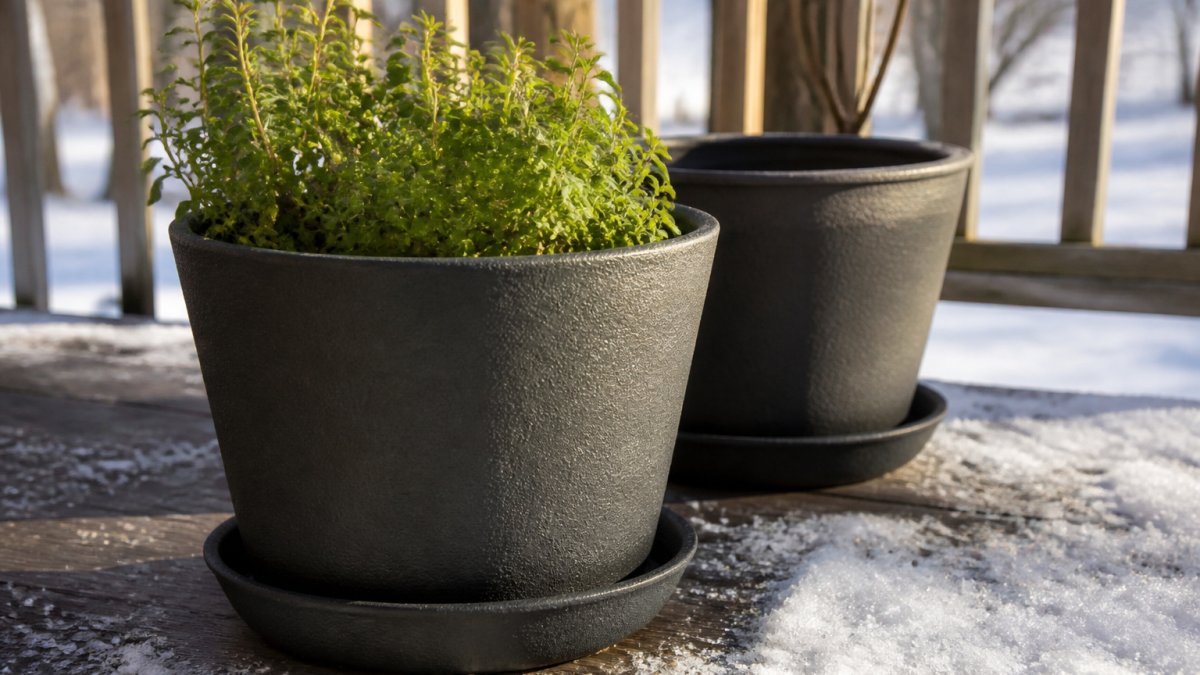
Freeze-thaw cycles are one of the harder tests a planter faces. Water seeps into microscopic cracks, freezes, expands, and widens those cracks until the pot fails. Thick walls resist that pressure, and a pot that flexes slightly in cold weather is behaving normally, not failing.
If you garden where winters swing above and below freezing repeatedly, read do plastic planters crack in winter for the full explanation of what actually causes cracking.
How to Clean Plastic Planters Between Seasons
Cleaning plastic planters takes about fifteen minutes per pot and prevents the mineral buildup that dulls color and blocks drainage. Empty the old soil, scrub the inside with warm water and a mild dish soap, and rinse thoroughly. Skip bleach on colored pots; it can fade the finish.
Austin Planter Plastic Flower Pots with Saucers, 4 inch, Lime Green, 5 Pack →
Hard water leaves white crusty rings that soap will not touch. A diluted white vinegar soak loosens calcium deposits, then a soft brush lifts them off. For a step-by-step method, see how to remove hard water stains from planters.
- Scrub drainage holes with a bottle brush so they stay open
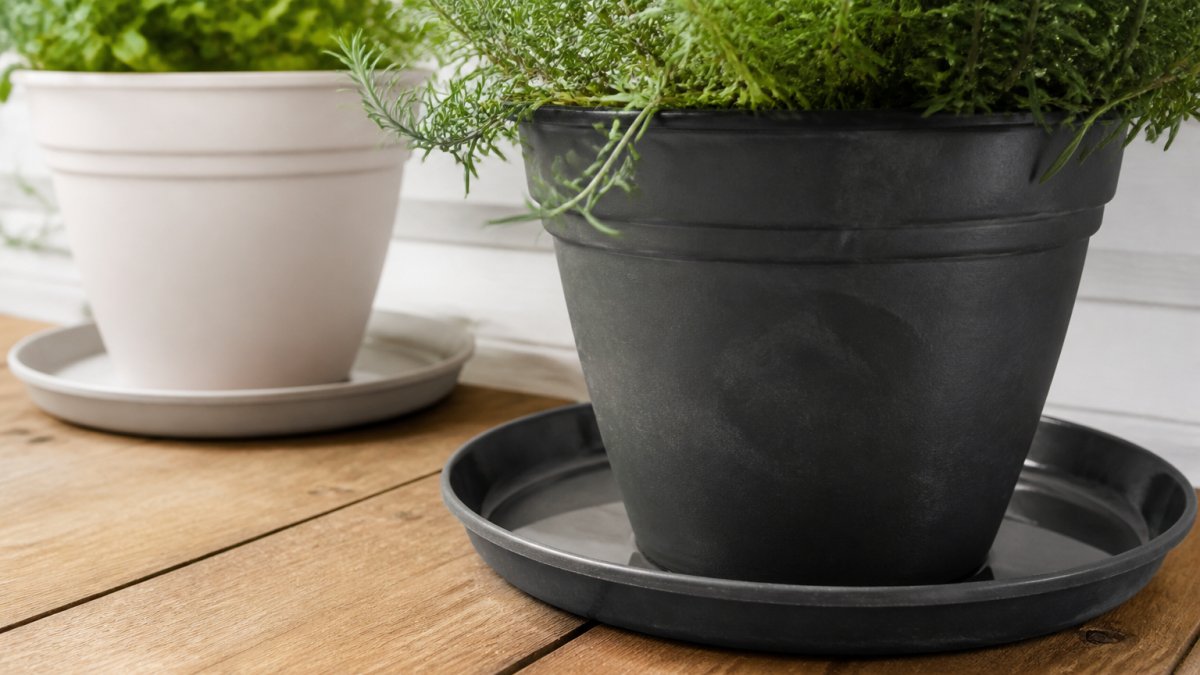
- Rinse saucers separately; grit collects in the lip
- Let pots dry fully before refilling to avoid mold
Sizing and Plant Pairing for Balconies and Patios
Sizing decides whether a planter works, and most balcony gardeners buy too large. The right pot is the smallest one that holds the root mass a plant will build in one season, plus a little headroom. Oversized pots waste soil, stay wet too long, and are heavy to move.
Use this practical sizing guide to match pot volume and depth to common balcony and patio plants.
| Plant type | Minimum pot diameter | Minimum soil depth | Drainage needs | Notes |
|---|---|---|---|---|
| Herbs (basil, parsley, mint) | 4 to 6 inches | 6 inches | One central hole or several small holes | Mint spreads; give it its own pot |
| Small succulents | 3 to 4 inches | 3 to 4 inches | Fast-draining mix, open holes | Shallow roots; avoid overwatering |
| Trailing annuals (petunias, ivy geranium) | 9 to 12 inches hanging | 8 inches | Holes plus a saucer or drip tray | Hanging pots dry faster; check weight limits |
| Compact tomatoes and peppers | 12 to 14 inches | 12 inches | Large holes, saucer recommended | Determinate varieties suit containers best |
| Leafy greens and lettuce | 6 to 8 inches | 6 inches | Moderate drainage | Shallow-rooted; succession planting works well |
| Small shrubs and dwarf evergreens | 14 to 18 inches | 14 inches | Strong drainage, pot feet help | Heavy when wet; plan for winter protection |
Depth matters more than width for plants with taproots or deep root systems, such as tomatoes and carrots. Width matters more for shallow-rooted spreaders like herbs and succulents. A pot that is too shallow dries out fast and constricts roots; a pot that is too deep holds water at the bottom and can sour the soil.
For a small balcony, three or four 4 inch pots with saucers give you herbs and color without crowding the railing. Hanging pots free up floor space entirely, but check the railing or hook rating before you hang a wet 9 inch pot, which can weigh considerably more than the empty pot.
Drainage is part of sizing. Every pot needs at least one open hole, and a saucer should catch runoff without letting the pot sit in standing water. If a decorative pot has no holes, use it as a cachepot and keep the planted pot inside it.
Our guide to the best planters for apartment balconies covers pairing and layout in more detail. Pair sun-loving herbs with a south-facing rail and shade-tolerant foliage with a north wall. Group pots by water need so you are not soaking drought-tolerant succulents to keep ferns happy.
Choosing Your Recycled Planter Set From Beloit Plastics
Our recommendation is simple: start with a matched set of thick-walled recycled polypropylene pots with saucers, sized to your space, and skip anything that will not state its recycled percentage. We mold our Austin Planter line in Beloit, Wisconsin, from 95% recycled polypropylene, with drainage holes in every pot and a drip tray included.
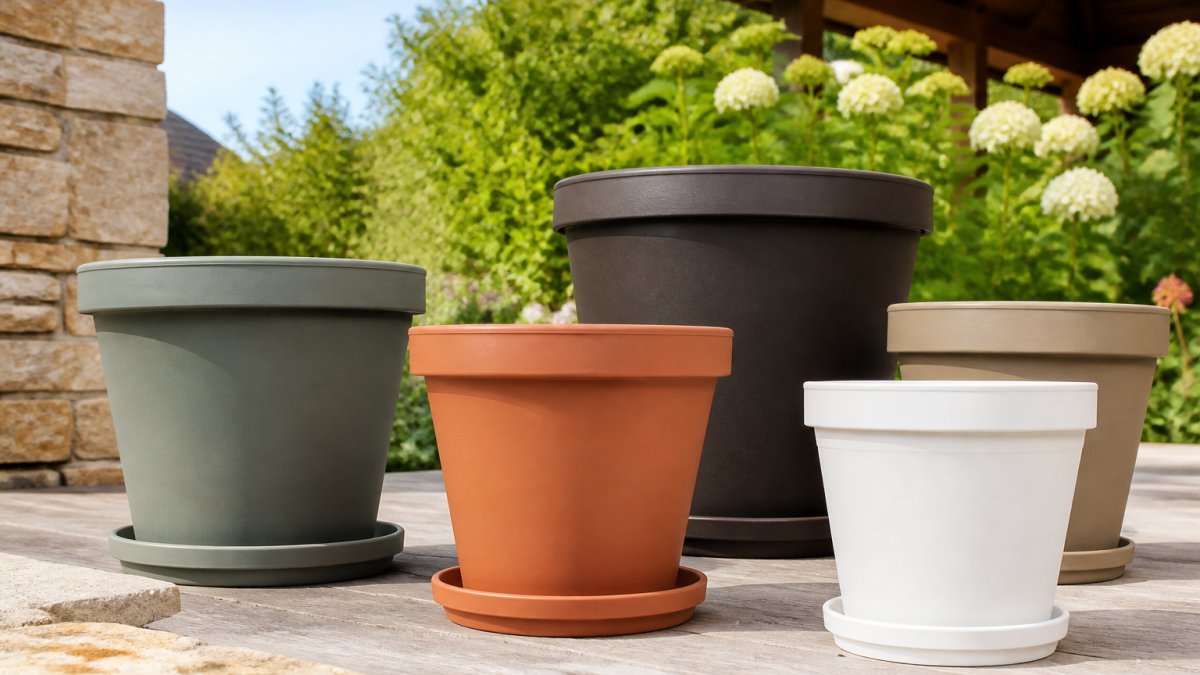
The Austin Planter 4 inch flower pots with saucers in White Granite run $16.45 for a five-pack, and the Lime Green and Terra Cotta versions are $19.99. For hanging space, the 9 inch Terra Cotta Colored hanging pots are $34.25 for five, and the 2 inch Wavy set in Sea Blue is $15.99.

Best for: balcony and patio gardeners who want a durable, made-in-USA set with saucers included. Skip if: you need compostable pots for seedling transplants.
Every order ships free with a 30-day return window.
Frequently Asked Questions
Are recycled plastic planters good for outdoor use?
Yes, when the plastic is thick and UV-stabilized. Look for fade-resistant color and drainage holes built in, since drilling your own weakens the base. A saucer underneath also protects wood decks and concrete from water stains. Beloit Plastics pots are made from 95% recycled polypropylene and are built to last several seasons.
What are planters made from recycled plastic bottles actually made of?
Most are polypropylene or polyethylene regrind collected from post-consumer and post-industrial waste, sometimes including bottle flake. The material is melted and molded into pots, so the finished planter is still plastic, just with a second life. Quality depends on wall thickness and how clean the feedstock was. Ask the seller for a recycled-content percentage and where the material was sourced. A clear number like 95% recycled content tells you far more than a leaf icon on the label.
How do you clean and maintain recycled plastic planters?
Empty the pot, scrub the inside with warm water and a few drops of mild dish soap, and rinse until no soap film remains. Skip bleach on colored pots because it dulls the finish. Use a soft brush on the drainage holes and saucer, then let everything air-dry upside down in the sun. For mineral crust or white fertilizer salts, soak the pot for 20 minutes in a vinegar and water mix, then scrub again. Clean pots at the end of the season so pests and root debris do not overwinter.
Can recycled plastic planters be recycled again at end of life?
Often yes, but check locally. Polypropylene is accepted in many curbside programs, though rigid black plastic is sometimes rejected by sorting equipment. Rinse the pot, remove soil and saucers, and confirm your municipal guidelines before tossing it in the bin. Because a quality recycled planter lasts several seasons, the better environmental move is reuse: repot, hand it to a neighbor, or use it for seed starting. Fewer replacements means less plastic entering the waste stream overall.
The real test of any planter is the second winter, not the first week. Beloit Plastics LLC builds planters thick enough to pass it, with 95% recycled polypropylene construction, drainage holes molded in, and saucers included to protect your surfaces. Get started with Beloit Plastics LLC and put a planter on your patio that is still there next spring.