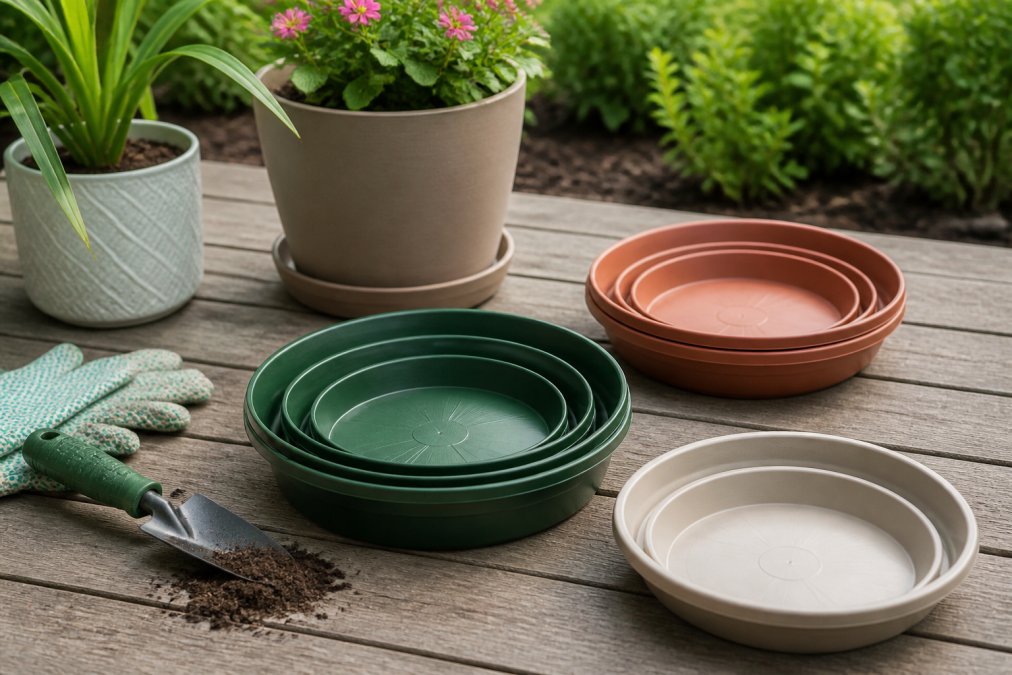
 listicle
Sturdy Garden Saucers for Pots: 2026 Buyer's Guide
Table of Contents
- What Makes a Garden Saucer Sturdy
- How to Choose the Right Size Plant Saucer
- Heavy Duty Plant Saucers for Deck Protection
- Quick Comparison: Size, Price, and Capacity
- Durable Plastic Planters for Sale: Our Full Range
- Why Polypropylene Outperforms Other Materials
- Drainage, Runoff Management, and Root Health
- Frequently Asked Questions
Last Updated: September 19, 2026
What Makes a Garden Saucer Sturdy
A sturdy garden saucer for pots protects your home while managing water and soil spillage. Quality saucers handle temperature swings, heavy pots, and years of daily use without degrading, while cheap options crack in freeze-thaw cycles.
Beloit Plastics LLC manufactures sturdy garden saucers from high-impact polypropylene, engineered to resist brittleness in cold and warping in heat across all climates.
Heavy-duty material construction and durability standards
Heavy-duty construction means the saucer can support substantial weight without flexing or cracking. Thicker, high-impact polypropylene distributes weight evenly and resists deformation, while thin plastic saucers flex under pressure and fail.
The ribbed design lifts the saucer slightly off the floor, protecting hardwood, carpet, and furniture from water rings while adding structural rigidity without bulk.
Color molded throughout the resin won't fade, chip, or expose lighter material under scratches, maintaining appearance over years of use.
UV stabilization for outdoor use
UV rays attack polymer chains, causing brittleness and fading. Without UV stabilization built into the resin, outdoor saucers become chalky and crack within a year or two.
High-quality polypropylene includes UV inhibitors mixed throughout the material, providing permanent protection whether on a sunny patio or shaded porch.
How to Choose the Right Size Plant Saucer
Sizing a saucer requires balancing water capacity, visual balance, and functionality. Too small won't catch overflow; too large looks awkward and wastes space.
Matching saucer diameter to pot base
The saucer's top diameter should be slightly larger than the pot's bottom, allowing even resting and water collection around the edges.
Measure your pot's base diameter and add 1-2 inches for the target saucer size: a 6-inch base needs a 7-8-inch saucer; an 8-inch base needs a 10-inch saucer.
The saucer's tapered design, wider at the top than the bottom, provides more water-catching space. Read the size chart carefully to avoid measurement mismatches.
Saucer depth and water capacity
Depth determines water capacity. Shallow saucers work for plants needing infrequent watering; deeper saucers provide a reservoir for moisture-loving plants or irregular watering schedules.
Drainage holes prevent pooling that leads to root rot and algae.
For indoor hardwood floors, shallow saucers catch spills without standing water hazards. For outdoor patios, deeper saucers provide moisture reservoirs during hot days.
Heavy Duty Plant Saucers for Deck Protection
Water damage to decks and patios is costly and preventable. A sturdy garden saucer for pots protects surfaces from repeated watering and drainage.
Ribbed design prevents water rings and stains
The ribbed underside lifts the saucer slightly off the surface, allowing air circulation that prevents water pooling and the discoloration, rot, and mineral staining it causes.
Indoor vs. outdoor usage considerations
Indoors, saucers protect hardwood floors from water damage and carpeted areas from mold growth.
Outdoors, saucers protect deck finishes from UV damage and water saturation, extending deck life and preventing mineral staining on concrete or pavers.
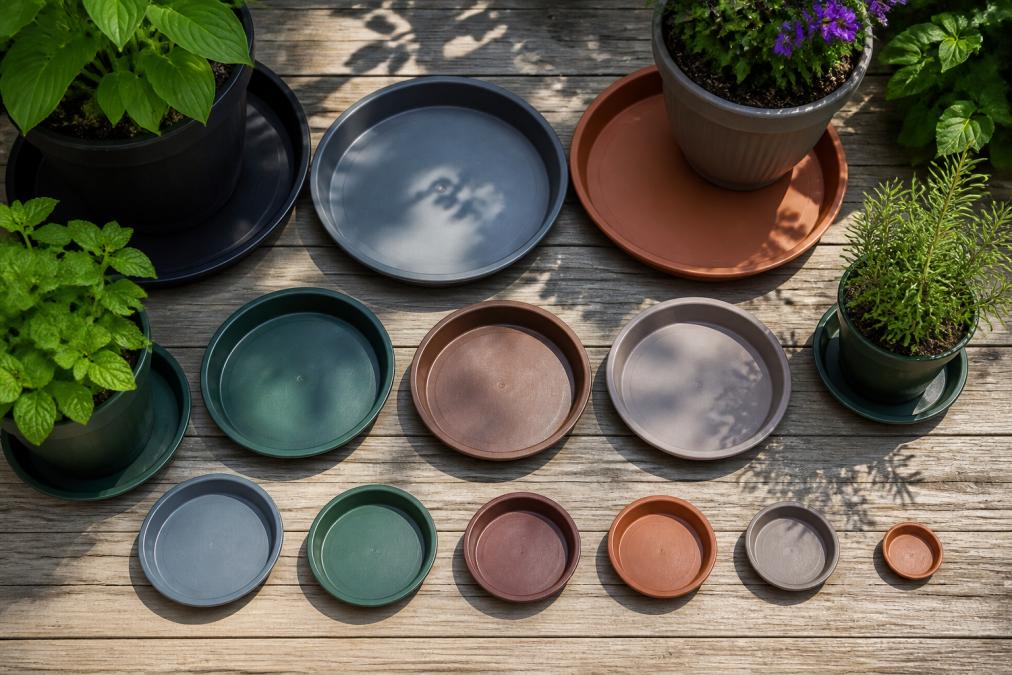
Quick Comparison: Size, Price, and Capacity
| Size | Starting Price | Best For | Water Capacity | Weight |
|---|---|---|---|---|
| 3 inch | $9.99 | Herbs, succulents | Minimal | Very light |
| 4-6 inch | $9.99 | Compact plants | Low | Light |
| 7-8 inch | $9.99-$11.99 | Standard pots | Moderate | Medium |
| 10-12 inch | $12.99 | Large pots | Good | Medium-heavy |
| 16 inch | $16.75 | Very large pots | High | Heavy |
| 21 inch | $29.99 | Extra-large containers | Very high | Heavy |
Durable Plastic Planters for Sale: Our Full Range
Beloit Plastics LLC offers sturdy garden saucers across nine sizes, each engineered with the same durability standards. Choosing the right size requires matching your pot's dimensions and weight load.
10 inch Heavy duty polypropylene Saucer →

Saucer-to-pot compatibility guide
| Saucer Size | Pot Base Diameter | Pot Shape | Max Safe Load | Best For | Price |
|---|---|---|---|---|---|
| 3 inch | 2-2.5 inch | Tapered/round | 3-5 lbs | Herbs, small succulents, propagation | $9.99 |
| 4 inch | 2.5-3.5 inch | Tapered/round | 5-8 lbs | Compact herbs, young seedlings | $9.99 |
| 6 inch | 4-5 inch | Tapered/round | 8-12 lbs | Standard herb pots, small flowers | $9.99 |
| 8 inch | 6-7 inch | Tapered/round | 12-18 lbs | Medium flower pots, small shrubs | $9.99-$11.99 |
| 10 inch | 8-9 inch | Tapered/round | 18-25 lbs | Large flower pots, standard deck planters | $12.99 |
| 12 inch | 10-11 inch | Tapered/round | 25-35 lbs | Large deck containers, small trees | $12.99 |
| 16 inch | 14-15 inch | Tapered/round | 35-50 lbs | Extra-large deck planters, statement containers | $16.75 |
| 21 inch | 19-20 inch | Tapered/round | 50-75 lbs | Oversized outdoor containers, commercial landscaping | $29.99 |
Small saucers (3-6 inches): herbs and compact plants
Small saucers (3-6 inches) are designed for tabletop gardening, windowsill herbs, and compact succulents, handling single herbs to standard herb pots.
These saucers are easy to move and clean, ideal for apartment balconies, shelves, hanging baskets, and wall-mounted planters.
Medium saucers (8-12 inches): standard patio pots
Medium saucers (8-12 inches) are a versatile size. The 8-inch at $11.99; the 10-inch at $12.99; the 12-inch at $12.99 supports up to 35 pounds for deck planters and shrubs.
This size range covers most residential gardening needs, holding enough water to protect surfaces.
Large saucers (16-21 inches): heavy outdoor containers
Large saucers (16-21 inches) support big planters and heavy soil loads. The 16-inch at $16.75; the 21-inch at $29.99.
Larger surface area protects more deck area from water damage.
Why Polypropylene Outperforms Other Materials
Polypropylene isn't the only material available for saucers. Understanding why it's the best choice requires comparing it to alternatives, and knowing the real-world limits of each material.
Plastic vs. clay vs. resin saucers: weight capacity and durability
Clay saucers are brittle, cracking in freeze-thaw cycles and failing in cold climates. They're porous (water seeps through), heavy, and break easily. Poor weight distribution causes hairline cracks under saturated pots.
Resin saucers are lighter than clay but often lack UV stabilization, fading and becoming brittle after a few years.
Freeze-thaw durability and crack resistance
Freeze-thaw cycles are brutal on brittle materials. Water enters pores, freezes, expands, and cracks the structure repeatedly until it fails.
Recycled and eco-friendly saucer options
Recycled polypropylene diverts post-consumer plastic waste from landfills and delivers durability comparable to virgin material when properly manufactured, though some recycled products may have slightly lower UV resistance.
Drainage, Runoff Management, and Root Health
Water management is the core function of a saucer. It's not just about preventing water damage to your deck. It's about plant health.
How drainage holes prevent water pooling
Drainage holes at the bottom of the saucer prevent water from sitting stagnant. Without drainage, water would pool indefinitely, creating anaerobic conditions that promote root rot.
Water collection and moisture control
A saucer collects excess water that drains from the pot. This water can be reabsorbed by the plant's roots over time, reducing how often you need to water.
Frequently Asked Questions
How do I know what size saucer my pot needs?
Measure the base diameter of your pot at the bottom. Your saucer's top opening should be slightly larger than that measurement to accommodate the pot comfortably. Most pots rest on the flat inner surface of the saucer. Check the size chart on product pages carefully, as top and bottom dimensions differ. For a 10-inch pot, a 10-inch or 12-inch saucer typically works well.
Will sturdy garden saucers survive freeze-thaw cycles?
High-impact polypropylene saucers are engineered to handle freeze-thaw stress without cracking. The material flexes slightly as water freezes and thaws, preventing the brittleness that affects clay or ceramic alternatives. Saucers with ribbed undersides also allow air circulation. Regions with harsh winters benefit most from plastic construction.
What's the difference between heavy duty plant saucers for deck protection and standard trays?
Heavy-duty saucers feature ribbed undersides that lift the saucer slightly off the floor, creating an air gap that protects hardwood, carpet, and deck surfaces from water rings and stains. The ribbed design prevents direct contact between wet plastic and finished surfaces. Standard trays may sit flat and allow moisture to pool underneath. This feature is essential for protecting indoor flooring and outdoor deck finishes.
Can plastic saucers really prevent root rot in outdoor containers?
Saucers prevent root rot by managing excess water. They catch drainage from pots and provide a small water reservoir for steady moisture uptake. Built-in drainage holes on the saucer bottom prevent water from pooling indefinitely, which helps prevent root rot.