 listicle
7 Benefits of Lightweight Plastic Garden Containers
Last Updated: October 23, 2026
Quick Summary
Lightweight plastic garden containers offer portability, durability, moisture retention, and affordability compared with clay or stone alternatives. They flex instead of shattering, hold water in the root zone so you water less often, and cost less per pot, though they can tip in wind and fade under intense UV without thick walls or a UV stabilizer.
- Thick walls and molded ribs resist impact and UV fading better than thin, single-wall plastic pots.
- Plastic is non-porous, so it holds moisture longer and reduces watering frequency compared with unglazed terracotta.
- Open drainage holes and a chunky potting mix matter more for root health than the container material itself.
- Add gravel or stone beneath the potting mix to lower the center of gravity and stop top-heavy pots tipping.
- Clean plastic pots with warm water and mild dish soap, and use a vinegar solution for white mineral crust.
Table of Contents
- Why Lightweight Plastic Garden Containers Make Sense
- Benefit 1: Easy to Move and Rearrange
- Benefit 2: Durability That Handles the Seasons
- Benefit 3: Moisture Retention and Watering Frequency
- Plastic vs. Clay Pots for Plants: A Practical Comparison
- Plastic Planter Drainage: Why Holes Matter More Than Material
- How to Prevent Planters from Tipping Over
- How to Clean Plastic Plant Pots
- Choosing Containers by Plant and Setting
- Frequently Asked Questions
Why Lightweight Plastic Garden Containers Make Sense
Walk through any garden center and you'll notice the potting benches are increasingly filled with lightweight plastic garden containers rather than heavy stone or clay alternatives.
The core argument is simple: plastic planters win on portability, cost, and moisture control, and they lose on weight anchoring and long-term aesthetics.
Below, we'll walk through the seven benefits that matter most, plus the drainage, cleaning, and tipping problems nobody warns you about.
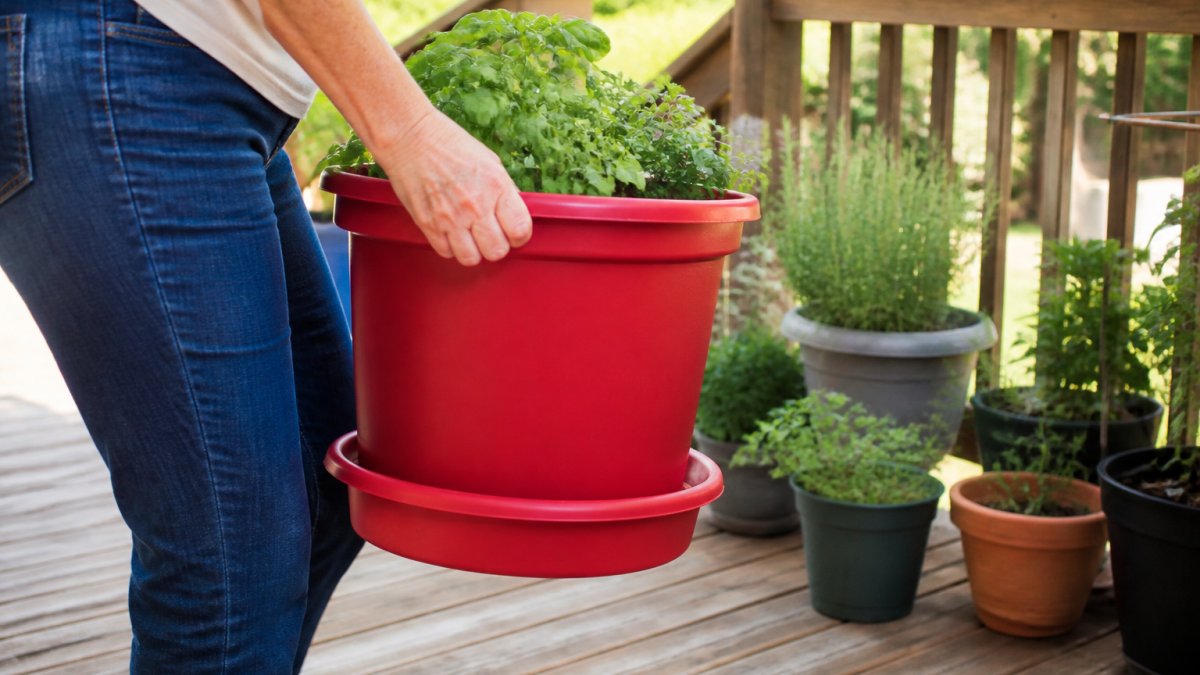
Benefit 1: Easy to Move and Rearrange
The most immediate advantage is that you can carry a planted pot across a patio without bracing your knees. A medium planter filled with damp potting mix is heavy enough already; the container itself shouldn't add to the problem.
This changes how you actually use a garden. You can chase the sun through the day, pull pots under cover before a frost warning, or shift a seating arrangement before guests arrive without recruiting help. Repositioning becomes a one-minute task rather than a project.
For renters and balcony gardeners, that flexibility is the whole point. Seasonal rearranging stops being a chore and starts being something you do on a whim.
Benefit 2: Durability That Handles the Seasons
Modern plastic pots are not the brittle, sun-crazed buckets of twenty years ago. High-impact polypropylene resists cracking from knocks, dropped tools, and the freeze-thaw cycles that split clay pots wide open.
Durability here means three different things, and it's worth separating them:
- Breakage resistance: plastic flexes rather than shatters, so a tipped pot rarely means a lost plant. Thicker walls and molded ribs distribute impact stress; thin, single-wall pots crack at the rim first.
- Weather resistance: quality resins hold their color and structure through sun exposure and hard winters. The enemy is ultraviolet light, which breaks polymer chains at the surface and leaves the plastic chalky, faded, and brittle over time.
- Freeze-thaw survival: water expands when it freezes. A pot saturated with soil and water can crack from the inside out during a hard freeze, regardless of material. Plastic survives this better than terracotta because it flexes, but a pot left full of wet soil in an exposed spot is still at risk.
The honest caveat: cheap thin plastic will fade and go chalky under intense UV. Thicker-walled pots made from recycled polypropylene hold up far better, which is why material thickness matters more than the price tag on the shelf.
Practical steps extend outdoor life more than any single purchase decision:
- Choose thick walls and molded ribs over thin, flexible plastic for pots that stay outside year-round.
- Empty or insulate pots before a hard freeze if the pot is not frost-proof; a pot full of wet soil is the most common freeze-crack victim.
- Keep pots off direct, all-day sun on the south and west sides where UV exposure is most intense; a little afternoon shade dramatically slows fading.
- Rinse off fertilizer and mineral crust that can degrade the surface and harbor algae.
- Store empty pots out of sunlight between seasons rather than leaving them stacked on an exposed deck.
A common pattern is that the first failure point is not the pot body but the rim or the drainage saucer, which takes the most handling and standing water. Inspect those areas each spring and retire any pot that has gone brittle at the lip before it fails under a full load of soil.
If you want a fuller material breakdown before committing, our guide to the best pots for container gardening covers the full range of options.
Benefit 3: Moisture Retention and Watering Frequency
Plastic is non-porous, and that single property reshapes your watering routine. Unglazed terracotta wicks moisture through its walls and dries out fast; plastic holds water in the root zone, so you water less often.
That's a genuine win for busy households and for anyone who travels. It's also a risk, because moisture retention and overwatering are two sides of the same coin. Plants that hate wet feet, like succulents and many herbs, can suffer in a pot that never dries.
The fix is straightforward: use a potting mix with good drainage, make sure the pot has open drainage holes, and empty the saucer rather than letting the pot sit in standing water. Root health depends far more on drainage than on the container material itself.
Plastic vs. Clay Pots for Plants: A Practical Comparison
Neither material wins outright, so judge them against how you garden rather than against each other in the abstract. If you want a deeper material breakdown before committing, our guide to the best pots for container gardening covers the full range of options.
| Factor | Plastic Pots | Clay and Terracotta Pots |
|---|---|---|
| Weight when filled | Light, easy to lift | Heavy, hard to move |
| Breakage risk | Flexes, rarely cracks | Chips and shatters |
| Watering frequency | Less frequent | Frequent, dries fast |
| Cost | Affordable | Higher per pot |
| Outdoor winter survival | Good with thick walls | Poor in freeze-thaw |
| Repairability | Not repairable | Not repairable |
The pattern is clear. Clay offers breathability and a classic look; plastic offers portability, affordability, and moisture control. For renters, balcony growers, and anyone moving pots regularly, plastic is the practical choice. For a permanent, sheltered display where weight is an asset, clay still earns its place.
Plastic Planter Drainage: Why Holes Matter More Than Material
No container material can compensate for poor drainage. A plastic planter with adequate holes will outperform a premium clay pot with a blocked base every time.
Drainage holes do three jobs: they let excess water escape, they pull air into the root zone, and they flush out the fertilizer salts that accumulate after months of feeding. Without that outflow, salts crust the soil surface and burn root tips.
A few habits keep drainage working:
- Check that holes aren't sealed by a saucer pressed tight against the base
- Use a chunky potting mix rather than dense garden soil
- Empty saucers after heavy rain so pots never sit in water
- Flush pots with plain water occasionally to rinse out salt buildup
If you want a fuller routine, these drainage tips for container plants cover the practical details.
How to Prevent Planters from Tipping Over
Top-heavy pots fall over in wind, and a fallen pot means spilled soil, snapped stems, and a stained patio. The fix is a mix of placement and ballast.
Start by matching pot size to plant size. A tall plant in a shallow pot is a lever waiting for a gust. Choose a wider base, or set the pot low against a wall or railing where wind loads are lower.
For genuinely windy spots, add weight low in the container: a layer of gravel or stone beneath the potting mix lowers the center of gravity without harming roots. If you're furnishing an exposed balcony, this roundup of durable planters for balcony gardens is worth a look before you buy.
How to Clean Plastic Plant Pots
Plastic pots clean up faster than any other material, which is one reason they get reused season after season. A five-minute routine between plantings keeps them looking new and stops disease carrying over.
- Knock out the old potting mix and rinse loose soil away
- Scrub the inside with warm water and a drop of mild dish soap
- For white mineral crust, soak the pot in a vinegar and water solution, then scrub
- Rinse thoroughly and let it dry in the sun before refilling
Skip the bleach unless you're sanitizing after a diseased plant, and never scrub with an abrasive pad that dulls the finish. For stubborn deposits, this walkthrough on removing hard water stains from planters goes step by step.
Choosing Containers by Plant and Setting
Matching pot to plant prevents most container failures before they start, and this is where most generic advice stops short.
Start with three questions: how much water does the plant want, how deep does its root system go, and how much sun will the pot receive?
Water preference. Succulents, cacti, and many herbs want fast-draining mix and a pot that dries between waterings.
Root depth. Vegetables and fruiting plants need depth, because shallow pots stunt root development and dry out fast.
Exposure. Sheltered patios tolerate almost anything; exposed decks and balconies demand thick walls, wide bases, and fade-resistant color.
A simple decision guide by plant type:
- Succulents and cacti: small to medium pot, gritty fast-draining mix, open drainage, let dry fully between waterings.
- Herbs (basil, rosemary, thyme): medium pot with good drainage; rosemary and thyme lean toward the succulent end, basil toward consistent moisture.
- Leafy greens and lettuce: medium pot, consistent moisture, partial sun in hot climates.
- Tomatoes and peppers: large, deep pot with a wide base for stability; consistent watering and a saucer to buffer dry spells.
- Ferns and tropicals: medium to large pot, moisture-retentive mix, shelter from harsh afternoon sun.
Setting matters just as much as plant type. Group pots on exposed balconies so they shelter one another from wind.
When you're ready to buy, our Austin Planter plastic flower pots with saucers come in a five-pack of 4-inch pots with drainage holes and matching trays, sized for herbs, succulents, and starter plants.

Frequently Asked Questions
Are plastic planters good for outdoor use?
Yes, when they are made from high-impact polypropylene or similar resins. Plastic garden containers resist cracking, fading, and moisture damage better than unsealed terracotta, which can spall in freeze-thaw cycles. Look for pots labeled weather-resistant and fade-resistant. For example, Beloit Plastics planters are made in the USA from over 90% recycled plastic and are designed for indoor or outdoor use. Pair them with saucers to protect decks and patios from water stains.
Do plastic pots need drainage holes?
Yes. Drainage holes are essential in any container, plastic or clay. Without them, water pools at the bottom, roots suffocate, and rot sets in. Plastic planter drainage works best with several holes across the base plus a saucer to catch overflow. Beloit Plastics pots come with pre-drilled drainage holes, so you do not need to drill anything. Empty the saucer after heavy rain to prevent standing water and salt buildup.
How do you keep plastic planters from tipping over?
Start with a pot that is wider at the base than the top, and set it on a level surface. Put the heaviest layer, such as gravel or a large plant's root ball, low in the container. For tall plants, push a stake through the root ball and tie the stem loosely. On windy balconies, group pots together or use a saucer with a ribbed underside for grip. Beloit Plastics saucers have a support grid that elevates the pot and improves airflow.
How long do plastic garden containers last?
Quality plastic pots made from UV-stabilized polypropylene often last five to ten years outdoors, and longer indoors. Lifespan depends on sun exposure, temperature swings, and how you handle them. Cheap, thin plastic may crack within a season or two. Thicker walls and molded color that runs through the resin, like Beloit Plastics planters, resist fading and breakage. Storing empty pots out of direct sun over winter extends their life further.