 listicle
How Do You Keep Planters From Blowing Over?
Last Updated: November 4, 2026
Quick Summary
You stop planters blowing over by stacking five fixes: choose heavy, wide, straight-sided pots, add gravel ballast low in the pot, tie tall plants to rails or walls, use pot feet and gravel for grip, and group pots behind a windbreak. Check straps, brackets, and drainage twice a year before storm season and after winter.
- Tapered pots tip more easily than straight-sided pots because their base is narrower than the rim.
- Put ballast under the root ball, never on top of the drainage hole, so water can still escape.
- Strap the pot, not the trunk or stem, since plants need to flex in wind.
- Place the heaviest, widest pots on the windward side and lighter ones behind them.
- A permeable slatted screen beats a solid wall, which can create downwind turbulence.
Table of Contents
- Why Planters Tip in High Winds
- 1. Choose the Best Pots for Container Gardening
- 2. Learn How to Weigh Down Outdoor Planters
- 3. Securing Tall Potted Plants to Rails and Walls
- 4. Use Pot Feet, Risers, and Gravel for Stability
- 5. Strategic Placement, Windbreaks, and Grouping
- Seasonal Anchor Checks and Maintenance
- Shop Durable Planters and Saucers for Windy Patios
- Frequently Asked Questions
Why Planters Tip in High Winds
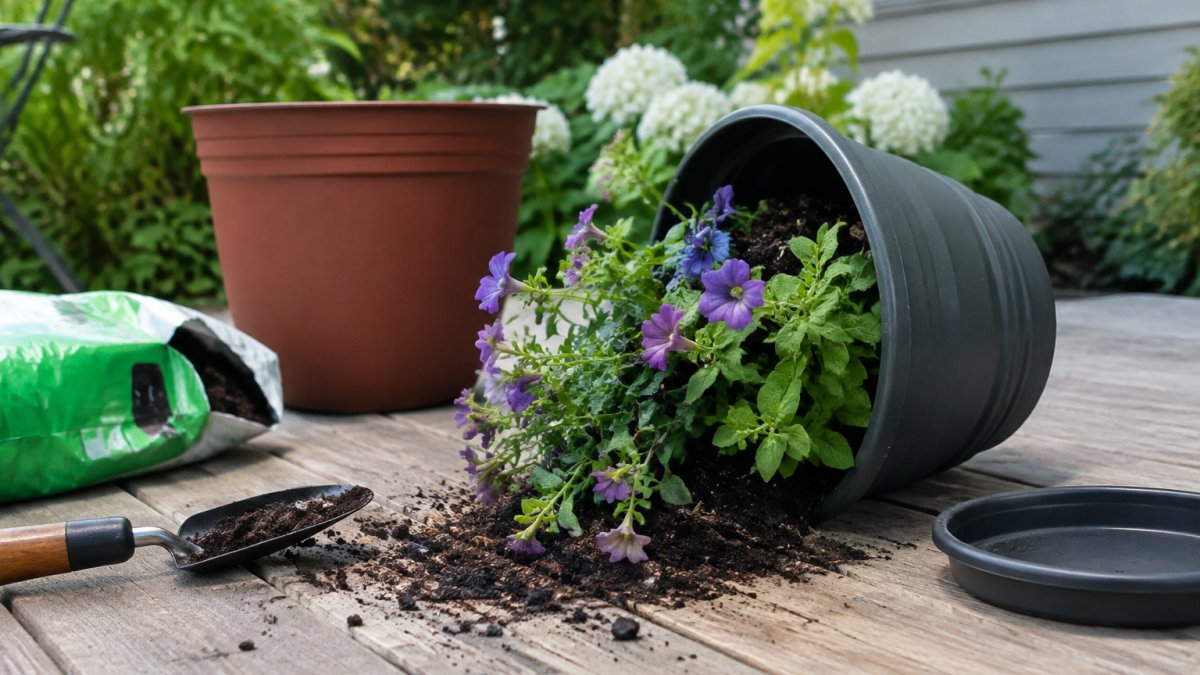
Planters blowing over happens when wind pressure on the plant's foliage overcomes the weight holding the pot down. The taller the plant and the lighter the pot, the lower the wind speed needed to send it over. That is the whole physics problem in two sentences, and it explains why a heavy ceramic pot with a fern stays put while a lightweight plastic pot with a tomato plant goes down in the first real gust.
Planters and saucers for patios and balconies are built to stay put, so planters blowing over is a problem worth thinking through. Three forces decide the outcome:
- Sail area. Leaves and stems catch wind like a sail. A bushy plant in a narrow pot is the worst combination.
- Center of gravity. Weight sitting low in the pot resists tipping. Weight sitting high, in a tall plant, works against you.
- Base width. A wide base gives the wind a longer lever to fight against before the pot goes past the balance point.
Most guides treat this as a "buy heavier pots" problem. It is really a stability problem with five separate fixes, and the best setups stack several of them. Below, we walk through each one, from pot selection to seasonal anchor checks, so you can match the effort to how exposed your space really is. The National Weather Service wind speed guidance is a useful reference for understanding how quickly gusts escalate in an open, unsheltered area.
1. Choose the Best Pots for Container Gardening
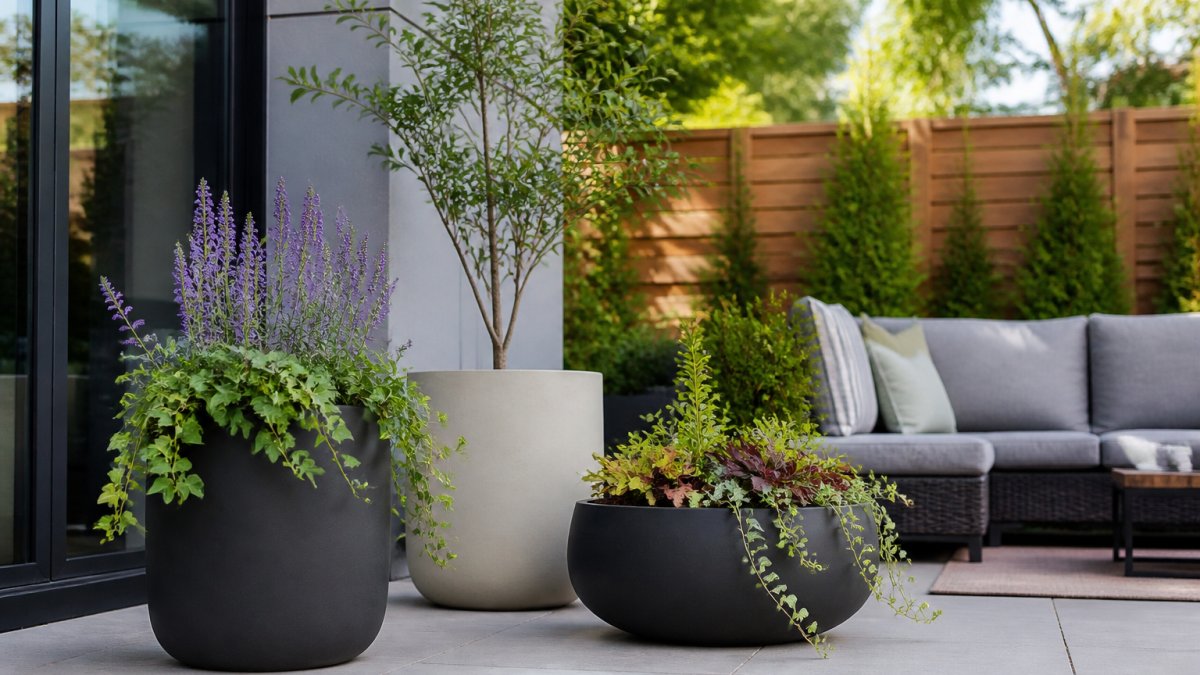
The best pots for container gardening in windy spots share three traits: heavy material, a wide base, and straight sides. Start there and you solve half the problem before the plant goes in.
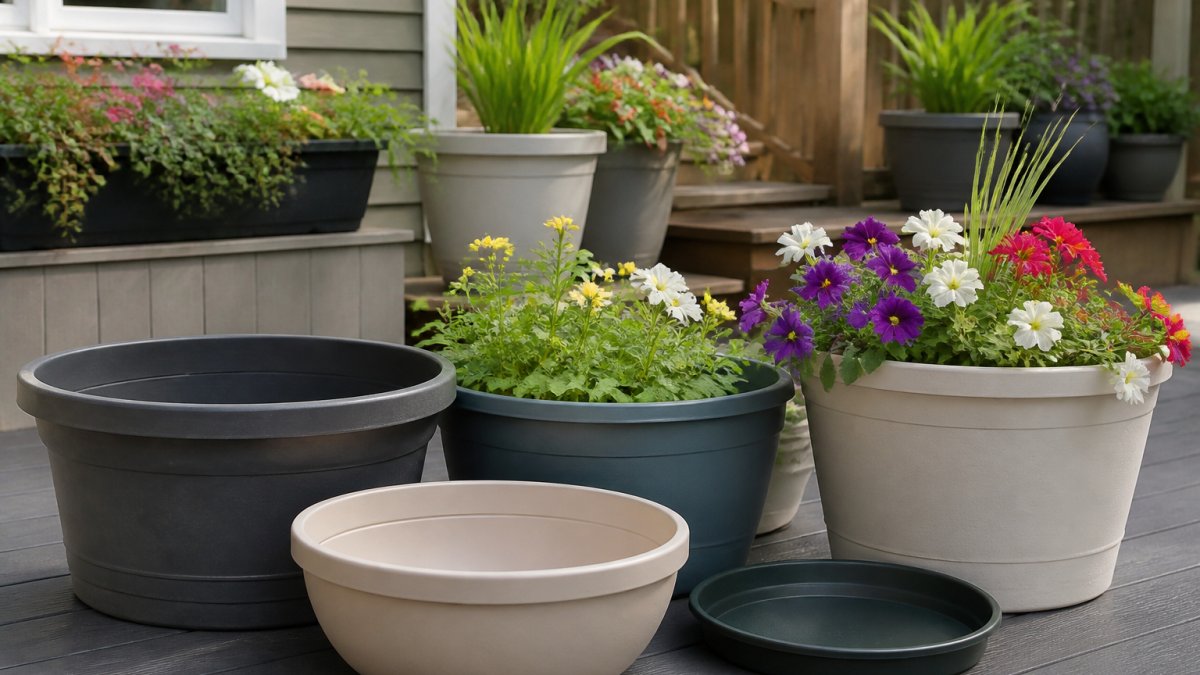
Material matters more than most shoppers expect. Terracotta and concrete pots carry real mass, which lowers the center of gravity and keeps the pot planted. Resin and plastic pots are lighter, so they need help from ballast or anchoring.
Shape matters just as much. Tapered pots that narrow at the bottom tip more easily than straight-sided pots, because the base width is smaller than the rim. A wide, straight-sided pot with a broad foot gives you the most stability per pound.
For a deeper material comparison, our guide to the best pots for container gardening breaks down how each material handles wind, weight, and winter.
Materials That Add Weight at the Base
Concrete and heavy ceramic lead on pure mass. Terracotta sits in the middle and gains weight once wet. Resin and plastic are the lightest options, which is exactly why they pair well with ballast and saucers rather than fighting the wind alone.
Heavy pots are harder to move, so a lighter pot with good ballast may suit a patio you rearrange often.
The best pots for windy spots share three traits: heavy material, a wide base, and straight sides.
| Pot material | Weight | Wind note |
|---|---|---|
| Concrete and heavy ceramic | Heaviest | Lead on pure mass |
| Terracotta | Middle | Gains weight once wet |
| Resin and plastic | Lightest | Pair with ballast and saucers |
2. Learn How to Weigh Down Outdoor Planters
Learning how to weigh down outdoor planters comes down to adding mass low in the pot without wrecking drainage. The rule is simple: weight goes under or around the root ball, never on top of the drainage hole.
Here is the order we recommend:
- Check the drainage holes first. Any ballast you add must not block them. Water that cannot escape rots roots faster than wind damages pots.
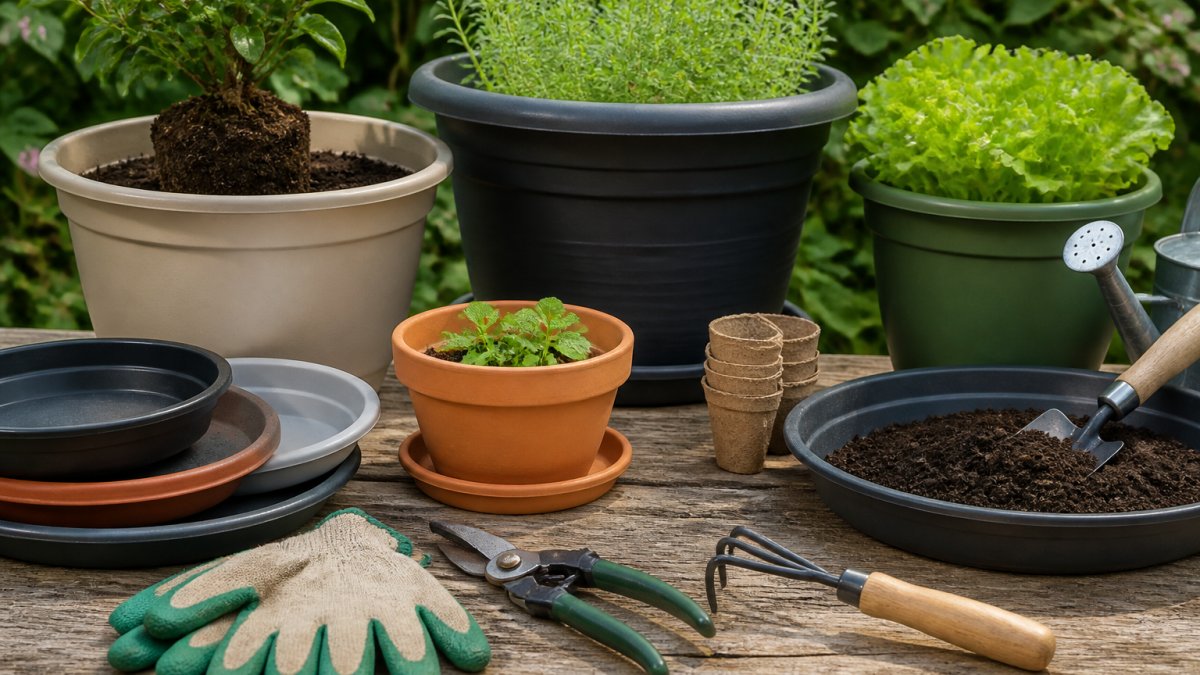
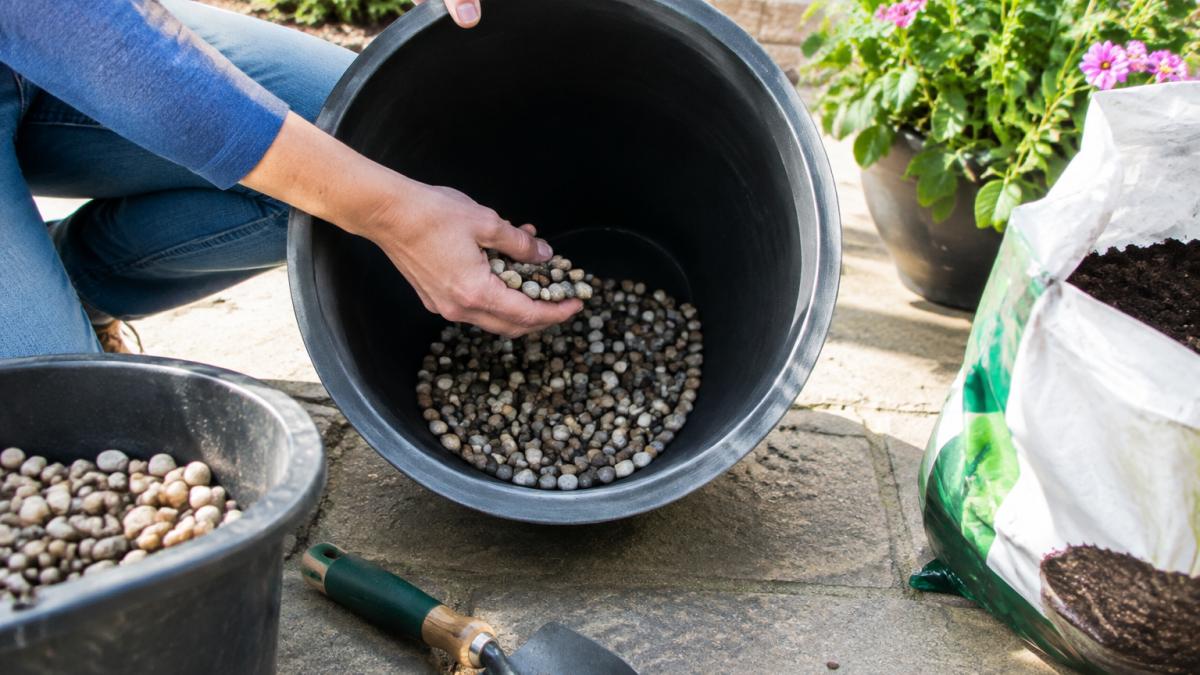
- Add a base layer of gravel or pebbles. A couple of inches in the bottom adds weight where it counts most, at the base.
- Set the root ball on top. Keep the potting mix above the gravel line so roots are not sitting in standing water.
- Top with decorative pebbles if you like. A top layer reduces soil splash and evaporation, but it does little for stability. The weight that matters is at the bottom.
Ballast Options That Won't Harm Roots
Gravel, pebbles, and washed stone are the safest ballast because they do not break down or change the soil chemistry. Sand works but is heavy to haul and can compact. Avoid anything that holds moisture against the roots, and skip foam or packing material, which adds bulk but almost no weight.
For a ready-made option, our Austin Planter Chunks decorative pebbles are designed for pots and saucers. One gallon covers about an 18-inch diameter depending on layer depth, and most are made from 100% recycled or waste plastics. They can be used around pots in saucers to hide the water.

Watch out: stacking bricks or rocks on the soil surface does almost nothing for stability and can crush shallow roots. Weight belongs at the base, not the top.
3. Securing Tall Potted Plants to Rails and Walls
Securing tall potted plants to rails and walls is the fix for pots that are simply too tall to weigh down effectively. A six-foot plant in a pot has a high center of gravity no amount of gravel will fully correct, so tie it back.
Three approaches work:
Austin Planter Chunks, 1/2 gallon and 1 gallon →
- Rail straps. A strap or bungee around the pot and the railing stops the pot from tipping outward. Use a wide strap, not thin cord, which can cut into the pot or the rail finish.
- Wall brackets. A bracket screwed into a stud anchors the pot to the wall. This is the most secure option for balcony gardening on an exposed upper floor.
- Tethering to a fixed point. A short tether from the pot to a structural anchor limits how far it can move. Keep the tether short so the pot cannot build momentum.
Plant-safe anchoring means the hardware touches the pot, not the stems. Never tie a strap around the trunk or main stem, because the plant needs to flex in wind. It is the pot that must stay still.
4. Use Pot Feet, Risers, and Gravel for Stability
Pot feet and risers do two jobs at once: they lift the pot off the surface so water drains, and they widen the effective footprint that resists tipping. On a windy balcony, that second job matters as much as the first.
Gravel works differently. A gravel bed under and around the pot base spreads the load and adds friction, so the pot is less likely to slide before it tips. Combine the two and you get drainage plus grip.
For a closer look at which saucers and gravel-style accessories hold up outdoors, our sturdy garden saucers guide covers the options and what to check before you buy.
Watch out: a saucer that collects standing water makes the pot heavier, but it also keeps the base wet, which shortens the life of wood decks and can stain concrete. Empty saucers after heavy rain.
5. Strategic Placement, Windbreaks, and Grouping
Strategic placement is the cheapest fix on this list and the one most people skip. Wind speed drops sharply in the lee of a wall, a railing, or a row of other pots, so moving a vulnerable planter two feet can change its fate.
Grouping pots together is the practical version of this. Clustered pots shield each other, and the group as a whole presents less exposed surface than the same pots spread apart. Put the heaviest, widest pots on the windward side and the lighter ones behind them.
A windbreak helps too. A slatted screen or a row of dense shrubs breaks gust energy before it reaches the pots. Solid barriers can create turbulence on the downwind side, so a permeable screen usually beats a solid wall.
Balcony gardeners working with exposed rails and walls will find more placement ideas in our guide to durable planters for balcony gardens.
Seasonal Anchor Checks and Maintenance
Anchors fail quietly. A strap that held through spring can be UV-brittle by fall, and a bracket that was tight in June can work loose after a season of freeze-thaw. Check your setup twice a year: once before storm season and once after winter.
The seasonal checklist we use:
- Inspect straps and tethers for fraying, cracking, or UV damage
- Tighten every bracket screw and check for wall movement
- Re-level pots that have settled or shifted
- Clear drainage holes and empty saucers
- Refresh ballast if the pot has been repotted
- Move the most exposed pots to a sheltered spot before forecast gusts
Shop Durable Planters and Saucers for Windy Patios
Wind stability starts with the right pot and the right base under it. Beloit Plastics LLC makes U.S.-made planters, saucers, and garden accessories built for everyday outdoor use, with durable construction for all seasons, protection from water stains, and easy cleaning and maintenance. Our products feature Always Free Shipping, Quick Ship, and 30-Day Returns.
When you are ready to upgrade, browse our planters and pots and match a wide, straight-sided pot to your most exposed spot. Sarah L. in Wisconsin wrote "Perfect Fit for My Patio Setup!" and Rick B. in Ohio wrote "Classic Look That Lasts."
Frequently Asked Questions
How can I prevent my planters from blowing over in high winds?
Start with a heavier pot and a wider base, then add ballast such as gravel or decorative pebbles to the bottom third. Keep the center of gravity low by planting taller specimens deep and grouping pots together so they shelter one another. On balconies, tether the pot to a railing or wall anchor rated for the load. Check anchors each season, because UV exposure and freeze-thaw cycles loosen hardware over time.
What is the best way to weigh down outdoor planters?
Place ballast in the bottom of the pot before adding potting mix, or set the pot inside a heavier outer container. Gravel, stone, and decorative planter chunks all work, and a layer of pebbles on top of the soil also reduces splash and evaporation. Avoid blocking drainage holes, since trapped water adds weight unevenly and can rot roots. A pot that is heavy at the base resists tipping far better than one weighted near the rim.
How do I keep tall potted plants from falling over in the wind?
Tall plants catch more wind, so securing tall potted plants means lowering the center of gravity and reducing sail area. Stake the trunk inside the pot, prune dense top growth before storm season, and set the container against a wall or railing. For plants above roughly 4 feet, use a manufactured anchor strap or a wall-mounted bracket rather than a loose tie, and leave a little slack so the stem can flex instead of snapping.
Can I secure pots on a balcony without drilling into the building?
Yes. Railing clamps, weighted bases, and tension straps hold pots without permanent modifications, which matters for renters. A door or fence hanger rated for 10 lbs works for smaller hanging pots. Always confirm your building's rules on balcony modifications before installing anything that clamps or hooks onto shared structures.
Keeping pots upright in wind is not about buying the heaviest planter on the shelf. It is about getting weight low, widening the base, tying back what cannot be weighed down, and checking the hardware before the season turns. Get those four habits in place and your patio stays intact through the gusts that flatten everyone else's. Get started with Beloit Plastics LLC and build a patio setup that holds its ground all year.