 listicle
Durable American Made Garden Planters: 2026 Guide
Table of Contents
- Quick Comparison: American Made Planters by Size, Price, and Best Use
- Best Materials for Outdoor Planters (and What Fails in Freeze-Thaw)
- How Regional Weather Decides Which Planter Survives
- Soil Volume and Root Health: Sizing a Planter for the Plant
- How to Maintain Plastic Garden Planters Season After Season
- Where to Buy American Made Plant Saucers and Planters
- Frequently Asked Questions
Last Updated: September 12, 2026
Quick Comparison: American Made Planters by Size, Price, and Best Use
Durable American made garden planters are containers manufactured domestically from materials engineered to survive freeze-thaw cycles, UV exposure, and years of outdoor use without cracking or fading. This guide from Beloit Plastics LLC breaks down what actually determines planter lifespan, which materials hold up in which climates, and how to size a pot for the plant going in it.
Here's the short version before the detail. The planter that fails in year two almost never fails because of the plant. It fails because the material was too thin, the drainage was wrong, or the size was too small for the root mass.
| Planter | Size | Price | Best Use |
|---|---|---|---|
| Austin Planter 4 inch Pots with Saucers | 4 in, 5 pack | $16.45 | Herbs, succulents, windowsills |
| Austin Planter 4 inch Pots, Lime Green | 4 in, 5 pack | $19.99 | Colorful balcony groupings |
| Austin Planter 4 inch Pots, Terra Cotta | 4 in, 5 pack | $19.99 | Classic patio arrangements |
| Austin Planter 9 inch Hanging Pots | 9 in, 5 pack | $34.25 | Trailing flowers, porch eaves |
| Austin Planter 7 inch Hanging Pots | 7 in, 5 pack | $29.95 | Small hanging displays |
| Austin Planter 11 inch Hanging Pots | 11 in, 5 pack | $29.99 | Full trailing baskets |
| Austin Planter 18 inch Plant Saucer | 18 in | $34.99 | Under large floor pots |
| Austin Planter 18 inch Saucers, Case of 2 | 18 in, 2 pack | $34.99 | Deck and patio protection |
Best Materials for Outdoor Planters (and What Fails in Freeze-Thaw)
Polypropylene is the best material for outdoor planters in most home settings because it resists freeze-thaw cracking, holds color, and stays light enough to move. Resin blends behave similarly. Stone and cast stone resist wind but are heavy and can chip. Metal conducts heat and rusts unless coated. Fabric grow bags drain well but break down faster in sun.

The failure mode that matters most is freeze-thaw. Water seeps into a porous wall, freezes, expands, and pushes the material apart from the inside. Thin, rigid plastics shatter. Thick, slightly flexible polypropylene absorbs that movement instead. The mechanism is simple: water expands roughly 9% by volume when it turns to ice, and that expansion has to go somewhere. A wall that can flex slightly relieves the pressure; a wall that can't, cracks.
A second failure mode is UV degradation. Sunlight breaks polymer chains at the surface, which is why cheap plastic pots chalk, fade, and turn brittle after a season or two. UV-stabilized polypropylene and resin blends resist this because the stabilizers absorb or scatter the ultraviolet energy before it reaches the polymer backbone. This is why color retention and crack resistance are really the same property tested two different ways.
Polypropylene vs. Resin, Stone, Metal, and Fabric
Polypropylene is a neutral plastic with a simple carbon-hydrogen structure, which is why it resists fading and cleans easily. It's also recyclable, and many domestic manufacturers use high percentages of recycled content. For outdoor use, look for wall thickness in the range most domestic manufacturers publish for their heavy-duty lines, thin, flexible walls flex too much and crack at the rim, while very thick rigid walls can't relieve ice pressure at all. The sweet spot is a wall thick enough to hold its shape and slightly flexible enough to give under expansion.
Resin blends behave much like polypropylene in cold weather, with slightly different surface finishes. Resin is a broad category, so durability depends on the specific blend and wall thickness rather than the word "resin" on the label. A resin planter with a thick, slightly flexible wall performs like polypropylene; a thin resin shell performs like cheap ceramic.
Cast stone looks substantial and anchors well in wind, but it's heavy, and moving a large one takes two people. Cast stone is porous, which is the trade-off: it wicks moisture, which helps roots in hot climates, but that same porosity makes it vulnerable to spalling in freeze-thaw zones unless it's sealed. A sealed cast stone planter in a cold climate can last decades; an unsealed one can crack in a single hard winter.
Metal planters need an anti-rust coating and a heat-reflective finish if they'll sit in full sun, since bare metal can cook roots in summer. Powder-coated steel and aluminum are the common choices. The failure point is rarely the metal itself, it's the coating, which chips at the rim and base and lets rust start underneath. Corten steel is the exception: it forms a stable rust layer that protects the metal beneath, but that layer stains surfaces and runoff, so it needs a saucer or a gravel bed.
Fabric grow bags offer excellent root aeration and drainage, but UV exposure degrades them within a few seasons. They're the best choice for root health and the worst choice for longevity. If you use them, plan on replacing them every two to three seasons and storing them out of direct sun when empty.
How Regional Weather Decides Which Planter Survives
Regional weather is the single biggest predictor of planter lifespan, and it matters more than brand or price. A planter that thrives on a covered Florida lanai can fail in a single Northeast winter. The reverse is also true. Most buying guides treat climate as a footnote; it should be the first filter, because the same material that wins in one region loses in another.
Here's a practical matrix for matching material to climate. Use it as a starting point, then adjust for your specific microclimate, a south-facing wall, a covered porch, or a rooftop all change the equation.
| Climate Pattern | Primary Stress | Best Material | Material to Avoid |
|---|---|---|---|
| Northeast / Midwest freeze-thaw | Ice expansion, repeated cycles | Thick, slightly flexible polypropylene or resin | Thin ceramic, unsealed cast stone |
| South / Southwest heat and UV | UV degradation, soil drying | UV-stabilized polypropylene, sealed cast stone | Thin plastic, untreated metal |
| Coastal salt air | Corrosion, moisture | Polypropylene, resin, powder-coated aluminum | Bare steel, untreated metal |
| High wind | Overturning, structural stress | Cast stone, heavy resin, weighted bases | Light plastic, fabric grow bags |
| Desert with wide day-night swings | Thermal expansion, UV | Sealed cast stone, thick resin | Thin plastic, fabric |
In the Northeast and Midwest, freeze-thaw cycling is the test. A customer in Wisconsin put it plainly: "Perfect Fit for My Patio Setup!" That's a climate where a pot can freeze and thaw dozens of times in one season. Thick-walled polypropylene handles it; thin decorative ceramics don't. The number of cycles matters more than the lowest temperature, a pot that freezes once and stays frozen is under less stress than one that thaws and refreezes every week.
In the South and Southwest, heat and UV do the damage. Colors fade, plastic turns brittle, and soil dries out fast. Fade-resistant, UV-resistant polypropylene holds its color across seasons. In these regions, a lighter color also helps: a dark pot in full sun can push root-zone temperatures well above ambient, which stresses roots even when the plant is watered. A light-colored or reflective planter is a functional choice, not just an aesthetic one.
On the West Coast, salt air and moisture drive rust in metal and degradation in fabric. Resin and polypropylene shrug it off. If you want metal near the coast, powder-coated aluminum outperforms steel because it doesn't rust through when the coating chips.
In high-wind areas, weight and structural integrity matter more than anything. A heavy cast stone planter stays put. A light plastic pot needs a saucer and a sheltered spot. A common pattern is to use a heavy planter as an anchor and lighter pots grouped behind it, so the light ones are shielded from the worst gusts.
Soil Volume and Root Health: Sizing a Planter for the Plant
Soil volume determines root health more than any other single factor, and most planters fail because they're too small. Roots need room to spread, air to breathe, and a reservoir of moisture between waterings. A pot that's too small dries out in hours, strangles the root ball, and forces daily watering.
Here's the practical rule. Match the pot's diameter to the plant's mature spread, then go one size up for anything you want to keep long-term.
| Plant Type | Minimum Pot Size | Notes |
|---|---|---|
| Herbs, succulents | 4 inch | Shallow roots, fast drainage |
| Small annuals | 6 to 8 inch | Moderate root spread |
| Trailing flowers | 9 to 11 inch | Needs volume for hanging baskets |
| Large floor plants | 14 to 18 inch | Pair with a matching saucer |
Drainage holes matter as much as volume. Without them, water pools at the bottom, roots rot, and the plant dies regardless of how good the soil is. Look for pots with several drainage holes molded in, plus a saucer to catch runoff and protect surfaces.

How to Maintain Plastic Garden Planters Season After Season
Maintaining plastic garden planters takes about 10 minutes per pot, twice a year. Wash them in warm soapy water, check the drainage holes, and inspect for cracks before the first freeze. That routine is the difference between a planter that lasts three seasons and one that lasts ten.
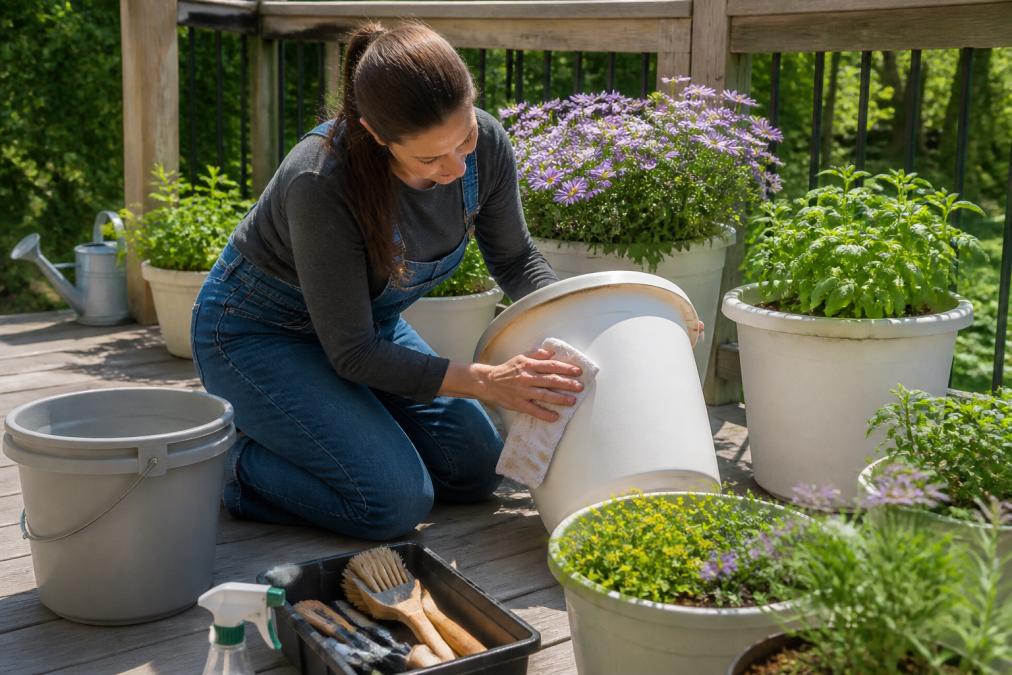
A simple seasonal checklist:
- Empty spent soil and rinse the interior with warm water
- Scrub away mineral deposits with a soft brush and mild soap
- Clear every drainage hole with a small tool or skewer
- Check the rim and base for hairline cracks
- Store unused pots indoors or under cover before the first hard freeze
- Wipe saucers clean to prevent staining
Polypropylene planters are dishwasher safe, which makes deep cleaning easy at the end of the season. Skip abrasive pads, which scratch the finish and give dirt a place to collect.
Where to Buy American Made Plant Saucers and Planters
The best place to buy American made plant saucers and planters is directly from a domestic manufacturer, because you skip the middle markup and get warranty support from the source. Buying direct also means faster shipping and a clearer return path if a size doesn't work out.
Beloit Plastics LLC manufactures its planters and saucers domestically and sells direct, with free shipping and a 30-day return window. The Austin Planter line covers everything from 4-inch starter pots to 18-inch saucers, all made from high-impact polypropylene with recycled content.

A customer in Ohio described the appeal simply: "Classic Look That Lasts." That's the whole point of buying domestic: you're paying for material thickness and manufacturing consistency, not packaging.
Frequently Asked Questions
What is the most durable material for outdoor planters?
High-impact polypropylene holds up best across most US climates. It resists cracking through freeze-thaw cycles, will not rust like metal, and weighs far less than cast stone, so it is easy to move when a cold snap hits. Look for UV-resistant, BPA-free, lead-free construction with drainage holes built in. Thicker walls matter more than the label: a sturdy recycled polypropylene pot with a weather-resistant finish outlasts a thin, cheap alternative every time.
How do I choose a weather-resistant planter for my climate?
Match the material to your worst season, not your best. In the Northeast and Midwest, frost-proof polypropylene survives repeated freeze-thaw cycles that crack ceramic and thin resin. In the South and Southwest, UV-resistant color that will not fade matters more than freeze protection. Coastal areas need anti-rust and salt-tolerant finishes. Whatever your region, pick a planter with drainage holes and a matching saucer so water never sits against the roots or your deck.
Where can I find high-quality plant saucers made in the USA?
Buying direct from a US manufacturer is the simplest route. Beloit Plastics LLC makes plant saucers molded from 95% recycled high-impact polypropylene. Direct-from-manufacturer pricing, free shipping, and a 30-day return window remove most of the risk. Measure the base of your pot and add about 2 inches to the diameter when ordering.
Is an American-made planter worth the higher price?
The price gap usually comes down to wall thickness and material grade. A thicker recycled polypropylene planter with a weather-resistant finish typically lasts several seasons outdoors, while a thin budget pot may crack after one winter. Domestic production also shortens the supply chain and keeps quality control closer to the source. If you factor in replacement cost over three to five years, the durable option often costs less per season.
How much soil does a planter need for healthy roots?
Root health depends on soil volume, not pot height. A 4 inch pot suits herbs, succulents, and seedlings; a 9 to 11 inch hanging planter handles trailing flowers; an 18 inch saucer under a large container supports bigger root systems. Always leave drainage holes clear and add a saucer so excess water drains away instead of pooling around the roots.
The challenge with any planter purchase is that durability is invisible until it's tested by a real winter. Beloit Plastics LLC builds planters and saucers from thick, high-impact polypropylene with molded drainage, fade-resistant color, and recycled content, so the pot you buy this season is the pot you still have in five. Browse the Austin Planter collection to match a size and color to your space, with free shipping and 30-day returns on every order.