 listicle
Best Pots for Container Gardening in 2026: Material Guide
Table of Contents
- Best Pots for Container Gardening: A Quick Material Comparison
- Plastic vs Terracotta Planters: Which Material Wins?
- Drainage Requirements for Garden Pots: Why Holes Matter
- Matching Pot Size and Depth to Your Plants
- Best Potting Soil for Containers: The Foundation of Health
- Climate, Placement, and Smart Container Features
- Top Picks for Your Container Garden
- Conclusion: Choose the Best Pots for Container Gardening
- Frequently Asked Questions
Last Updated: September 4, 2026
Choosing the right containers is the single most important decision for a thriving patio or balcony garden, and the best pots for container gardening balance durability, drainage, and climate resistance. At Beloit Plastics LLC, we manufacture U.S.-made planters designed to handle freeze-thaw cycles and intense sun without cracking or fading. Below, we break down the materials, sizes, and soil strategies that determine whether your plants flourish or fail.
Best Pots for Container Gardening: A Quick Material Comparison
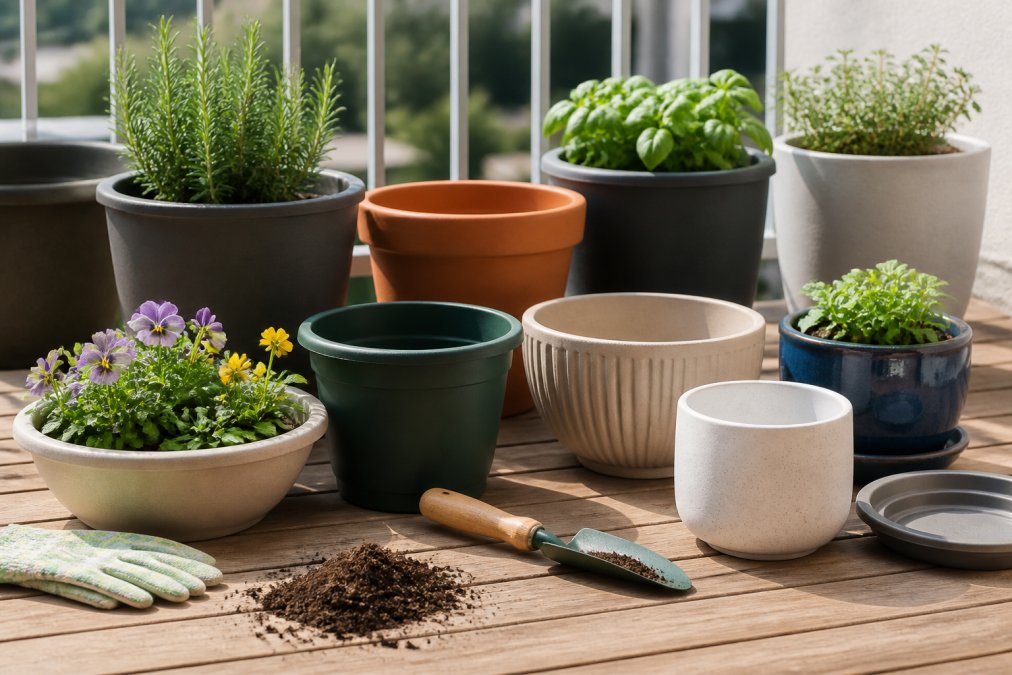
Container gardening is growing plants in pots rather than in the ground, making material choice central to root health. The main options are plastic, terracotta, glazed ceramic, metal, and fabric grow bags.
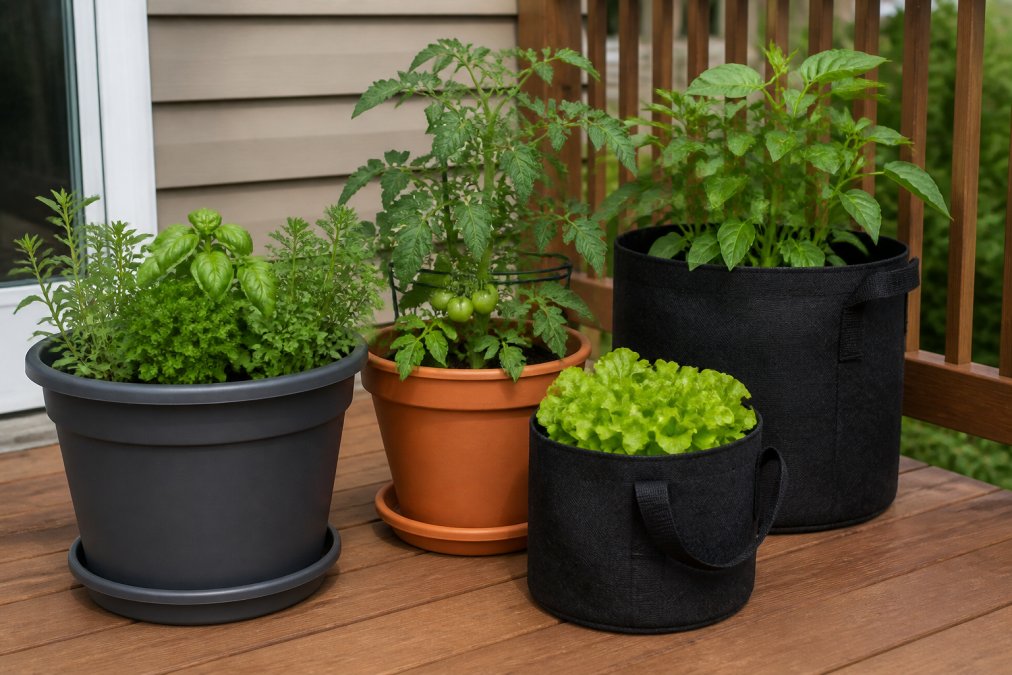
Plastic planters, especially polypropylene, resist winter cracking and stay lightweight. Terracotta and unglazed ceramic allow air exchange but dry out faster and can shatter in freezing temperatures. Metal heats up quickly, stressing roots, while fabric grow bags aerate well but need more frequent watering.
| Material | Weight | Winter Survival | Moisture Retention | Best For |
|---|---|---|---|---|
| Plastic | Light | Excellent | High | Balconies, beginners |
| Terracotta | Heavy | Poor | Low | Dry climates |
| Glazed Ceramic | Heavy | Moderate | High | Decorative displays |
| Metal | Medium | Moderate | Low | Modern aesthetics |
| Fabric | Very Light | Good | Very Low | Root pruning, aeration |
Plastic vs Terracotta Planters: Which Material Wins?
Plastic planters generally outperform terracotta because they retain moisture longer, weigh less, and survive harsh winters. Terracotta's porous walls encourage air pruning and prevent overwatering, but they also accelerate moisture loss and nutrient leaching.
In cold climates, terracotta absorbs water that expands when frozen, causing cracks. High-impact polypropylene flexes under pressure and resists frost damage, lasting many seasons in freeze-thaw regions while terracotta often needs replacement after one or two winters.
Drainage Requirements for Garden Pots: Why Holes Matter
Drainage holes are the most important container feature because they prevent waterlogged soil, which suffocates roots and promotes root rot from fungi like Pythium and Phytophthora.
How Many Holes and What Size?
The number and size of drainage holes should scale with the pot's diameter. A common pattern among commercial growers is:
- Pots under 6 inches: 1 to 2 holes, each 1/4 to 3/8 inch in diameter
- Pots 6 to 12 inches: 3 to 5 holes, each 1/2 inch in diameter
- Pots 12 to 18 inches: 5 to 7 holes, each 1/2 to 3/4 inch in diameter
- Pots over 18 inches: 7 or more holes, or a central 1-inch hole plus several smaller ones around it
Holes smaller than 1/4 inch clog quickly with fine potting mix particles. Holes larger than 3/4 inch allow soil to wash out unless you cover them with a mesh screen or a piece of landscape fabric. A single central hole in a large pot is rarely sufficient because water pools at the edges, away from the center.
The Perched Water Table Problem
Adding gravel or pebbles at the bottom of a pot does not improve drainage; it creates a perched water table. Water does not move from fine potting mix into coarse gravel until the mix is fully saturated to the top of the gravel layer, keeping the bottom 1 to 2 inches of soil saturated and prone to root rot.
The only effective fix is to ensure the soil column drains freely all the way to the bottom, with holes at the lowest point of the pot. If you are concerned about soil washing out, use a piece of window screen or a coffee filter over the holes instead of gravel.
Saucers and Drip Trays: Managing Runoff
Saucers protect surfaces but must be emptied after watering; standing water keeps the pot bottom saturated, recreating the perched water table problem. For outdoor containers, use pot feet or risers to elevate the pot 1/2 to 1 inch off the ground, allowing free drainage and air circulation.
Self-Watering Containers: A Different Drainage Model
Self-watering planters use a reservoir below the soil with a wicking mechanism, relying on an overflow port rather than traditional drainage holes. This keeps the root zone consistently moist, suiting moisture-loving plants like lettuce, herbs, and ferns, but not succulents or cacti that need dry periods.
Testing Drainage Before Planting
Before planting, test drainage by filling the pot with mix, watering thoroughly, and timing how long water takes to stop dripping. A well-draining container releases excess water within 30 to 60 seconds. If water pools or drains slowly, amend with perlite or coarse sand and drill additional holes if needed.
For edible crops, drainage affects nutrient availability. Waterlogged soil leaches nitrogen and potassium faster and makes iron and manganese more soluble, potentially reaching toxic levels.
Matching Pot Size and Depth to Your Plants
Container depth and volume should match the plant's root system, not its top growth. Shallow-rooted herbs like basil and lettuce thrive in pots 6 to 8 inches deep, while tomatoes, peppers, and root vegetables need at least 12 to 14 inches.
Graduated pot sizes let you start seedlings in small containers and transplant up as they grow. Deep-rooted perennials and small shrubs need containers of 16 inches or more with a wide base for wind stability. When in doubt, choose a larger pot; more soil volume means more moisture retention and less frequent watering.
Best Potting Soil for Containers: The Foundation of Health
The best potting soil for containers is lightweight and well-drained, retaining moisture without compacting. A quality mix typically contains peat moss or coconut coir for moisture, perlite for aeration, and compost for nutrients.
Garden soil is too heavy for containers and compacts quickly, suffocating roots and blocking drainage. Potting mixes are formulated for confined root zones, providing the air pockets roots need. Over time, mix breaks down, so refresh the top layer or repot annually.
Climate, Placement, and Smart Container Features
Pot material directly determines whether roots survive extreme heat, freezing winters, or dramatic temperature swings. This section addresses how material choice interacts with U.S. climate zones.
Root Temperature: The Hidden Climate Variable
Roots are more temperature-sensitive than most gardeners realize. Most vegetable and ornamental roots function optimally between 60°F and 75°F. Above 85°F, root respiration accelerates, nutrient uptake slows, and root tips die.
Pot material controls root temperature by determining heat transfer from the sun and air. Dark plastic and metal absorb the most radiant heat; on a 90°F day in full sun, soil in a black plastic pot can reach 110°F, while the same soil in a light-colored pot stays closer to 85°F.
Climate-Specific Material Recommendations
Hot, arid climates (e.g., Phoenix, Las Vegas, West Texas): Choose light-colored plastic, glazed ceramic, or concrete pots. Light colors reflect solar radiation, and glazed or concrete surfaces reduce evaporative water loss. Avoid dark plastic, metal, and fabric grow bags, which heat soil quickly and dry out within hours.
Cold, freeze-thaw climates (e.g., Minneapolis, Denver, Buffalo): High-impact polypropylene plastic is the most reliable choice because it flexes under expanding ice. Terracotta and unglazed ceramic absorb water that expands when frozen, cracking the pot; even glazed ceramic can fail if the glaze has hairline cracks. Metal conducts cold rapidly to roots.
Humid, rainy climates (e.g., Seattle, Atlanta, New Orleans): Fabric grow bags and unglazed terracotta dry out faster, helping prevent root rot in wet conditions. However, fabric bags on wet ground can wick moisture upward; elevate them on pot feet or a pallet.
Mild, coastal climates (e.g., San Diego, Charleston): Material choice is less critical, but fog and salt air affect metal pots. Untreated steel or iron rusts quickly near the coast; choose powder-coated metal or plastic instead.
Placement Strategies for Temperature Control
Placement is a free climate-control tool. In hot climates, position pots on the east side of a building for morning sun and afternoon shade. In cold climates, place pots against south-facing walls, which absorb heat during the day and radiate it at night, raising the microclimate by 5 to 10°F.
Smart Container Features for Climate Resilience
Modern container designs address climate stress directly:
- Double-walled or insulated pots: These create an air gap between the inner and outer walls, reducing heat transfer in both directions. They keep soil cooler in summer and warmer in winter, and they also reduce watering frequency by slowing evaporation.
- UV-stabilized plastic: All outdoor plastic pots should contain UV inhibitors. Without them, polypropylene becomes brittle and fades within one to two seasons of full sun exposure. Look for pots labeled "UV-resistant" or "UV-stabilized."
- Light-colored interiors: A light-colored inner surface reflects light back into the soil, which can slightly reduce root-zone temperature. This is a minor factor but helps in extreme heat.
- Insulating liners: Some fabric pots come with an inner liner that adds insulation while maintaining aeration. These are useful in both hot and cold climates.
Ergonomic and Accessible Design for Climate Management
Climate stress often forces gardeners to move pots, into shade during heat waves, into shelter during frosts. Pots with integrated handles or grip rails make moving easier. Lightweight plastic pots (under 5 pounds when empty) are manageable, but a 14-inch pot filled with moist mix can weigh 30 to 40 pounds; consider a pot dolly or wheeled plant stand.
Matching Climate Strategy to Plant Needs
Finally, match your climate strategy to the plants. Heat-loving crops like tomatoes and peppers tolerate soil temperatures up to 85°F but stop producing fruit above 90°F. Cool-season crops like lettuce and spinach bolt when soil temperatures exceed 75°F.
Top Picks for Your Container Garden
Our top recommendation for most gardeners is the Sample Pack 12-Piece Flower Pot and Saucer Set, priced at $39.99. This set delivers graduated sizes from 2 to 12 inches, covering everything from seed starting to mature herbs and flowers. Each pot includes drainage holes and a matching saucer, and the high-impact polypropylene construction resists weather and fading.

For budget-conscious gardeners, the 12-Piece Flower Pot and Saucer Set at $22.00 offers the same graduated range and durability at a lower entry point. If you need a pop of color, the Austin Planter 4-inch Lime Green 5-Pack at $19.99 is made from 95% recycled polypropylene and works well for succulents and small herbs.


For larger plants, the MRAP 14-inch Pot and Saucer at $20.75 handles tomatoes and peppers, while the Oval Pot with Saucer at $39.75 maximizes space efficiency on narrow patios. Hanging gardeners will appreciate the 12-inch Pot with Hanger at $19.35 for trailing annuals.
| Product | Price | Sizes | Best For |
|---|---|---|---|
| 12-Piece Set (2"-12") | $39.99 | 2-12 in | Complete gardens |
| 12-Piece Set (Budget) | $22.00 | 2-12 in | Value shoppers |
| 4-inch 5-Pack | $19.99 | 4 in | Herbs, succulents |
| MRAP 14-inch Pot | $20.75 | 14 in | Tomatoes, peppers |
| Oval Pot with Saucer | $39.75 | 17x9 in | Narrow patios |
| 12-inch Hanging Pot | $19.35 | 12 in | Trailing flowers |
Conclusion: Choose the Best Pots for Container Gardening
Selecting the best pots for container gardening requires matching material, drainage, and depth to your specific plants and climate. Plastic planters with proper drainage holes and UV resistance offer the best combination of durability, weight, and moisture retention for most gardeners.
Beloit Plastics LLC provides a full range of U.S.-made planters with drainage holes and matching saucers, engineered to survive every season without cracking or fading. Our direct manufacturer pricing, free shipping, and 30-day returns make it easy to start your container garden with confidence. Explore our collection of durable, weather-resistant planters and find the perfect fit for your patio or balcony.
Frequently Asked Questions
Do plants grow better in plastic or ceramic pots?
Plastic pots generally offer better moisture retention, making them forgiving for beginners and ideal for patio gardening in hot, dry climates. Ceramic and terracotta pots are porous and allow more air exchange, which helps prevent overwatering but requires more frequent watering. The best choice depends on your plant type and watering habits. For most container gardens, high-quality plastic pots provide durability and consistent moisture, while glazed ceramic offers a decorative look with moderate moisture retention.
What type of soil is best for growing plants in container pots?
Use a high-quality potting mix, not garden soil. Potting mix is formulated with ingredients like peat moss, perlite, and compost to ensure proper aeration, drainage, and moisture retention. Garden soil compacts in containers, suffocating roots and leading to poor drainage. For most vegetables and flowers, a general-purpose potting mix works well. Succulents and cacti require a specialized mix with extra sand or perlite to increase drainage and prevent root rot.
What is the most common mistake with container plants?
Overwatering is the most frequent error. Many gardeners water on a schedule rather than checking the soil's moisture level. Before watering, insert your finger about an inch into the soil. If it feels dry, water thoroughly until it drains from the bottom holes. If it feels moist, wait. Ensure your pot has adequate drainage holes and use a well-drained potting mix to prevent waterlogged roots, which leads to root rot and plant death.
How do I choose the right size pot for my plants?
Match the pot size to the plant's mature root system. A pot that is too small restricts root growth and dries out quickly. A pot that is too large can hold excess moisture and lead to root rot. A good rule is to choose a pot that is 2-4 inches larger in diameter than the plant's current root ball. For vegetables like tomatoes, select a pot with a minimum volume of 5 gallons to support their growth.
Do all garden pots need drainage holes?
Yes, drainage holes are essential for the health of almost all container plants. They allow excess water to escape, preventing the soil from becoming waterlogged and reducing the risk of root rot. Without drainage holes, salts from fertilizer and tap water can also build up in the soil. If you find a decorative pot without holes, use it as a cachepot and plant in a separate, well-draining plastic pot that fits inside.