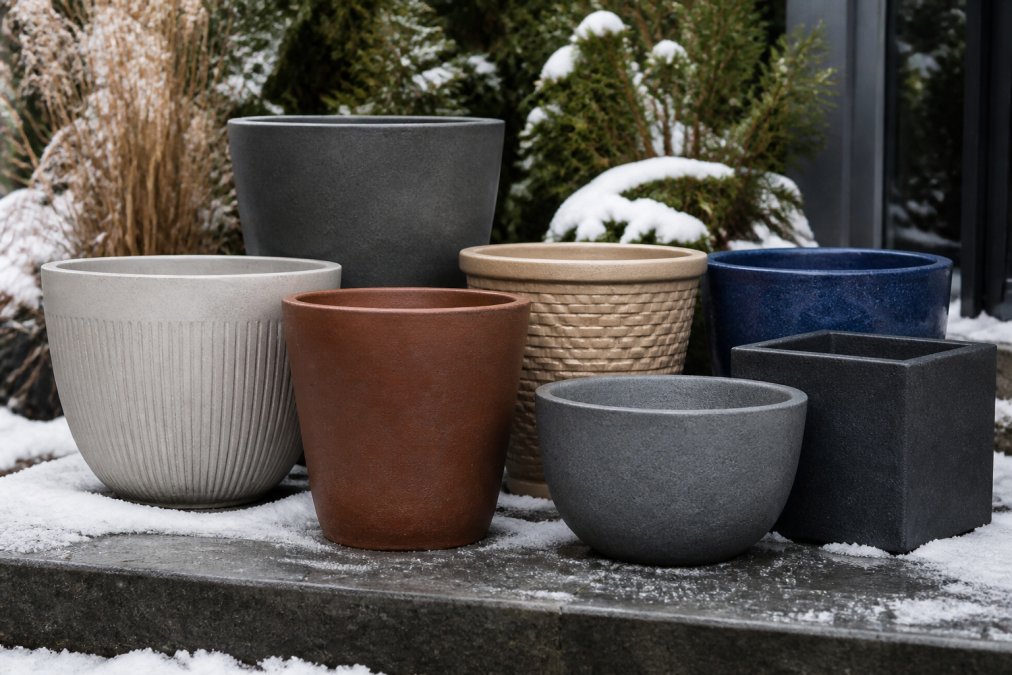
 listicle
Best Frost Resistant Outdoor Planters 2026: Top Picks
Table of Contents
- Quick Comparison: Best Frost Resistant Outdoor Planters 2026
- Best Materials for Winter Garden Pots
- Frost Proof vs Frost Resistant Planters: What's the Difference?
- Our Top Frost Resistant Outdoor Planters for 2026
- How to Winterize Outdoor Planters: A Step-by-Step Guide
- Why Planters Crack: The Physics of Pot Failure
- Frequently Asked Questions
Last Updated: September 13, 2026
Quick Comparison: Best Frost Resistant Outdoor Planters 2026
The best frost resistant outdoor planters 2026 buyers can choose are made from high-density polypropylene, fiberglass, or composite resin, materials that flex with temperature swings instead of cracking. This guide from Beloit Plastics LLC breaks down which containers survive a real winter and which ones fail by February.
Here's the short version before the detail:
| Planter | Size | Material | Price | Best For |
|---|---|---|---|---|
| Austin Planter 4 Inch Pots with Saucers (5 Pack) | 4 in | Recycled polypropylene | $19.99 | Herbs, succulents, windowsills |
| Austin Planter 9 Inch Hanging Pots (5 Pack) | 9 in | Polypropylene | $34.25 | Patios, railings, trailing plants |
| 12 Inch Red Pot with Saucer | 12 in | High-impact polypropylene | $19.37 | Decks, yards, statement plants |
The throughline here is simple: frost damage is a materials problem, not a luck problem. Once you understand why pots crack, the shopping list writes itself.

Best Materials for Winter Garden Pots
The best materials for winter garden pots share one trait: they flex instead of shattering. Non-porous plastics and resins absorb almost no moisture, so they have nothing inside them to freeze and expand.
Non-Porous Plastics and Resins
High-density polypropylene and molded resin top this category. Because water can't soak into the wall of the pot, the freeze-thaw cycle has no purchase. These materials also resist UV fading, which matters if the pot sits in full sun eight months a year.
Beloit Plastics LLC molds its Austin Planter line from high-impact polypropylene with over 90% recycled plastic content, and every pot ships with drainage holes already drilled.

Materials That Fail in Freeze-Thaw Cycles
Unglazed terracotta and thin ceramic are the classic casualties. Both are porous, so they absorb moisture through the wall. When that moisture freezes, it expands and pushes outward, and the pot loses the argument. Glazing helps, but a single hairline crack in the glaze defeats it.
Frost Proof vs Frost Resistant Planters: What's the Difference?
Frost proof and frost resistant planters are not the same claim, and the gap matters in hardiness zones 5 and below. A frost-resistant planter survives light freezes with cosmetic damage at most. A frost-proof planter is engineered so that freezing water cannot crack the structure at all.
Frost resistance is a spectrum, not a checkbox. Non-porous polypropylene sits near the frost-proof end because water never enters the material. Porous stoneware sits at the fragile end no matter how thick the wall is.
If you garden in a zone with repeated freeze-thaw cycles, buy for the frost-proof end of the spectrum. The price difference is small. Replacing cracked pots every spring is not.
Our Top Frost Resistant Outdoor Planters for 2026
Every pick below comes from Beloit Plastics LLC's Austin Planter line, molded in the United States from high-impact polypropylene with recycled content. All three share the same core advantage: a non-porous wall that gives freezing moisture nowhere to expand.
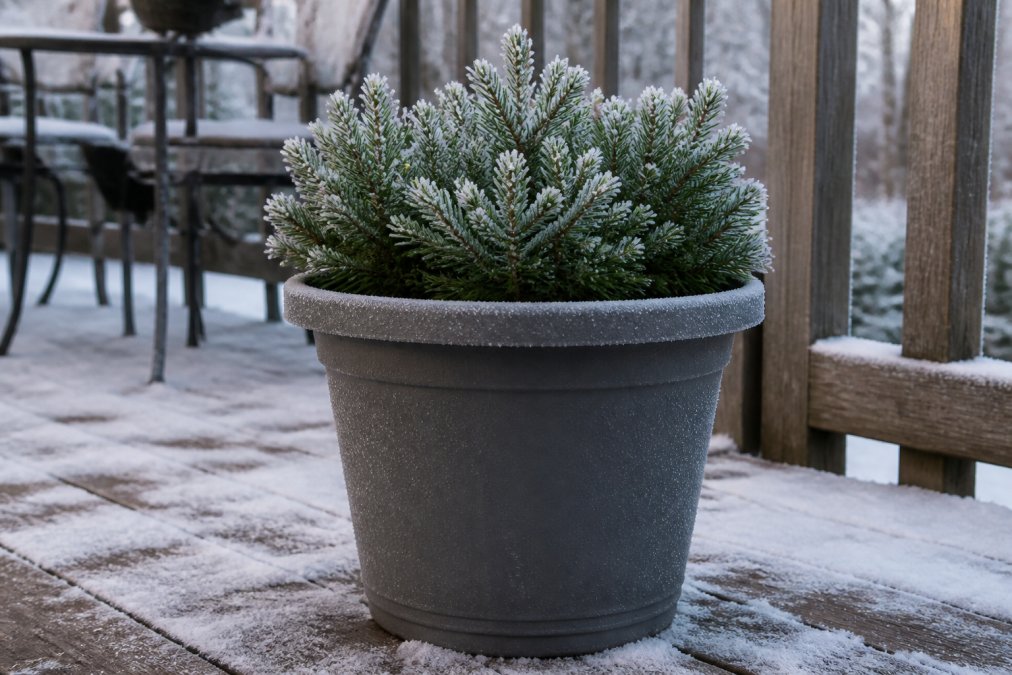
Austin Planter 4 Inch Pots with Saucers (5 Pack)
The 4-inch set is the practical starting point. Five pots with matching saucers for $19.99, each with drainage holes molded in, so there's no drilling and no root rot. The saucers catch runoff and keep deck boards and windowsills free of water stains.
What most guides miss is how useful small pots are in winter. You can move a 4-inch pot indoors in one hand when a hard freeze hits, then set it back out when the cold breaks. That flexibility beats any permanent installation.
Best for: Herbs, succulents, and starter plants on balconies and windowsills.
Austin Planter 9 Inch Hanging Pots (5 Pack)
Hanging planters solve a winter problem most gardeners never think about: soil contact with frozen ground. Suspended pots drain faster and sit above the coldest air layer near the soil. This five-pack runs $34.25 with drainage holes and a molded terra cotta color that won't fade in sun.
The trade-off is wind. Hanging pots swing, and swinging pots spill soil. Hang them against a wall rather than in an open corner.
Best for: Patios, porch railings, and trailing plants.
12 Inch Red Pot with Saucer
For a single statement container, the 12-inch red pot with saucer is the pick at $19.37. The Austin Planter saucer has a flat inner surface so the pot seats evenly and a ribbed underside that lifts it off the deck, which stops moisture from pooling underneath.

That ribbed base detail is the kind of thing nobody tells you about. A pot sitting flush on a wet deck wicks water upward and freezes against the base. Airflow underneath prevents it.
Best for: Decks, yards, and larger ornamental plantings.
How to Winterize Outdoor Planters: A Step-by-Step Guide
Winterizing outdoor planters takes about 20 minutes per pot and prevents most cold-weather damage. The goal is to remove standing water, insulate the root ball, and keep the container off frozen surfaces. What most guides skip is that the timing and the method both change with your USDA hardiness zone, a Zone 5 winter and a Zone 8 winter are different problems.
Start With Your Zone, Not the Calendar
Your first-frost date drives every decision below. The USDA hardiness zone map assigns each region a zone based on average annual extreme minimum temperature, and the spread is wide enough to change your whole routine:
- Zones 3-4 (minimums roughly -40°F to -20°F): Stop watering in early September. Non-frost-proof pots should be emptied and stored indoors; only non-porous plastic, fiberglass, or composite resin should stay outside.
- Zones 5-6 (roughly -20°F to 0°F): Stop watering two to three weeks before first frost. Wrap root zones on anything staying out, and move pots under 6 inches indoors.
- Zones 7-8 (roughly 0°F to 20°F): A single hard freeze is the main risk, not a sustained deep freeze. Frost-resistant plastic and glazed ceramic usually survive; unglazed terracotta still does not.
- Zones 9-11: Frost is rare and brief. The main threat is a surprise overnight dip, so keep frost cloth on hand rather than doing a full winterization.
Check your local first-frost date through USDA hardiness zone map before you start.
The Step-by-Step Routine
- Stop watering two weeks before your first frost date. Wet soil is the enemy. Dry soil freezes far less destructively.
- Clear the drainage holes. Blocked holes trap water at the bottom, which is where ice does the most structural damage.
- Empty the saucer. A full saucer freezes solid and can crack from below.
- Raise the pot off the ground. Pot feet or a brick underneath break the contact with frozen concrete and improve airflow.
- Wrap the root zone, not the pot. Burlap or straw around the plant's base insulates roots without trapping moisture against the container wall.
- Move small pots indoors during hard freezes. Anything under 6 inches is easy to relocate and worth the effort.
- Skip the plastic wrap. Sealing a pot traps condensation, which is the exact problem you're trying to avoid.
DIY Insulation for Pots That Aren't Frost Proof
If you already own terracotta or thin ceramic pots and don't want to replace them, you can buy them a few more seasons with low-cost insulation. None of these methods makes a porous pot frost proof, they slow the freeze-thaw cycle enough to reduce cracking.
- Bubble wrap liner: Line the inside wall with a single layer of bubble wrap before adding soil. The air pockets act as a thermal break between the wet soil and the porous wall. Leave the drainage hole clear.
- Cardboard collar: Wrap the outside of the pot with corrugated cardboard and secure it with twine. Corrugation traps air the same way bubble wrap does, and it's free.
- Burlap skirt: Wrap the pot's exterior in burlap, leaving the top rim exposed so the soil can still breathe. Burlap sheds rain while slowing heat loss.
- Pot feet or bricks: Lifting the pot off a frozen surface is the single cheapest upgrade. A pot sitting flush on a wet deck wicks water upward and freezes against the base.
- Grouping: Cluster pots together against a south-facing wall. The shared thermal mass and reflected heat can raise the microclimate by a zone or more in a sheltered spot.
Why Planters Crack: The Physics of Pot Failure
Planters crack because water expands when it freezes, and porous walls give that expanding ice somewhere to push. Water expands by roughly 9% as it turns to ice. Inside a sealed pore in a terracotta wall, that expansion has nowhere to go but outward, and the material fails along its weakest line.
This is why the crack almost always appears vertically, running up the side wall. Ice pushes upward and outward, and the wall splits along the path of least resistance. A hairline crack in fall becomes a full split by spring after three or four freeze-thaw cycles.
Non-porous materials sidestep the whole mechanism. If water can't enter the wall, there's no internal ice to expand. That's the entire physics argument for polypropylene, fiberglass, and composite resin in cold climates.
Shape Matters: V-Shape vs. Straight-Wall Pots
Most guides stop at material. Shape is the second variable, and it changes how a pot fails.
A straight-wall pot has parallel sides from rim to base. When the soil mass freezes and expands, the pressure pushes outward against a wall that has no taper to relieve it. The wall takes the full load, and if the material is porous, it cracks vertically.
A V-shape pot (also called a tapered pot) narrows toward the base. As the soil freezes and expands, the taper lets the frozen mass slide upward along the angled wall instead of pressing straight out. The ice has somewhere to go, up and out the top, so the wall sees less lateral stress. This is why tapered terracotta survives winters that crack straight-sided terracotta of the same thickness.
A bowl-shape pot curves inward at the base, which concentrates stress at the widest point. Bowls are the most likely shape to crack at the belly, not the rim.
A square pot has corners, and corners are stress concentrators. Ice pressure that a round wall would distribute evenly gets focused at the four corners, which is where square pots typically fail first.
Weight vs. Stability: The Trade-Off Nobody Explains
Heavy concrete and stone planters resist wind but hold cold longer and drain slowly, which keeps moisture against the root zone. Lightweight resin pots warm faster in spring and drain more freely. That's the trade-off, and it cuts both ways in winter.
A heavy pot is stable in wind but slow to thaw, so its soil stays frozen longer and any trapped moisture has more time to do damage. A light pot drains and thaws fast but can tip in a winter gust, especially once the soil surface freezes and the plant above becomes a sail.
Stability comes from geometry, not sheer mass. Three things matter more than weight:
- Base width relative to height. A pot whose base is at least 60% of its rim diameter resists tipping far better than a tall, narrow pot of the same weight.
- Pot feet or a raised base. Lifting the pot breaks surface contact and stops the wicking that freezes the base to the deck.
- Wind placement. A pot against a wall or in a corner sees a fraction of the wind load of one in the open. Move light pots to sheltered spots before the first hard freeze.
Frequently Asked Questions
What are the best outdoor planters for cold weather?
The best outdoor planters for cold weather are made from non-porous, flexible materials like high-density polypropylene and resin. These materials resist moisture absorption and flex slightly during freeze-thaw cycles instead of cracking. Look for planters with thick walls, drainage holes, and saucers to manage water. Beloit Plastics offers USA-made polypropylene planters starting at $16.45 for a 5-pack, designed to handle sub-zero temperatures without shattering.
Do plastic planters crack in freezing temperatures?
Cheap, thin plastic planters can crack in freezing temperatures because water seeps into micro-cracks, expands, and forces the material apart. Thick, high-density polypropylene planters resist this because they absorb almost no moisture and have enough flex to handle thermal expansion. Beloit Plastics planters use 95% recycled polypropylene with thick walls, so they survive freeze-thaw cycles that destroy standard terracotta or thin plastic pots.
How do I winterize outdoor planters?
To winterize outdoor planters, first remove dead annuals and loose soil. Empty saucers so trapped water can't freeze against the pot base. Raise the planter on pot feet or bricks to keep it off frozen surfaces and allow drainage. For perennials, insulate the root ball with burlap or mulch, and move pots to a sheltered spot against a wall. Beloit Plastics planters with drainage holes and saucers make this process easier because water never pools inside the pot.
What is the most durable material for outdoor planters?
High-density polypropylene and fiberglass are the most durable materials for outdoor planters. Both resist UV fading, moisture absorption, and freeze-thaw damage. Fiberglass costs more but lasts decades. High-density polypropylene, like the material in Beloit Plastics planters, offers similar durability at a lower price and is made in the USA from recycled plastic. Avoid unglazed terracotta and thin ceramic, which crack after one or two winters.
Are frost proof and frost resistant planters the same thing?
No. Frost proof means the planter can withstand freezing temperatures without any damage, even when saturated. Frost resistant means the planter handles cold but may still crack if water sits inside it during a hard freeze.