 listicle
Best Durable Plastic Planters for Sale (2026 Review)
Table of Contents
- How We Tested the Best Durable Plastic Planters
- Austin Planter 4-Inch 5-Pack: Best for Seedlings and Herbs
- MRAP 14-Inch Pot and Saucer: Best for Patio Shrubs
- 12-Inch Red Pot with Saucer: Best Statement Color
- 7-Inch Multi-Color Case: Best for Balcony Variety
- What Makes a Planter Weather-Resistant Outdoor Pots Need
- Choosing the Best Plastic Planters for Winter Survival
- How to Clean Plastic Planters for Years of Use
- Frequently Asked Questions
Last Updated: September 5, 2026
The search for durable plastic planters often ends in frustration: a pot that cracks, fades, or shatters by winter. At Beloit Plastics LLC, we build planters from thick, high-impact polypropylene that resists UV rays and freeze-thaw cycles, so you buy once instead of every season. This review covers what makes a planter genuinely weatherproof, and how to keep containers looking new.
Thin, brittle plastic from discount retailers fails fast because it lacks the impact resistance and UV inhibitors needed for outdoor exposure. The models below are all manufactured in the USA from recycled materials.
How We Tested the Best Durable Plastic Planters
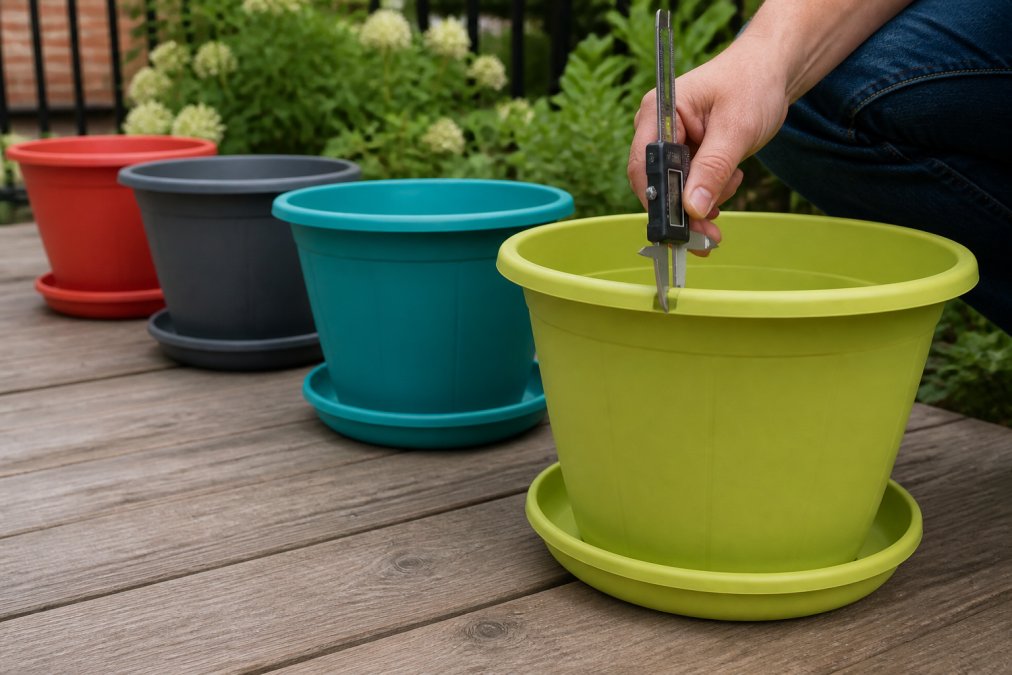
We evaluated each planter against four criteria: wall thickness and rigidity, drainage hole design, UV and frost resistance, and the quality of the included saucer. A planter that passes all four will handle full sun, heavy rain, and freezing winters without cracking or becoming brittle. We also checked whether the color is molded through the plastic rather than painted on the surface, since surface paint chips and fades quickly.
A common mistake is assuming all plastic is the same. The key distinction is between polypropylene and cheaper alternatives. Polypropylene offers excellent flexibility, meaning it can expand and contract with temperature changes rather than cracking under stress. This makes it a superior choice for outdoor use where freeze-thaw cycles are common. For guidance on selecting containers that withstand harsh conditions, resources like the University of Minnesota Extension's guide to container gardening emphasize the importance of pot material and durability for plant health.
Austin Planter 4-Inch 5-Pack: Best for Seedlings and Herbs
The Austin Planter 4-inch pots are our top pick for starting seeds and growing kitchen herbs. Each pack includes five pots with matching saucers, made from 95% recycled polypropylene. At $19.99, you get thick, sturdy walls that resist cracking when you handle or transplant seedlings.

Several drainage holes across the bottom prevent root rot, and the saucer functions as a drip tray. The color is molded through the polypropylene, resisting fading in direct sun. Available in lime green, terra cotta, red, purple, sea blue, and white granite, these pots handle both indoor windowsills and sheltered outdoor spots.
MRAP 14-Inch Pot and Saucer: Best for Patio Shrubs
The MRAP 14-inch pot is the workhorse of the lineup, built for larger plants like patio shrubs and small ornamental trees. It measures 14 inches wide and 5 inches tall, with a matching 14-inch saucer that acts as a water reservoir. At $20.75, its thick walls hold their shape even when filled with dense, wet potting soil.
The saucer's flat inner surface lets the pot sit evenly, while the ribbed underside elevates it slightly to promote airflow, preventing moisture from staining wood or leaving mineral deposits on concrete. The weather-resistant polypropylene handles full sun and winter exposure without becoming brittle.
12-Inch Red Pot with Saucer: Best Statement Color
A classic molded-color design makes the 12-inch red pot a bold focal point for entryways and patios. The color runs throughout the resin, so it won't peel or fade unevenly. Priced at $19.37, this high-impact polypropylene pot is sturdy enough for patios, decks, and even craft projects.

The included saucer has a support grid that raises the pot slightly, promoting airflow and preventing moisture buildup underneath, protecting your flooring from water stains. The red finish pairs well with green foliage as a standalone statement piece or part of a larger arrangement.
7-Inch Multi-Color Case: Best for Balcony Variety
The 7-inch bright multi-color pots bring a case of five assorted colors to your balcony, creating visual variety without the cost of buying individual planters. At $29.95, this set is ideal for grouping herbs, flowers, and small ornamentals. Each pot includes a saucer, and they are all fade-resistant for outdoor use.

These pots offer more soil capacity than the 4-inch options while remaining lightweight enough to rearrange easily. The bright colors are molded through the polypropylene, holding their intensity across multiple seasons. Customers like Amber R. from Texas call them a "Game Day Essential," while Kevin D. from Oregon calls them "Cute, Durable, and Affordable."
| Planter | Size | Price | Best For | Key Feature |
|---|---|---|---|---|
| Austin Planter 5-Pack | 4 inch | $19.99 | Seedlings, herbs | 95% recycled polypropylene |
| MRAP Pot and Saucer | 14 inch | $20.75 | Patio shrubs | Heavy-duty walls, water reservoir |
| Red Pot with Saucer | 12 inch | $19.37 | Statement color | Molded-color resin |
| Multi-Color Case | 7 inch | $29.95 | Balcony variety | Five assorted colors |
What Makes a Planter Weather-Resistant Outdoor Pots Need
Weather-resistant outdoor pots need a material that tolerates temperature swings and a finish that blocks UV radiation. Polypropylene and high-density polyethylene are the gold standards because they remain flexible in cold weather instead of shattering like acrylic or thin polystyrene.
HDPE vs. Polypropylene: The Material Science
Two plastics dominate the durable planter market: high-density polyethylene (HDPE) and polypropylene (PP). Both are thermoplastic polymers, but their molecular structures give them different performance profiles.
HDPE has a linear molecular structure with minimal branching, allowing polymer chains to pack tightly. This creates a denser, stiffer material with higher tensile strength, resisting impact cracking and holding shape under heavy soil loads. The trade-off is that HDPE is less flexible than polypropylene, so in extreme cold it can become more brittle if wall thickness is insufficient.
Polypropylene has a more branched molecular structure, making it inherently more flexible, the key to its winter survival. When soil water freezes, it expands by roughly 9 percent. A rigid pot transfers that stress directly to the walls, causing cracks; polypropylene absorbs the stress by flexing microscopically, then returning to shape when the ice thaws.
UV Stabilizers: What "Fade-Resistant" Actually Means
When a manufacturer claims a planter is "fade-resistant," it means the resin contains UV stabilizers. The two most common types are hindered amine light stabilizers (HALS) and UV absorbers.
HALS work by scavenging free radicals that UV radiation creates in the polymer chain; without them, UV exposure breaks molecular bonds, causing brittleness and chalking. UV absorbers, by contrast, absorb UV radiation before it penetrates the plastic and convert it into harmless heat.
Quality planters use both systems in combination. A planter with 0.3 percent UV stabilizer loading might last two to three years in full sun, while one with 1.0 percent loading can last eight to ten years. When you see a planter advertised as "UV-stabilized" without specifying the additive package, treat that claim with skepticism.
Wall Thickness and Impact Resistance
Wall thickness is the simplest predictor of durability. Discount planters typically have walls of 1.5 to 2 millimeters; premium planters range from 3 to 5 millimeters. Thicker walls also provide better insulation for plant roots, buffering against rapid soil temperature swings.
Impact resistance is measured using the Izod impact test, which strikes a notched sample with a pendulum and measures energy absorbed before fracture. Polypropylene typically scores between 0.5 and 2.0 foot-pounds per inch, depending on formulation. Planters moved frequently or subjected to hail need higher impact ratings.
The Freeze-Thaw Cycle Explained
The freeze-thaw cycle is the most common killer of outdoor planters. When saturated soil freezes, it expands. If the planter cannot flex, the expansion creates internal pressure exceeding the plastic's tensile strength, resulting in a hairline crack that widens with each subsequent freeze.
Polypropylene's flexural modulus, a measure of stiffness, is typically between 150,000 and 250,000 psi, low enough to allow meaningful flex without feeling floppy. A planter below 100,000 psi will feel rubbery and may deform under heavy soil; one above 300,000 psi will be too rigid for cold climates.
Drainage is equally critical. A planter without adequate drainage holes will hold excess water at the root zone, leading to root rot. All the planters we recommend come with several pre-drilled drainage holes, and the saucer catches runoff to protect your surfaces.
Choosing the Best Plastic Planters for Winter Survival
For winter survival, the best plastic planters are made from impact-resistant polypropylene that can flex as soil freezes and thaws. Look for pots with thick walls, ideally 3-4 millimeters or more, which provide better insulation for roots and greater structural integrity.
You should also consider whether the planter will stay outside year-round or move to a garage. Durable construction matters most for pots that remain exposed. A planter left empty and upside down over winter will last longer than one left filled with wet soil, since the soil expands and contracts with each freeze. The USDA Plant Hardiness Zone Map can help you understand your local frost dates and average minimum temperatures, which informs how much thermal stress your planters will face.
How to Clean Plastic Planters for Years of Use
Cleaning plastic planters is straightforward: wash with warm, soapy water and a soft brush, then rinse thoroughly. For mineral deposits, a solution of white vinegar and water breaks down residue without scratching. Avoid abrasive scrubbers, which create micro-scratches that trap dirt and dull the finish.
Before reusing a planter for a new plant, sanitize it with a diluted bleach solution to kill any lingering pathogens. This is especially important if the previous plant showed signs of disease. The Clemson Cooperative Extension's guide on sterilizing pots recommends a mix of one part bleach to nine parts water, soaked for at least 10 minutes, to ensure containers are safe for reuse. Rinse completely and let the pot air dry in the sun before planting.
The Full Restoration Protocol
A deep-cleaning routine goes beyond soap and water. Here is the step-by-step protocol used by professional greenhouse operators.
Step 1: Dry Removal. Knock out all loose soil and roots. Use a stiff nylon brush to remove caked-on debris. Do not use a wire brush, which will gouge the plastic and create crevices where pathogens can hide.
Step 2: Degreasing. Mix one tablespoon of dish soap with one gallon of warm water. Add one-quarter cup of trisodium phosphate (TSP) if available; TSP cuts through residual fertilizer oils that plain soap cannot dissolve. Scrub thoroughly, paying special attention to the rim and drainage holes.
Step 3: Acid Wash for Mineral Deposits. Hard water leaves calcium and magnesium deposits that appear as white crusty rings. A 50/50 solution of white vinegar and water dissolves these minerals. For stubborn deposits, apply full-strength vinegar and let it sit for 15 minutes before scrubbing. Do not use muriatic acid or other pool-grade acids, which can degrade polypropylene.
Step 4: Sanitization. After cleaning, sanitize with a 10 percent bleach solution (one part bleach to nine parts water). Soak for at least 10 minutes to kill fungal spores, bacteria, and plant viruses that survive standard soap-and-water cleaning. Rinse thoroughly, as residual bleach can damage plant roots.
Step 5: UV Restoration. Over years of sun exposure, polypropylene develops a chalky, oxidized surface layer. This is not structural damage, the plastic beneath is still sound. To restore the finish, apply a plastic restorer containing UV protectants with a soft cloth, let it haze, then buff to a shine. This also replenishes surface UV protection.
When to Retire a Plastic Planter
Even the best polypropylene planter has a finite lifespan. Inspect your planters annually for these signs of end-of-life failure:
- Crazing: Fine spiderweb-like cracks on the surface indicate the plastic is becoming brittle. This is the precursor to structural failure.
- Chalking: If white powder appears on the surface when you rub it, the UV stabilizers are exhausted and the polymer is degrading.
- Warping: A planter that no longer sits flat or has bowed sides has lost its structural integrity.
- Deep cracks: Any crack that penetrates the full wall thickness compromises the planter's ability to hold soil and water.
Responsible Disposal and Recycling
When a plastic planter reaches the end of its useful life, it should not go to a landfill. Most are made from polypropylene (resin code 5) or HDPE (resin code 2), both widely recyclable. However, curbside programs often reject them because their curved shapes jam sorting machinery.
Check whether your planter has a resin identification code stamped on the bottom. If it does, you have several disposal options:
- Specialty recyclers: Many municipalities operate drop-off locations for rigid plastics that curbside programs cannot handle. Search for "rigid plastic recycling" plus your city name to find one.
- Garden center take-back programs: Some independent garden centers and nurseries collect used plastic pots for return to manufacturers. The Garden Center Association's pot recycling locator can help you find participating locations.
- Mail-in programs: Companies like TerraCycle offer zero-waste boxes for plastic garden containers. You fill a box, ship it back, and the plastic is recycled into new products.
- Upcycling: A cracked planter can become a drainage layer at the bottom of a larger container. Break it into chunks and place them beneath the soil to improve drainage in a new pot.
By following this maintenance protocol, a quality polypropylene planter can easily serve 10 to 15 years. When it finally retires, responsible recycling ensures the material lives on in a new product rather than sitting in a landfill.
Frequently Asked Questions
What is the most durable material for outdoor planters?
High-density polyethylene (HDPE) and polypropylene are the most durable plastics for outdoor planters. Polypropylene, used in the Austin Planter line, resists cracking from freeze-thaw cycles and UV damage. These materials remain flexible in cold weather rather than becoming brittle like cheaper plastics. Look for planters labeled as impact-resistant or shatterproof. Products made from recycled polypropylene, like those from Beloit Plastics, offer the same durability while being more eco-friendly.
What are the downsides to plastic pots?
Cheap plastic pots can become brittle and crack after one or two seasons of sun exposure. They also offer less thermal insulation than ceramic or concrete, meaning roots can overheat in summer or freeze faster in winter. Some lightweight plastic pots can tip over in strong winds. You avoid these issues by choosing thick-walled polypropylene planters with UV-resistant finishes. The color is molded throughout the plastic, so it won't peel or fade like painted alternatives.
Do plastic planters need drainage holes?
Yes, drainage holes are essential for plant health. Without them, excess water pools at the bottom, leading to root rot and fungal growth. The best durable plastic planters come with pre-drilled drainage holes. For example, the Austin Planter 4-inch pots feature several holes in the base to ensure proper water flow. If you find a planter without holes, you can drill them yourself using a standard drill bit, but buying pots with drainage already built in saves time and prevents cracking.
Are plastic planters better than ceramic for outdoor use?
For most outdoor applications, plastic planters are more practical than ceramic. Durable plastic planters are lightweight, making them easy to rearrange, and they won't shatter if knocked over. Ceramic pots are porous, which means they absorb water and can crack during winter freeze-thaw cycles. High-quality polypropylene planters are frost-resistant and shatterproof, so they survive harsh winters without needing to be moved indoors. Ceramic does offer a more premium look, but plastic provides better longevity for the price.
Finding planters that survive winter without cracking is a common challenge, but choosing the right material solves it. Beloit Plastics LLC builds every planter from durable, recycled polypropylene in Beloit, Wisconsin, with drainage holes, matching saucers, and fade-resistant colors. With free shipping, direct manufacturer pricing, and a 30-day return policy, you can upgrade your patio or balcony with confidence. Explore the full collection and find the right size for your plants.
Frequently Asked Questions
Q: What is the most durable material for outdoor planters?
A: High-density polyethylene (HDPE) and polypropylene are the most durable plastics for outdoor planters. Polypropylene, used in the Austin Planter line, resists cracking from freeze-thaw cycles and UV damage. These materials remain flexible in cold weather rather than becoming brittle like cheaper plastics. Look for planters labeled as impact-resistant or shatterproof. Products made from recycled polypropylene, like those from Beloit Plastics, offer the same durability while being more eco-friendly.
Q: What are the downsides to plastic pots?
A: Cheap plastic pots can become brittle and crack after one or two seasons of sun exposure. They also offer less thermal insulation than ceramic or concrete, meaning roots can overheat in summer or freeze faster in winter. Some lightweight plastic pots can tip over in strong winds. You avoid these issues by choosing thick-walled polypropylene planters with UV-resistant finishes. The color is molded throughout the plastic, so it won't peel or fade like painted alternatives.
Q: Do plastic planters need drainage holes?
A: Yes, drainage holes are essential for plant health. Without them, excess water pools at the bottom, leading to root rot and fungal growth. The best durable plastic planters come with pre-drilled drainage holes. For example, the Austin Planter 4-inch pots feature several holes in the base to ensure proper water flow. If you find a planter without holes, you can drill them yourself using a standard drill bit, but buying pots with drainage already built in saves time and prevents cracking.
Q: Are plastic planters better than ceramic for outdoor use?
A: For most outdoor applications, plastic planters are more practical than ceramic. Durable plastic planters are lightweight, making them easy to rearrange, and they won't shatter if knocked over. Ceramic pots are porous, which means they absorb water and can crack during winter freeze-thaw cycles. High-quality polypropylene planters are frost-resistant and shatterproof, so they survive harsh winters without needing to be moved indoors. Ceramic does offer a more premium look, but plastic provides better longevity for the price.