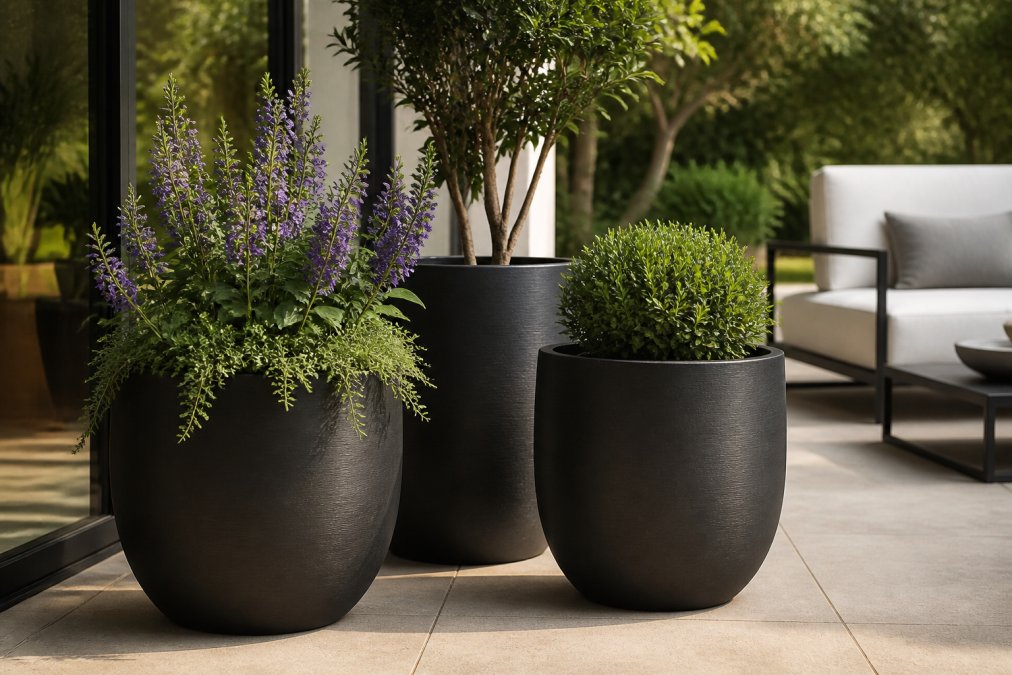
 comparison
Are Expensive Planters Worth Buying? A 2026 Review
Table of Contents
- Are Expensive Planters Worth It? The Bottom Line
- Price vs. Value: What You're Actually Paying For
- Material Matters: Durability of Expensive Planters
- The Best Planters for Outdoor Use: Where Premium Pays Off
- How Expensive Planters Prevent Root Rot
- Freeze-Proof Planter Materials: Surviving Winter
- Our Verdict: When to Invest in Durable Outdoor Planters
- Conclusion
- Frequently Asked Questions
Last Updated: September 9, 2026
Are Expensive Planters Worth It? The Bottom Line
Most gardeners have watched a cheap planter crack, fade, or crumble within a single season, which raises the question of whether expensive planters are worth buying. The short answer is yes, premium planters justify their cost when you calculate the price per year of service, but only if you choose the right material for your climate and use case. At Beloit Plastics LLC, we manufacture U.S.-made planters.
A cheap $10 terracotta pot that shatters in the first freeze costs more over time than a $40 resin planter that survives a decade of winters. The real metric is cost-per-use, not the sticker price.
Price vs. Value: What You're Actually Paying For
When you pay more for a planter, you are funding better material composition, thicker walls, UV resistance, and craftsmanship that prevents cracking and fading. Cheap planters often use thin plastic that becomes brittle in cold weather or porous terracotta that absorbs moisture and spalls during freeze-thaw cycles.
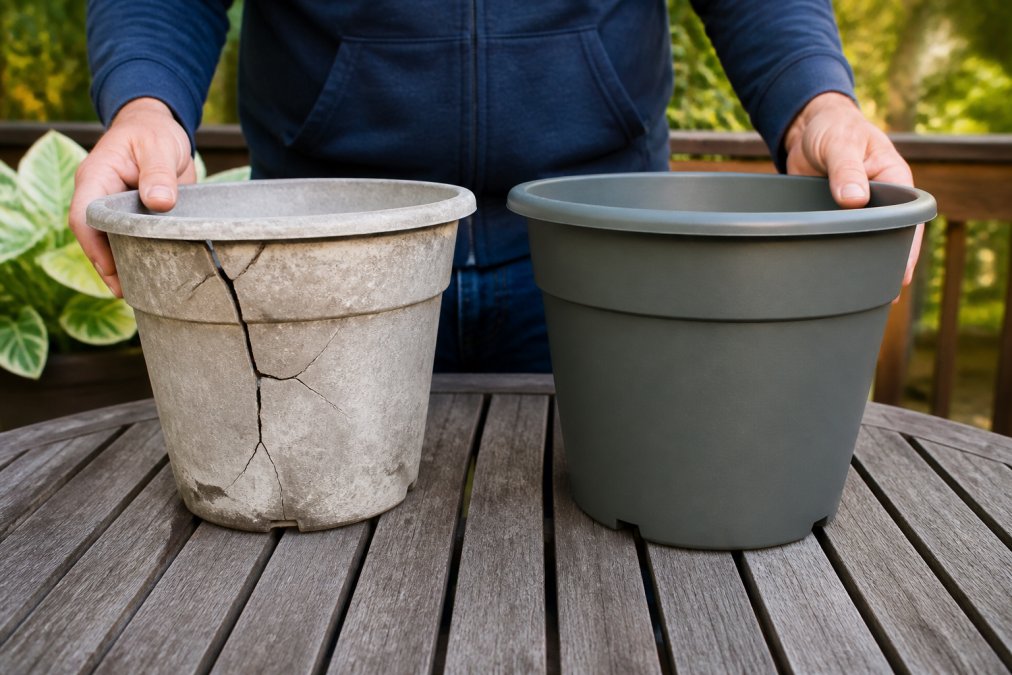
But the real question is not what you pay upfront, it is what you pay per year of service. A budget planter may need replacing every year or two, while a durable outdoor planter can last a decade or more.
Let's put real numbers on this. A $10 terracotta pot that cracks in its first winter costs $10 per year if it lasts one season. A $40 polypropylene planter that survives ten winters costs $4 per year, and it still looks presentable in year ten. Even a $100 fiberglass statement planter that lasts 15 years costs just $6.67 per year. The math flips even faster when you factor in the cost of replacing the plant itself: losing a $30 perennial to a cracked pot that exposes roots to frost doubles the true cost of that cheap container.
Beyond the sticker price, you are paying for specific engineering details that affect both longevity and plant health. Drainage holes that are properly sized and positioned prevent water pooling at the root zone. Saucers with support grids or ribbed undersides keep the pot elevated so moisture does not get trapped against your deck or balcony. Color that is molded throughout the material, rather than painted or coated on the surface, does not peel, chip, or fade to a chalky pastel after a few seasons of UV exposure. Thicker walls provide insulation for roots against temperature swings and resist cracking from incidental impacts like a knocked-over pot or a dropped garden tool.
You are also paying for manufacturing consistency. Cheap planters often have thin spots, uneven wall thickness, or flash from the molding process that creates weak points. Premium manufacturers control wall thickness to a consistent specification, which means the planter flexes evenly under pressure rather than snapping at a thin seam. This is why a $40 resin planter can survive a freeze that shatters a $12 terracotta pot: the material has give, and the walls are thick enough to accommodate ice expansion without structural failure.
There is also a hidden cost to cheap planters that rarely appears in the price comparison: the cost of plant loss. When a porous terracotta pot spalls in winter, it often takes the plant with it, either through root exposure or through the shock of being transplanted mid-season. Losing a $25 tomato plant, a $15 herb collection, or a $50 ornamental shrub to a failed container doubles or triples the true cost of the cheap pot. Premium planters protect your plants through the season, you are buying the survival of what is inside it.
Material Matters: Durability of Expensive Planters
The material composition of a planter is the single biggest factor in its longevity. Terracotta and ceramic are porous, heavy, and prone to cracking in freezing temperatures. Concrete planters provide structural integrity and thermal insulation but are extremely heavy, making them impractical for balconies and rooftops where weight limits apply.
Resin and polypropylene planters offer the best balance of durability, weight, and weather resistance. High-impact polypropylene resists UV radiation, so colors stay vibrant rather than fading to chalky pastels. These materials also handle temperature swings without becoming brittle, which matters in climates with harsh freeze-thaw cycles. The USDA Plant Hardiness Zone guidelines help gardeners understand their local temperature extremes, but regardless of zone, a quality resin planter outperforms porous materials in winter survival.
| Material | Durability | Weight | Freeze Resistance | Best Use Case |
|---|---|---|---|---|
| Terracotta | Low to moderate | Heavy | Poor | Mild climates, indoor |
| Concrete | High | Very heavy | Moderate | Ground-level permanent planting |
| Fiberglass | High | Light | Good | Large statement pieces |
| Polypropylene | Very high | Light | Excellent | Patios, balconies, year-round outdoor |
But durability is only half the story. The environmental impact of your material choice is a factor most planter guides ignore, and it is one of the strongest arguments for buying premium. Cheap plastic planters are often made from virgin, low-grade polymers that degrade quickly under UV exposure, becoming brittle and cracking within a few seasons. When they fail, they go to a landfill, where they will sit for centuries. The EPA data on plastic waste generation shows that containers and packaging account for a significant share of municipal solid waste, and a planter that lasts one season before cracking contributes to that stream far more than a durable pot that serves for a decade.
Premium planters made from recycled polypropylene, like the ones Beloit Plastics LLC manufactures, close the loop in two ways. First, they divert plastic waste from landfills by using post-consumer recycled material. Second, their longevity means fewer replacements, which means fewer discarded pots over time.
Climate-specific performance is the other angle that separates premium materials from budget options. In the Upper Midwest and Northeast, freeze-thaw cycles are the number one killer of planters. Porous materials like terracotta and unglazed ceramic absorb water; when that water freezes, it expands with tremendous force and shatters the pot from the inside. Concrete performs better but is not immune, repeated freeze-thaw cycles can cause surface spalling and hairline cracks. In the Southwest, intense UV radiation degrades cheap plastics, causing them to become brittle and fade within a single summer. Premium polypropylene includes UV stabilizers that prevent this degradation, maintaining both structural integrity and color for years.
Weight and structural integrity matter differently depending on where you garden. On a ground-level patio, a 50-pound concrete planter is a permanent installation. On a balcony or rooftop, that same planter is a liability. Most residential balconies are rated for 40 to 50 pounds per square foot, and a wet 12-inch concrete planter can easily exceed that limit. A polypropylene planter of the same size weighs a fraction of that while providing the same structural integrity. This is not just a convenience issue, it is a safety issue.
The environmental argument for premium planters extends beyond the pot itself. When a cheap planter cracks and you lose the plant inside, you are also discarding the potting soil, the plant, and any fertilizer or amendments you added. A premium planter that protects its contents for a decade prevents not just one disposal but a cycle of disposals, pot, plant, soil, and all.
The Best Planters for Outdoor Use: Where Premium Pays Off
For outdoor use, the best planters combine UV resistance, freeze-proof construction, and proper drainage. Our top recommendation is the Sample Pack 12-Piece Flower Pot and Saucer Set at $39.99, delivering graduated sizes from 2 to 12 inches with matching saucers. Made from high-impact polypropylene, this set handles everything from herbs to patio statement plants.

The color is molded throughout the material, so scratches and chips do not reveal a different color underneath. Each pot includes several drainage holes to prevent overwatering, and the saucer's ribbed underside keeps it slightly elevated to prevent moisture trapping on your deck or balcony. For a compact option, the Austin Planter 4 inch Flower Pots with Saucers in Terra Cotta at $19.99 for a 5-pack offers that classic clay look without the fragility, using fade-resistant recycled polypropylene.

How Expensive Planters Prevent Root Rot
Premium planters protect plant health through superior drainage design, the most important factor in preventing root rot. Root rot occurs when roots sit in waterlogged soil, depriving them of oxygen and allowing fungal pathogens to thrive. Quality planters feature multiple drainage holes at the bottom, and many include saucers with support grids that allow airflow beneath the pot.
Beloit Plastics LLC planters come with drainage holes. The saucer functions as a drip tray that catches excess water while the support grid keeps the pot slightly elevated, preventing the floor contact area from trapping moisture. This aeration matters for plant well-being, especially for container gardening enthusiasts growing succulents, herbs, and flowers that prefer well-draining soil.
The 12 inch Red Pot with Saucer at $19.37 demonstrates this design philosophy at scale, with drainage holes that protect roots while the lightweight resin construction makes it easy to move around your patio.
Freeze-Proof Planter Materials: Surviving Winter
For gardeners in cold climates, the freeze-thaw cycle is the ultimate test of planter durability. When water freezes inside porous materials like terracotta or unglazed ceramic, it expands and creates internal pressure that eventually causes cracking and spalling.
Freeze-proof planter materials include high-density polyethylene, polypropylene, and fiberglass, all of which have enough flexibility to accommodate ice expansion without structural failure. These materials also resist the weathering effects of repeated freezing and thawing, maintaining their appearance and structural integrity for many seasons. The University of Vermont Extension guidance on winter container care recommends moving containers to protected areas or choosing frost-resistant materials for outdoor winter storage.
Our Verdict: When to Invest in Durable Outdoor Planters
Investing in durable outdoor planters makes sense in three situations: you garden in a climate with harsh winters, you want planters that maintain curb appeal for years, or you are tired of replacing cracked pots every season. If you only need a temporary container for a single season or you are growing indoors, a budget option may suffice.
For most homeowners and apartment dwellers, the math favors quality. A $20 planter that lasts one season costs $20 per year. A $40 planter that lasts ten years costs $4 per year, and it looks better the entire time. The environmental impact also favors durability, since fewer discarded planters end up in landfills. According to EPA data on plastic waste generation, durable goods that avoid premature disposal reduce overall waste streams significantly.
The Austin Planter Plastic Flower Pots with Saucers, 4 inch, Lime Green at $19.99 shows that premium durability does not require a premium budget. Made from 95% recycled polypropylene, these pots resist fading, clean easily, and include drainage holes that protect plant roots. Customer Rick B. from Ohio described the classic look as one that lasts, and Tom J. from Colorado appreciated the bright color.

Conclusion
The question of whether expensive planters are worth buying comes down to how you value your time, your plants, and your outdoor space. Cheap planters create a cycle of replacement, plant loss, and disappointment that costs more than a quality purchase upfront. Beloit Plastics LLC offers U.S.-made planters and saucers engineered for longevity, with direct manufacturer pricing, free shipping, and 30-day returns that remove the risk from your purchase.
Explore the full collection and find planters that will serve your patio or garden for years to come.
Frequently Asked Questions
Are expensive planters worth the cost?
Expensive planters are worth the cost when you calculate cost-per-use. A $20 planter that cracks in one season costs $20 per year. A $40 planter built from high-impact polypropylene can last 10 or more years, costing just $4 per year. The more expensive option also protects your plants better with proper drainage and stable temperatures.
What materials are freeze-proof for outdoor planters?
The best freeze-proof planter materials are high-impact polypropylene, fiberglass, and thick resin. These materials flex slightly during freeze-thaw cycles instead of cracking like terracotta or concrete. Look for planters labeled as weather-resistant and made from recycled polypropylene.
Do expensive planters actually prevent root rot?
Yes, when they include proper drainage. Premium planters typically have multiple drainage holes, which let excess water escape and prevent waterlogged soil. Some quality planters also have saucers with support grids that allow airflow underneath, so the floor contact area doesn't trap moisture. This combination keeps roots healthier than cheap pots without functional drainage.
What are the best planters for outdoor use on a balcony?
The best planters for outdoor use on balconies are lightweight yet durable options made from polypropylene. They're strong enough for wind and weather but won't strain balcony weight limits like concrete or ceramic. A set with graduated sizes, like the 12-piece Sample Pack, lets you arrange varied plant heights without exceeding structural limits.
This article was published by Beloit Plastics LLC, a U.S. manufacturer of durable, recycled-plastic planters and garden accessories.