 ultimate-guide
Why Quality Planters Cost More: What You Pay For
Table of Contents
- The Real Cost Breakdown: Where Your Money Goes
- The Cost-per-Year Lifecycle Analysis
- Plastic vs Ceramic Planters Pros and Cons
- Shipping, Logistics, and Freight Expenses
- Best Pots for Container Gardening: Moisture Regulation and Plant Health
- Durable Outdoor Planters for All Seasons: Sustainability and Long-Term Value
- Conclusion: Why Quality Planters Are a Smart Investment
- Frequently Asked Questions
Last Updated: September 14, 2026
The Real Cost Breakdown: Where Your Money Goes
A quality planter costs more because the material, the manufacturing process, and the logistics behind it all cost more to get right. When you pick up a cheap pot, you are paying for thin walls, minimal material, and a production line built for speed. When you pick up a planter built to last, you are paying for density, precision, and the labor that goes into getting every detail correct. This guide from Beloit Plastics LLC breaks down exactly where your money goes, so you can decide whether the higher price tag makes sense for your balcony, patio, or backyard.
Material Quality and Durability
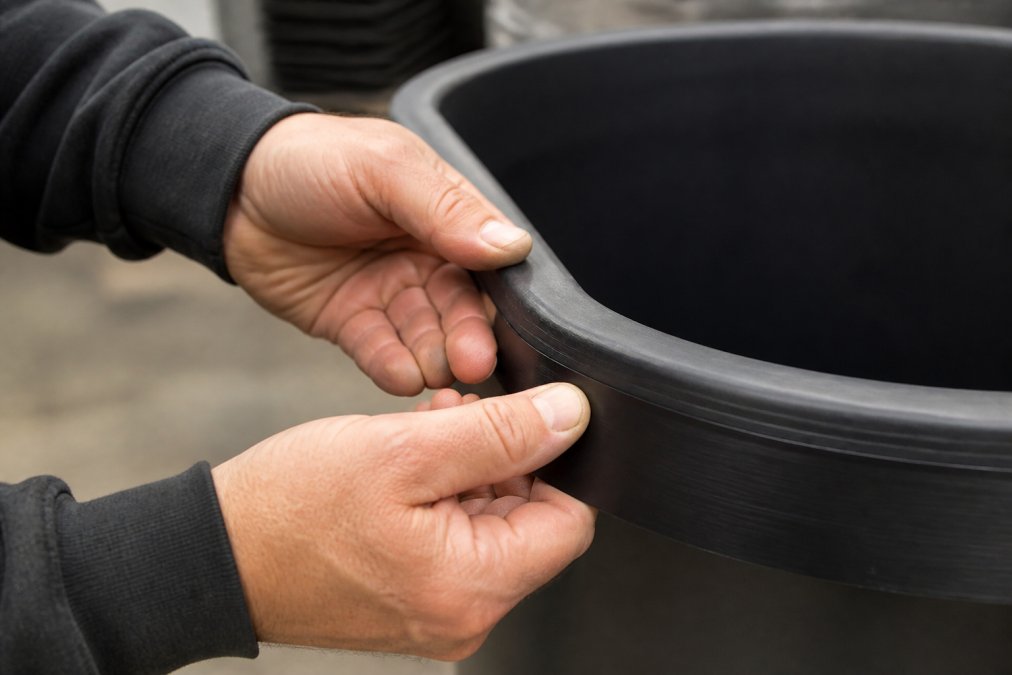
Material quality is the single biggest driver of planter cost. A planter made from thick, high-density polypropylene uses significantly more raw material per unit than a thin, flexible pot. That extra material is what gives a planter its structural integrity, its resistance to UV degradation, and its ability to survive freeze-thaw cycles without cracking. Cheaper planters cut corners here first: thinner walls, lower-grade resin, and less material overall. The result is a pot that looks fine on the shelf but fails after a season or two outdoors.
Manufacturing Processes and Labor Costs
Manufacturing overhead and labor costs separate budget pots from durable ones. Injection molding a thick-walled planter requires heavier tooling, longer cycle times, and tighter quality control than stamping out a flimsy container. Domestic manufacturing adds labor costs that overseas production avoids, but it also means closer oversight of material density and finish. A common mistake buyers make is assuming all plastic planters are made the same way. They are not. The process determines whether a planter holds its shape after years of sun exposure or sags and fades within months.
The Cost-per-Year Lifecycle Analysis
The cost-per-year lifecycle analysis is the most useful way to judge whether a planter is actually expensive. A cheap pot that costs a few dollars but needs replacing every year or two costs more per year than a well-built planter that lasts a decade. Divide the purchase price by the number of years it stays in service, and the math usually favors the higher upfront cost. This is the angle most buyers miss: they compare sticker prices instead of replacement cycles.
Replacement Cycle vs. Long-Term Investment
Replacement cycle length is where quality planters win on paper. A planter that survives five or more seasons spreads its cost across years of use, while a failing pot forces you to rebuy, repot, and risk losing plants to root damage during the transition. Treating a planter as a long-term investment rather than a disposable purchase changes how you evaluate the price. The question shifts from "why is this more expensive" to "how many years will this actually last."
Plastic vs Ceramic Planters Pros and Cons
Plastic and ceramic planters each have real trade-offs, and the right choice depends on where the pot will live. The differences come down to how each material is made and how it behaves under thermal and physical stress.
Ceramic planters are shaped from clay, dried, and fired in a kiln at high temperature. That firing process fuses the clay into a rigid, non-porous (or lightly porous, depending on glaze) body with excellent aesthetic range. The trade-off is brittleness: fired clay has almost no flex, so a knock against a railing, a hard freeze, or a shift in the soil can produce a chip or a crack that runs. Unglazed terracotta is also porous, which means it wicks moisture through the walls and can develop efflorescence (white mineral bloom) over time.
Plastic planters are formed by injection molding or rotational molding. Injection molding forces molten resin into a steel mold under pressure, which produces consistent wall thickness and sharp detail but requires expensive tooling. Rotational molding (rotomolding) tumbles resin inside a heated mold so it coats the interior evenly, which is how large, thick-walled, seamless planters are made. The resin itself matters as much as the process: high-density polyethylene (HDPE) and polypropylene (PP) resist UV degradation far better than the thin, low-grade resins used in budget pots, and UV stabilizers are added to slow the yellowing and embrittlement that sunlight causes.
| Factor | Plastic Planters | Ceramic Planters |
|---|---|---|
| Weight | Light, easy to move | Heavy, hard to relocate |
| Frost resistance | High with quality resin and UV stabilizers | Low; fired clay cracks in freeze-thaw cycles |
| Cost | Lower per unit | Higher per unit |
| Durability | Resists impact and UV | Chips and shatters |
| Moisture behavior | Non-porous; drainage depends on holes | Porous when unglazed; wicks and stains |
| Best for | Balconies, patios, containers | Sheltered indoor displays |
Weight and Structural Integrity
Weight and structural integrity matter more than most buyers realize, and they connect directly to how each material is made. A heavy ceramic pot on a balcony railing or upper deck raises safety and load concerns, while a lightweight planter with thick walls holds its shape without stressing the surface beneath it.
Structural integrity also affects root health. A planter that flexes or warps can crack, expose roots, and compromise the potting medium. This is where wall thickness and material density separate quality plastic from cheap plastic. A thin-walled pot flexes under the pressure of wet soil and can bow outward, which opens gaps at the base and lets water channel out unevenly. A thick-walled, rotomolded planter keeps a rigid base and walls through temperature swings, so the root ball stays stable and drainage stays predictable.
For large outdoor containers, weight is also a wind-resistance issue. A lightweight pot with a tall plant can tip in a gust, while a heavier pot or a weighted base resists it. Ceramic wins on raw mass but loses on portability and freeze safety; quality plastic wins on the balance of rigidity, low weight, and impact resistance. Most practitioners find that for balconies, patios, and rooftop containers, a thick-walled plastic planter is the more practical long-term choice, while ceramic is best reserved for sheltered indoor displays where its appearance can be appreciated without exposure to freeze-thaw cycles.
Shipping, Logistics, and Freight Expenses
Freight costs are baked into every planter's price, and they hit heavy, bulky items hardest. The reason is dimensional weight: carriers price large, light packages by the space they occupy, not just their actual weight. A tall, wide planter that weighs very little still consumes a large volume of a truck or container, so it is billed as if it were heavier. That is why a planter's shipping cost is driven by both mass and cubic volume, and why pot size compounds the problem.
Ceramic and terracotta planters are dense and fragile, which means higher freight costs and more breakage in transit. Breakage is a hidden cost that gets priced into the retail number: a percentage of every ceramic shipment arrives cracked, and that loss is spread across the units that survive. Ceramic also has to be packed with cushioning and often double-boxed, which adds material and labor to each shipment. Plastic planters ship lighter, resist impact, and can be nested or stacked, which lowers freight cost per unit and reduces damage claims.
The impact of pot size compounds this further. Larger planters take up more volume, so shipping a big pot costs more than shipping a small one even when the weight difference is modest. A 14-inch planter may weigh only a few pounds more than a 6-inch one, but it can occupy several times the cubic space, and dimensional-weight pricing reflects that. This is one reason the price gap between a small and a large planter is not linear: the large pot carries a freight penalty that the small pot does not.
The Impact of Pot Size on Production Costs
Pot size drives production costs in two directions. Larger planters require more raw material and longer molding cycles, and they consume more warehouse and freight space. In injection molding, a larger part needs a larger mold and a larger press, and the cycle time to fill and cool the part grows with wall thickness and surface area. In rotomolding, a larger mold takes longer to heat, tumble, and cool, so each unit ties up the machine for more time. That is why a 14-inch planter costs more than a 4-inch one, even though the design is similar.
Sizing up also affects weight distribution and how much potting medium the planter holds, which matters when you are calculating how many plants a space can support and how much soil you will need to buy. A larger pot needs more potting mix, more water, and a stronger base to support the weight of saturated soil. Those downstream costs are part of the true price of a large planter, and they are why the sticker price alone never tells the whole story.
Best Pots for Container Gardening: Moisture Regulation and Plant Health
The best pots for container gardening are the ones that manage moisture correctly. Drainage holes and a matching saucer do more for plant health than almost any other feature, because they prevent the waterlogged conditions that cause root rot. Moisture retention and root aeration work together: the potting medium holds enough water for the plant, while excess drains away instead of pooling at the roots. A planter without proper drainage traps water and slowly suffocates the root system.
Drainage Holes and Root Rot Prevention
Drainage holes and root rot prevention are directly linked. When water cannot escape, it saturates the potting medium, displaces oxygen, and creates the conditions where root rot takes hold. A planter with a saucer catches the runoff and protects your deck or windowsill from water stains at the same time. The University of Minnesota Extension guide to container gardening explains how proper drainage supports healthy root systems, and the USDA's plant hardiness information helps you match plant choices to your growing conditions.
Durable Outdoor Planters for All Seasons: Sustainability and Long-Term Value
Durable outdoor planters for all seasons are built from materials that resist weathering, UV degradation, and temperature swings. Sustainability plays a role here too: planters made from recycled polypropylene keep material in circulation and reduce the demand for new raw plastic. The EPA's information on recycling and sustainable materials outlines how recycled-content products lower environmental impact. Long-term value comes from combining durability with sustainable materials, so a single purchase serves you for years instead of a single season.
Professional Nursery Standards
Professional nursery standards set the benchmark for what a planter should withstand. Nurseries move plants through repeated watering, repotting, and seasonal shifts, so their containers have to hold up under constant handling. That is the standard quality planters are built to meet: thick walls, consistent material density, and drainage that works every time. When you buy a planter made to nursery-grade expectations, you are buying the same reliability that commercial growers depend on.
Conclusion: Why Quality Planters Are a Smart Investment
The upfront price of a quality planter reflects real costs: denser material, more careful manufacturing, and lighter, more efficient shipping. Spread across the years it stays in service, that price usually beats the cycle of replacing cheap pots every season. Beloit Plastics LLC makes U.S.-made planters and saucers built for exactly this kind of long-term use, with durable construction for all seasons, surface protection from water stains, and easy cleaning and maintenance. Explore the MRAP 14-inch pot and saucer or the Austin Planter 4-inch sets to see the difference material density and proper drainage make. Get started with Beloit Plastics LLC and invest in planters that earn their cost back season after season.

Frequently Asked Questions
Why are quality planters so expensive?
Quality planters cost more because of premium materials like UV-stabilized polypropylene, thicker walls for structural integrity, and manufacturing processes such as injection molding. These features ensure durability, frost resistance, and better moisture regulation. For example, a 14-inch pot with saucer from Beloit Plastics costs $20.75, but lasts many seasons, while cheap alternatives may crack after one winter. The higher upfront price reflects longer lifespan and healthier plants.
What type of planters last the longest in outdoor conditions?
Planters made from high-density polypropylene last longest outdoors. They resist UV degradation, frost, and cracking. Look for features like thick walls, drainage holes, and UV inhibitors. Plastic planters from Beloit Plastics, for instance, are made in the USA from 95% recycled polypropylene and withstand freeze-thaw cycles. Quality plastic offers durability at a lower weight.
Are expensive planters actually better for plant health?
Yes, expensive planters often provide better drainage, root aeration, and moisture retention. Cheap pots may lack proper drainage holes, leading to root rot. Quality planters, like those from Beloit Plastics, include saucers to catch excess water and prevent surface damage. Better materials also regulate temperature, protecting roots from extreme heat or cold. This creates a healthier environment for container gardening.
How does manufacturing location affect the price of garden pots?
Manufacturing location impacts cost through labor, shipping, and regulations. Domestically made pots, like those from Beloit Plastics in Wisconsin, avoid import tariffs and long freight costs, but may have higher labor expenses. However, local production ensures stricter quality control and faster delivery. For example, Beloit Plastics offers free shipping and direct manufacturer pricing, offsetting some costs while supporting American craftsmanship.