 ultimate-guide
Long Lasting Outdoor Garden Decor: 2026 Guide
Table of Contents
- Material Comparison: Which Outdoor Garden Decor Lasts?
- Durable Outdoor Planters Built for Every Season
- Weather-Resistant Garden Ornaments That Hold Their Color
- How to Maintain Garden Decor for Year-Round Beauty
- Climate-Specific Care for Long Lasting Outdoor Garden Decor
- Eco-Friendly and DIY Restoration for Outdoor Decor
- Conclusion
- Frequently Asked Questions
Last Updated: September 11, 2026
Material Comparison: Which Outdoor Garden Decor Lasts?
The material you choose determines whether your outdoor garden decor survives a single season or looks good for a decade. Polypropylene and UV-stabilized resin resist cracking through freeze-thaw cycles, powder-coated cast iron survives decades with occasional touch-ups, and natural bronze develops a protective patina rather than corroding. Untreated wood and thin ceramics are the outliers: both look excellent on day one and rarely make it past year three.
This guide breaks down how each material actually performs, what maintenance it demands, and which options suit your climate. The stakes are real. Replacing faded or cracked decor every spring costs far more than buying once and maintaining properly.
| Material | Lifespan | Maintenance | Best For |
|---|---|---|---|
| Polypropylene / resin | 5-10 years | Rinse seasonally | Planters, hanging pots, stepping stones |
| Powder-coated metal | 10-20 years | Touch up chips | Kinetic spinners, stakes, fencing |
| Cast iron | 20+ years | Recoat every 2-3 years | Statues, urns, heavy ornaments |
| Bronze | 30+ years | Occasional wax | Sculptures, focal pieces |
| Untreated wood | 2-4 years | Seal annually | Raised beds, rustic accents |
For most homeowners balancing cost against longevity, University of Illinois Extension guidance on weather-resistant garden materials confirms that UV-stabilized plastics and coated metals offer the best return on investment.

Durable Outdoor Planters Built for Every Season
A planter's failure point is almost never the sides. It is the base, where standing water freezes, expands, and splits the pot from the inside out. Durable outdoor planters solve this with two features: drainage holes that prevent water accumulation and a material that flexes slightly under freeze-thaw stress rather than cracking.
Polypropylene planters outperform terracotta in cold climates for exactly this reason. They will not absorb water, so there is nothing inside the wall to freeze and expand. Look for pots with pre-drilled drainage and a wall thickness that resists bowing when filled with wet soil.
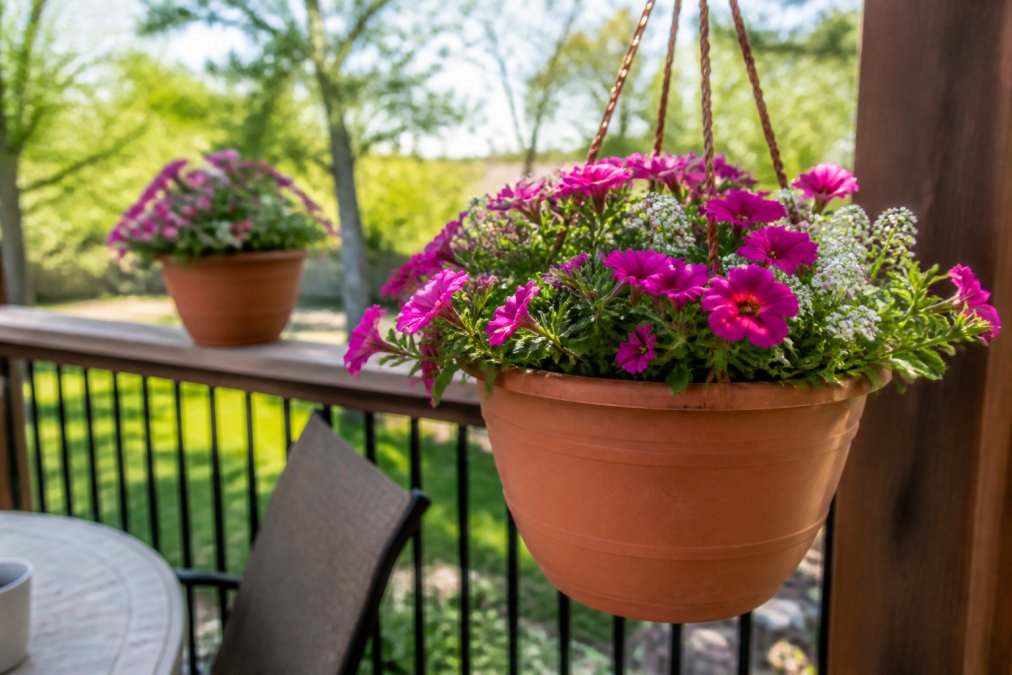
Beloit Plastics LLC manufactures its Austin Planter line from UV-stabilized polypropylene with recycled content, and each 9-inch hanging pot includes multiple drainage holes so no drilling is required. The terra cotta color holds through sun exposure rather than fading to pink by August. A five-pack runs $34.25 with free shipping.

Weather-Resistant Garden Ornaments That Hold Their Color
Fading is the slowest and most frustrating failure mode in garden decor. A spinner that looked vivid in May turns chalky by September, and by the next spring it is a pale ghost of itself. The culprit is ultraviolet radiation breaking down the pigment bonds in cheap plastic and paint, but the fix depends entirely on which material you are dealing with.
How color actually fails, by material:
- Unstabilized plastic: UV energy attacks the polymer chain itself, not just the pigment. The surface first chalks (a powdery white film), then embrittles and cracks. Color loss and structural failure are the same process.
- UV-stabilized plastic: Hindered amine light stabilizers (HALS) and UV absorbers are compounded into the resin before molding, so protection exists throughout the wall thickness, not just on the surface. Scratches do not expose unprotected material.
- Powder-coated metal: The coating is electrostatically applied and oven-cured into a cross-linked film that resists chipping far better than spray paint. Color holds as long as the film stays intact; a single deep chip becomes a rust initiation site.
- Painted or dyed resin: Surface-only color. Once the top layer erodes, the underlying gray shows through. These pieces fade fastest in high-UV regions.
- Bronze and copper: Color change is expected and protective. The green-brown patina is a stable oxide layer that shields the metal beneath. Do not strip it to chase a polished look unless you plan to wax regularly.
What to look for on the label or listing:
- The words "UV-stabilized," "UV-inhibited," or "fade-resistant" applied to the resin itself, not a topcoat
- Powder-coated rather than painted metal, especially on spinners, stakes, and fencing
- Stainless or sealed bearings in kinetic pieces; exposed steel bearings seize after a season of rain
- Rigid shafts on stakes and pinwheels, which resist bending in wind better than flexible ones
- Single-piece molded construction on stepping stones and statues, so there are no glued joints to separate after a freeze
A quick field test: Flex a plastic ornament slightly in the store. If it whitens at the bend, the polymer is already brittle and will not survive a winter. If it flexes and returns, the formulation has enough plasticizer and stabilizer to handle temperature swings.
University of Illinois Extension guidance on weather-resistant garden materials confirms that UV-stabilized plastics and coated metals offer the best return on investment for outdoor display.
Beloit Plastics LLC's Spinning Daisies line uses fade-resistant plastic built for multi-season outdoor display, available in 6-packs at $39.99 or 9-packs at $59.56. For ground-level accents, the company's 12-inch resin stepping stones at $9.95 each are molded as a single piece, so there are no joints to separate after a winter of foot traffic.

How to Maintain Garden Decor for Year-Round Beauty
Maintenance for long-lasting outdoor garden decor takes about an hour per season, and skipping it is the fastest way to shorten the life of pieces that should last a decade. Most guides stop at "clean and inspect." The difference between decor that lasts three years and decor that lasts fifteen is knowing what each material actually needs and when to intervene.
Seasonal maintenance checklist:
- Rinse planters and saucers with a hose to clear mineral buildup and old soil
- Inspect metal pieces for chips; touch up bare spots before rust starts
- Check drainage holes for root intrusion and clear them with a skewer
- Tighten spinner bearings and replace any that wobble or seize
- Bring delicate ceramics and thin resin indoors before the first hard freeze
- Wipe bronze with a soft cloth; wax annually if you want to slow patina
Material-specific care, beyond the checklist:
- Polypropylene and resin: Rinse with a garden hose and a soft brush. Avoid solvents, which dull the surface and can leach stabilizers. If the surface feels slick or slimy, that is biofilm, not damage; a dilute vinegar rinse removes it without abrasion.
- Powder-coated metal: The coating is the protection. Inspect edges, welds, and fastener points each spring, since these are where chips start. Touch up bare spots with a matching enamel before rust blooms. Do not power-wash; high pressure lifts coating at seams.
- Cast iron and steel: Recoat every two to three years with a rust-inhibiting paint. Wire-brush any existing rust to bare metal first, then prime. Painting over rust traps moisture and accelerates failure.
- Bronze: Leave the patina alone. It is a stable protective layer. Wax only if you prefer the polished look, and expect to re-wax annually to maintain it.
- Wood: Seal annually with an outdoor-rated oil or stain. End grain and joints absorb water fastest, so those areas need the most attention.
The most common mistakes:
- Power-washing everything at once. High pressure strips powder coating off metal and drives water into seams on resin pieces, which is exactly the damage you are trying to prevent.
- Painting over rust instead of removing it. The rust continues to spread under the paint and lifts it within a season.
- Storing plastic in a hot shed. Heat degrades UV inhibitors faster than sun exposure alone.
- Skipping the pre-freeze check. A planter with a blocked drainage hole will crack the first time water inside it freezes.
Colorado State University Extension advice on winterizing container plants and garden accessories notes that containers left outdoors through winter should be elevated slightly off hard surfaces so meltwater drains rather than pooling beneath the base.
Climate-Specific Care for Long Lasting Outdoor Garden Decor
Climate, not brand, decides how long decor actually lasts. A planter that thrives in a mild coastal yard may fail in its second winter where the ground freezes and thaws repeatedly. Matching material to your regional conditions matters more than any single product feature.
Freeze-thaw regions (Northeast, Midwest, mountain states): Prioritize polypropylene, resin, and powder-coated metal. Avoid unglazed terracotta, which absorbs water and cracks. Empty and store ceramic pots before the first hard freeze.
Hot, high-UV regions (Southwest, Southeast): Fading and embrittlement are the threats. UV-stabilized plastic and powder-coated metal hold up best. Dark-colored metal heats significantly in direct sun, so place it where plants will not cook against it.
Humid and coastal regions (Gulf, Pacific Northwest): Corrosion drives failure. Choose corrosion-resistant coatings, stainless hardware, and resin over untreated steel. Rinse salt spray off metal pieces monthly if you are within a few miles of the coast.
Dry, windy regions (plains states): Wind stress snaps thin stakes and topples lightweight pots. Weighted bases and rigid shafts matter more than color or finish.
Beloit Plastics LLC's products are engineered for year-round outdoor use across these conditions, and customer feedback reflects that range, from Diane M. in Florida reporting 'Birds Love It!' to Rick B. in Ohio noting 'Classic Look That Lasts'.
Eco-Friendly and DIY Restoration for Outdoor Decor
Restoration beats replacement on both cost and environmental grounds. Most faded or scuffed decor is structurally sound; only the surface has degraded. A weekend of cleaning and recoating can add years to pieces you were ready to discard.
Restoration methods by material:
- Faded plastic: Wash with mild soap, then apply a plastic-safe spray paint designed for outdoor use. Test on the underside first.
- Chipped powder coating: Sand the bare spot lightly, apply a rust-inhibiting primer, then a matching topcoat.
- Chalky resin: A thin coat of clear UV-resistant sealer restores depth without repainting.
- Rusted cast iron: Wire-brush the rust, prime with a rust converter, then repaint.
- Dull bronze: Leave the patina alone. It protects the metal. Wax only if you prefer the polished look.
Choosing recycled-content products in the first place reduces the waste stream further. Beloit Plastics LLC molds several of its planters from recycled eco-friendly plastic, which keeps material in circulation while delivering the same durability as virgin resin.
Conclusion
The gap between decor that lasts one season and decor that lasts ten comes down to material choice, drainage, and a modest seasonal maintenance routine. None of it is complicated, but skipping any one piece shortens the lifespan of everything you own.
Beloit Plastics LLC builds planters, saucers, stepping stones, and garden accents from UV-stabilized polypropylene and resin, all made in the USA with direct manufacturer pricing, always-free shipping, quick ship times, and a 30-day return window. If your current decor did not survive last winter, the material was the problem, not you.
Explore Now and start with planters and accents built to handle every season your yard throws at them.
The challenge with outdoor decor is that the failure is invisible until it is too late: a hairline crack in November becomes a split pot in March. Choosing UV-stabilized, drainage-optimized pieces from the start removes that risk. Beloit Plastics LLC manufactures its planters and garden accessories in the USA from durable, fade-resistant materials, backed by free shipping, quick dispatch, and a 30-day return policy. Get started with Beloit Plastics LLC and build a patio or garden that looks intentional in year five, not just year one.
Frequently Asked Questions
What garden decor materials last the longest outdoors?
Polypropylene, powder-coated metal, cast iron, and resin outlast most other materials. Polypropylene planters resist UV fading, corrosion, and freeze-thaw cracking. Powder-coated metal resists rust, and cast iron develops a protective patina. Resin stepping stones handle foot traffic and moisture without breaking down. For long lasting outdoor garden decor, look for UV-protected and rust-proof labels, and choose pieces rated for all-weather use.
How do you protect outdoor garden decor from weather damage?
Start with weather-resistant materials like UV-protected polypropylene or powder-coated finishes. During heavy freeze-thaw cycles, empty planters of standing water and raise them off the ground to prevent cracking. Clean surfaces with mild soap and water, and apply a plastic-safe paint or sealant to resin pieces every few years. Store lightweight ornaments like pinwheels during severe storms to extend their lifespan.
Are plastic garden accessories durable enough for harsh climates?
High-quality polypropylene and resin accessories handle harsh climates well. They resist UV fading, corrosion, and freeze-thaw cracking that damages cheaper plastics. For example, polypropylene hanging pots from Beloit Plastics are made in the USA with some recycled eco-friendly plastic and can last several seasons outdoors. Resin stepping stones also withstand weather and foot traffic. Look for thick walls and UV-protected finishes for the best durability.
How can I keep my garden decor from fading in the sun?
Choose UV-protected materials like polypropylene or powder-coated metal, which resist fading better than untreated wood or fabric. Position decor where it gets some afternoon shade if possible. For pieces that do fade, apply a plastic-safe paint or sealant. Beloit Plastics' Austin Planter 9 inch Hanging Flower Pots feature a bright color that won't fade in the sun and can last several seasons outdoors.