 ultimate-guide
Best Outdoor Planters for Winter: 2026 Guide
Table of Contents
- Why Most Planters Crack in Winter (And How to Stop It)
- What Makes a Planter Freeze-Proof? Key Materials Compared
- Our Top Picks for Freeze-Proof Outdoor Planters
- How to Protect Outdoor Pots from Freezing: A Step-by-Step Guide
- Winter Container Garden Ideas That Last All Season
- Common Winter Planter Mistakes to Avoid
- Final Verdict: Choosing the Right Planter for Your Climate
- Frequently Asked Questions
Last Updated: September 8, 2026
Why Most Planters Crack in Winter (And How to Stop It)
The physics of a cracking planter is simple: water expands when it freezes. When saturated soil freezes inside a rigid pot, it pushes outward with enough force to split terracotta, ceramic, and even concrete. The freeze-thaw cycle, where temperatures swing above and below 32°F repeatedly, turns a hairline crack into a broken planter by spring.
The good news is that the best outdoor planters for winter are engineered to survive this cycle. The best outdoor planters for winter are engineered to survive this cycle, and the material choice matters more than any other factor.
Most guides focus on aesthetics first and durability second. That's backwards. A beautiful pot that shatters in January costs you twice: once at purchase, again at replacement. This guide covers the materials that actually survive, how to protect outdoor pots from freezing, and winter container garden ideas that keep your porch looking alive when everything else is dormant.
What Makes a Planter Freeze-Proof? Key Materials Compared
Frost-proof means a material can withstand freezing temperatures without structural damage. Frost-resistant means it can survive some freezing but has limits. The distinction matters when you're shopping for outdoor planters for winter because manufacturers use the terms loosely.
Most guides stop at listing materials. What they don't tell you is how many freeze-thaw cycles each material actually survives in your specific climate zone.
Material Longevity by Climate Zone
The number of freeze-thaw cycles varies dramatically across the country. A garden in Minneapolis experiences roughly 40-50 cycles per winter, while one in Charlotte, North Carolina sees only 10-15. This difference explains why a planter that survives one winter in the South might shatter in its first season in the Upper Midwest.
Based on manufacturer testing data and long-term gardener reports across U.S. climate zones, here's what you can realistically expect:
| Material | Zone 4-5 (e.g., Minneapolis, Des Moines) | Zone 6-7 (e.g., St. Louis, Richmond) | Zone 8+ (e.g., Atlanta, Dallas) |
|---|---|---|---|
| Polypropylene plastic | 10+ seasons | 10+ seasons | 10+ seasons |
| Fiberglass | 8-10 seasons | 10+ seasons | 10+ seasons |
| Glazed ceramic | 1-3 seasons | 3-5 seasons | 5-8 seasons |
| Concrete (unsealed) | 2-4 seasons | 3-5 seasons | 5-7 seasons |
| Concrete (sealed annually) | 5-7 seasons | 6-8 seasons | 8+ seasons |
| Unglazed terracotta | 0-1 seasons | 1-2 seasons | 2-4 seasons |
These numbers assume the planter is left outside filled with soil all winter. If you empty and store pots indoors, you can extend any material's life significantly.
Why Polypropylene Wins on Physics, Not Just Marketing
The reason polypropylene performs well isn't a marketing claim, it's measurable. Polypropylene has a moisture absorption rate of less than 0.01% by weight. Terracotta absorbs up to 15% of its weight in water. When that absorbed water freezes, it expands by roughly 9% in volume, creating internal pressure that exceeds the tensile strength of the ceramic, causing cracks.
Polypropylene also has a lower modulus of elasticity than ceramic materials. In plain terms, it flexes slightly under pressure instead of resisting until it breaks. A polypropylene pot wall can deflect under ice pressure and return to its original shape. A terracotta wall cannot.
The Concrete Question: Sealing Changes Everything
Concrete gets a bad reputation in winter planter guides, but the reality is more nuanced. Unsealed concrete is porous, just like terracotta. Water migrates into the matrix and freezes, causing spalling, the flaking and chipping you see on older concrete planters.
However, sealing concrete with a breathable masonry sealer every fall changes the equation. A quality silane-siloxane sealer penetrates the surface and bonds chemically with the concrete, repelling liquid water while still allowing vapor to escape. This single step can double or triple a concrete planter's lifespan. The trade-off is maintenance: you must reapply annually, and the sealer costs roughly $20-30 per gallon, covering about 200 square feet.
A Note on Fiberglass and Resin
Fiberglass and resin planters perform nearly as well as polypropylene but with one key difference: they're more rigid. This makes them better for large statement pieces that need structural stability, but it also means they're more susceptible to impact damage in extreme cold. At temperatures below 0°F, some resin blends become brittle. High-quality fiberglass with proper gel coat resists this, but budget options may not.
Testing Your Own Planters
If you already own planters and want to know if they'll survive, try the water test. Place a few drops of water on the surface. If it beads up and rolls off, the material is sealed or non-porous. If it soaks in within 30 seconds, the material will absorb moisture and is vulnerable to freeze damage.
Our Top Picks for Freeze-Proof Outdoor Planters
For most homeowners, the best outdoor planters for winter are made from recycled polypropylene. They combine durability, lightweight handling, and affordability in a way that heavier materials can't match.

The Austin Planter Plastic Flower Pots with Saucers, 4 inch, Terra Cotta 5 Pack delivers the classic terracotta look without the cracking risk. At $19.99 for a five-pack, you get the warm, earthy aesthetic that complements winter greenery while the polypropylene construction shrugs off freezing temperatures. The color is molded throughout the material, so it won't flake or peel like painted pots.

For gardeners who want a larger statement piece, the 12 inch Red Pot with Saucer offers a bold pop of color against snow-covered landscapes. Priced at $19.37, this planter features weather-resistant construction with color molded throughout the resin. The included saucer has a ribbed underside that elevates it from the floor, promoting airflow and preventing moisture buildup.

How to Protect Outdoor Pots from Freezing: A Step-by-Step Guide
Even the best outdoor planters for winter benefit from a little preparation. These steps take about 30 minutes per planter and can extend the life of any container, regardless of material. But the standard advice, wrap in burlap, add mulch, only scratches the surface. What actually keeps plants alive and pots intact is understanding how temperature moves through the container system.
Step 1: Understand the Root Zone Temperature Problem
Here's the physics most guides skip: soil in a container is not insulated by the surrounding earth like in-ground plantings. A planter sitting on a concrete patio in January has cold air on all sides and cold ground below. When the air temperature drops to 10°F, the soil in an unprotected 12-inch pot can drop to the same temperature within 12-24 hours. Roots of most hardy perennials begin suffering damage below 20°F. At 10°F, root kill is nearly certain for all but the most cold-hardy species.
The goal of winter protection is not to keep the soil warm, that's impossible without heat. The goal is to slow the temperature drop and prevent rapid swings. A gradual drop from 32°F to 20°F over several days causes far less damage than a plunge from 40°F to 10°F overnight.
Step 2: Insulate the Root Ball with the "Pot-in-Pot" Method
The single most effective technique for protecting perennial roots in containers is the pot-in-pot method:
- Choose a larger container, at least 2-3 inches wider and deeper than your planted pot.
- Place a 2-inch layer of straw, shredded leaves, or wood chips in the bottom of the larger container.
- Set the planted pot inside.
- Fill the gap between the two pots completely with insulating material. Straw is ideal because it traps air while allowing moisture to escape.
- Cover the soil surface of the inner pot with 2-3 inches of mulch.
This method creates an air gap and insulating barrier that slows heat loss dramatically. University extension services report that this technique can keep root zone temperatures 10-15°F warmer than unprotected containers during extreme cold snaps.
Step 3: Use the Right Insulation Material
Not all insulation is equal. Here's how common materials compare for wrapping pots:
| Material | R-Value per inch | Pros | Cons |
|---|---|---|---|
| Burlap (single layer) | ~0.5 | Breathable, natural look | Minimal insulation alone |
| Bubble wrap | ~1.0 | Traps air well, cheap | Can trap moisture against pot |
| Straw bales | ~1.5-2.0 | Excellent bulk insulation | Bulky, can harbor rodents |
| Shredded leaves | ~1.0-1.5 | Free, biodegradable | Compacts and loses R-value |
| Rigid foam board | ~5.0 per inch | Best insulation per thickness | Ugly, must be hidden |
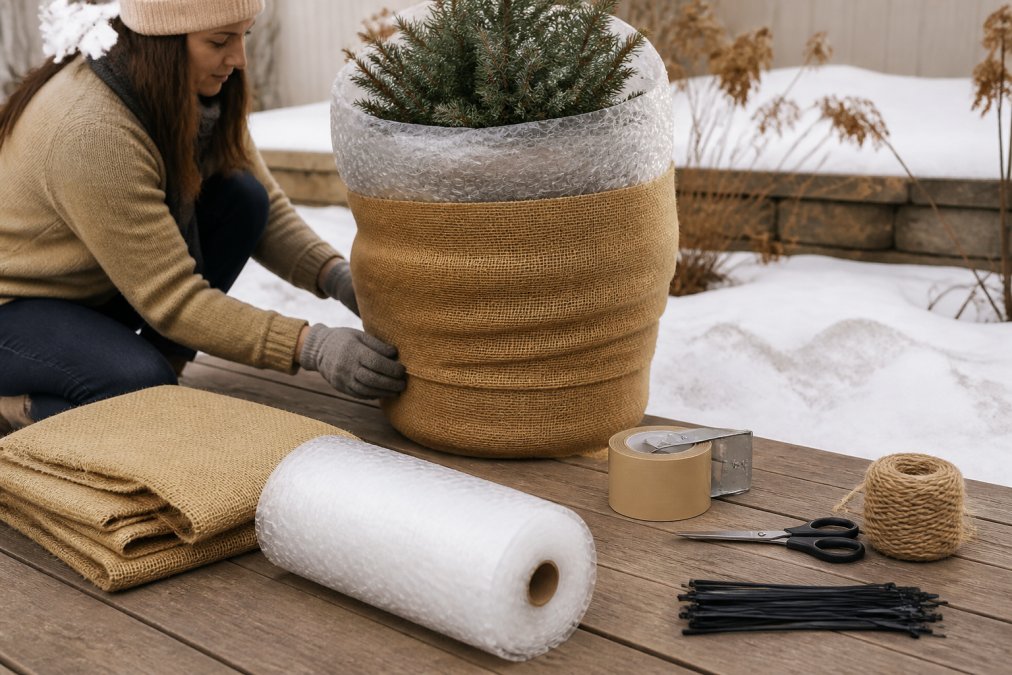
The key is layering. A single layer of burlap does almost nothing thermally, it's decorative. For real protection, combine a moisture barrier (plastic or bubble wrap) against the pot, then an insulating layer (straw, leaves, or foam) outside that, then burlap or another fabric to hold it together and look presentable.
Step 4: Elevate and Create a Thermal Break from the Ground
The ground conducts heat away from a pot far more efficiently than air does. A planter sitting directly on concrete or frozen earth loses heat through the bottom at a much faster rate than through the sides. This is why pot feet or wooden blocks matter, they create a thermal break.
For maximum protection, place a 1-inch piece of rigid foam board under the pot before setting it on pot feet. This adds an R-5 barrier between the pot bottom and the cold ground. Wooden pallets also work well, providing both elevation and an air gap.
Step 5: Manage Water Strategically
Conventional wisdom says to reduce watering in winter, and that's correct, but not for the reason most people think. It's not about preventing the soil from freezing (it will freeze regardless). It's about preventing ice crystal formation inside root cells.
Slightly moist soil actually protects roots better than bone-dry soil. Moist soil has higher thermal mass and releases heat more slowly as it cools. The danger is waterlogged soil, which fills all air pockets and creates a solid ice block around roots. Aim for soil that feels like a wrung-out sponge, damp but not dripping, heading into a hard freeze.
Step 6: Group Pots for Microclimate Effect
Grouping planters together against a south-facing wall creates a measurable microclimate. The wall absorbs solar radiation during the day and radiates it back at night, raising ambient temperatures by 5-10°F compared to open areas. The combined thermal mass of multiple pots slows temperature swings for all of them.
For extreme cold snaps below 0°F, the most effective protection is simply moving pots into an unheated garage, shed, or cold frame. The space doesn't need to be warm, just consistently above freezing. A sudden move from 20°F outdoors to 50°F indoors is itself a shock, so transition pots through an intermediate space if possible.
Winter Container Garden Ideas That Last All Season
A winter container garden is about structure and texture, not blooms. The goal is winter interest: visual appeal that holds up through snow, ice, and gray skies. With the right outdoor planters for winter, you can create displays that look intentional from November through March.
Evergreen Structures and Winter Interest
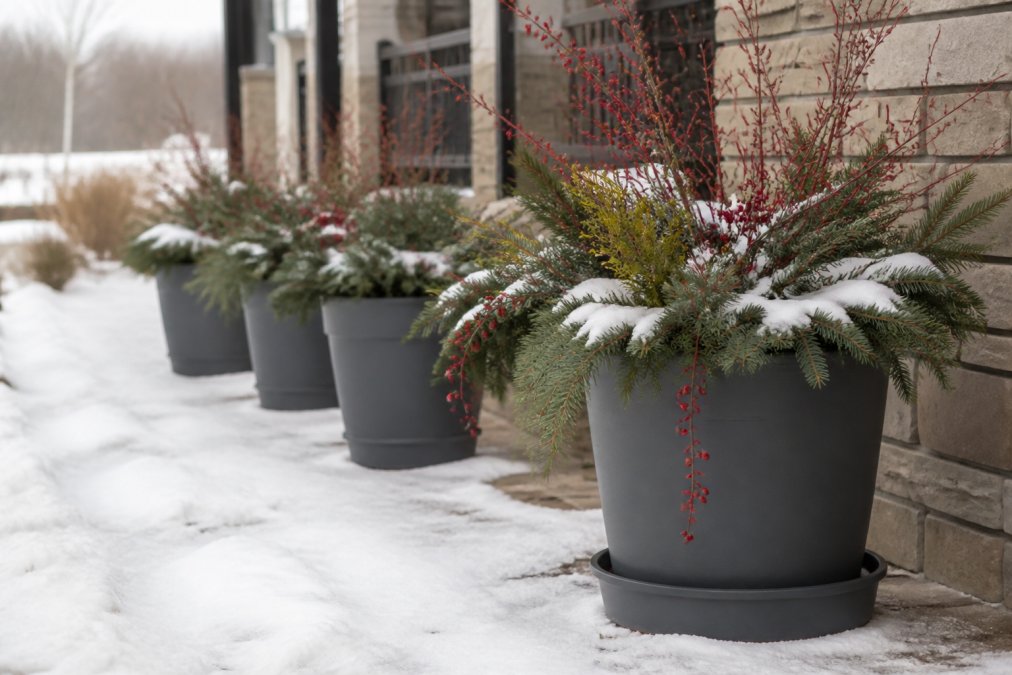
Evergreens and conifers form the backbone of any winter arrangement. Dwarf Alberta spruce, juniper, and boxwood provide year-round foliage and maintain their shape under snow. Winterberry shrubs add bright red berries that contrast beautifully with evergreen needles and white snow.
For a layered look, combine a central evergreen thriller with trailing elements. Fill the planter with hardy pansies or heuchera at the base for subtle color, then add birch branches or curly willow stems for height and movement. The key is choosing plants rated for your hardiness zone and keeping the soil moist but not waterlogged.
Small Balcony and Vertical Space Solutions
Apartment dwellers face a unique challenge: limited floor space and no ground contact for insulation. Vertical solutions make the most of small balconies. Wall-mounted planters, railing planters, and tiered stands maximize planting area without sacrificing walkway space.
Lightweight polypropylene planters are ideal for balconies because they don't add excessive weight to the structure. A 12-inch planter filled with moist soil can weigh 30 pounds or more, so choosing lightweight containers is both practical and safer for elevated spaces.
Common Winter Planter Mistakes to Avoid
The most common mistake is leaving soil saturated heading into a freeze. Roots that sit in ice-cold water suffer damage that shows up as yellowing leaves in spring. Always reduce watering frequency as temperatures drop, and ensure drainage holes remain clear.
Another frequent error is choosing porous materials for permanent winter displays. Terracotta and unglazed ceramic look charming in summer photos, but they lack the frost-proof qualities needed for harsh climates. Homeowners in the Northeast and Upper Midwest who have lost planters to freeze-thaw cycles know this pain firsthand.
Finally, don't forget about thermal shock. Moving a cold planter directly into a warm house, or vice versa, can crack even durable materials. Allow containers to acclimate gradually when transitioning between indoor and outdoor spaces.
Final Verdict: Choosing the Right Planter for Your Climate
The best outdoor planters for winter come down to matching material to your local conditions. Gardeners in mild climates have more options, while those in freeze-thaw zones should prioritize frost-proof materials like polypropylene or fiberglass.
For most of the country, recycled polypropylene offers the best balance of durability, weight, and price. It survives temperature swings, won't absorb water, and resists fading from UV exposure. The Austin Planter line from Beloit Plastics LLC delivers these benefits.
Before your next freeze, take stock of your containers. Which ones are vulnerable? Which are worth protecting? A few minutes of preparation now saves you from replacing cracked pots in spring. And when you do need new planters, choose materials built for the long haul, not just for a single season of curb appeal.
Choosing outdoor planters for winter doesn't have to mean sacrificing style for survival. The right material lets you enjoy a vibrant, structured garden display all season long without worrying about cracks and breakage. Beloit Plastics LLC offers U.S.-made polypropylene planters with drainage holes, attached saucers, and fade-resistant colors designed to last for years. Explore the Austin Planter collection today and build a winter garden that works as hard as you do.
Frequently Asked Questions
What type of planters can stay out in winter?
Planters made from polypropylene, fiberglass, or other heavy-duty plastics are the most reliable choices for staying out all winter. These materials handle freeze-thaw cycles without cracking because they flex slightly and don't absorb much water. Our Austin Planter pots, made from 95% recycled polypropylene, are built for this purpose. Avoid terracotta, ceramic, and unsealed concrete if temperatures regularly drop below freezing, as their porous bodies absorb moisture that expands and causes cracks.
What are the best materials for freeze-proof outdoor planters?
Polypropylene plastic is the top choice for freeze-proof outdoor planters. It's lightweight, durable, and won't absorb water, so the freeze-thaw cycle doesn't damage it. Fiberglass and stoneware blends also perform well but cost more. Avoid traditional terracotta and ceramic unless you're prepared to move them indoors or wrap them heavily. High-impact polypropylene, like the material used in our USA-made planters, resists both cold temperatures and UV damage, giving you several seasons of reliable outdoor use.
Can plastic planters be left outside in the winter?
Yes, but not all plastic is equal. Thin, brittle plastics can become fragile in extreme cold. Look for planters made from high-impact polypropylene or recycled polypropylene, which stay flexible in low temperatures. These materials handle the expansion and contraction of soil and moisture without cracking. Our planters are made from 95% recycled polypropylene and are fade-resistant, so they survive both freezing winters and intense summer sun. Check the pot's base for a recycling code or material label before leaving it out.
What should I put in an outdoor planter during winter?
Focus on hardy plants and natural elements that provide structure and color. Evergreen boughs, conifer branches, and spruce tips form a solid base. Add winterberry branches for bright red berries, birch branches for height, and dried hydrangea heads for texture. For live plants, choose winter-hardy options like pansies, heuchera, and ornamental kale. These tolerate cold soil and light frosts. Arrange them in layers: tall branches in back, evergreens in the middle, and low foliage or berries at the front.
How do I prepare my outdoor planters for freezing temperatures?
Start by cleaning the planter and ensuring drainage holes are open. Elevate pots on feet or bricks so water doesn't pool underneath. Wrap porous containers like terracotta in burlap or bubble wrap to add insulation. Move hardy plants into a sheltered spot near your home's foundation. Group pots together so they insulate each other. For extra protection, line the inside of the pot with bubble wrap before adding soil, and mulch the top layer to protect the root ball from temperature swings.
What should I plant in outdoor containers for winter interest?
Combine evergreen shrubs like dwarf conifers or boxwood with seasonal accents. Winterberry, holly branches, and birch stems add color and height. For flowers, pansies and violas bloom in cooler weather, while heuchera offers year-round foliage in shades of purple, green, and coral. Ornamental kale and cabbage provide texture that lasts through mild winters. Arrange these with trailing ivy or evergreen boughs for a full look. These plants tolerate cold and keep your porch looking intentional from November through March.